
Table of Contents
Every year, the Staff Selection Commission conducts the Multi-Tasking Staff and Havaldar Examination to recruit candidates for Group-C non-gazetted and non-ministerial posts in different ministries and departments of the Government of India. The SSC MTS Exam 2026 has started from 4th February 2026 and will be held on 05, 06, 09, 10, 11, 12, 13, 16, 17, 18, and 19th February 2026 in multiple shifts across the country.
Since the exam is conducted on different days and in several shifts, the difficulty level may vary from one shift to another. To maintain fairness for all candidates, SSC applies a normalization process so that marks of every shift are brought to a common scale. This article explains how the SSC MTS Normalization Process 2026 works and why it is important in deciding the final result.
What Is The SSC MTS Normalization Process?
Candidates must understand what normalization in SSC is before they start learning about SSC MTS Normalization 2026. The word “normalization” may have come up on numerous exams taken by applicants for government posts. The Staff Selection Commission normalizes the test results of the applicants for the multi-shift exams to account for any changes in the difficulty levels of the question papers across various shifts. Applicants who took the test numerous times had their results adjusted based on the test’s degree of difficulty. In the article below, SSC MTS Normalization Process 2026 has been covered.
SSC MTS Answer Key 2026 Out- Click to Check
SSC MTS 2026: Normalization Formula
SSC uses the Normalization model to calculate a candidate’s final score based on the difficulty of the shift. The average marks attained during a particular shift form the basis of the calculation used to calculate the difficulty level. So the average aptitude of the exam takers is the same across all shifts.
This is possible because so many candidates show up for each shift of the SSC exams. Another benefit is that the way shifts are assigned is random.
SSC Uses The Following Normalizing Formula For SSC MTS Normalization Process 2026:
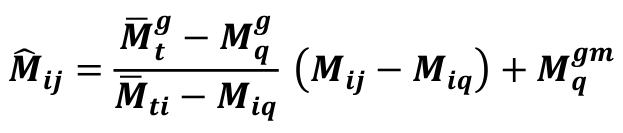
- 𝑴𝒊𝒋 = Normalized marks of the jth candidate in the ith shift.
- 𝑴𝒕𝒈= is the average mark of the top 0.1% of the candidates considering all shifts.
- 𝑴𝒒𝒈= is the sum of the mean and standard deviation marks of the candidates in the examination considering all shifts.
- 𝑴𝒕𝒊= is the average mark of the top 0.1% of the candidates in the ith shift.
- 𝑴𝒊𝒒= is the sum of mean marks and standard deviation of the ith shift.
- 𝑴𝒊𝒋= is the actual marks that the jth candidate obtained in the ith shift.
- 𝑴gm𝒒= is the sum of the mean marks of candidates in the shift having maximum mean and standard deviation of marks of candidates in the examination considering all shifts.
How Does SSC MTS Normalization 2026 Work?
SSC has changed its normalization process and introduced the equipercentile method under the new SSC normalization system. According to the official notice dated 2nd June 2025, this method will now be used for all SSC exams to make the evaluation fair for every candidate.
How The Equipercentile Method Works?
In this method, marks are not compared directly. Instead, candidates are compared on the basis of their percentile rank in their own shift.
- For example, if a candidate performs better than 80 percent of students in one shift, that candidate will be considered equal to another candidate who also performed better than 80 percent in a different shift.
- This system checks the relative performance of a candidate within the same shift and then matches it with other shifts. Because of this, differences in paper difficulty do not affect the final result.
Benefits Of The SSC Normalisation
- It allows fair comparison between candidates of different shifts.
- Students who get tougher question papers do not face any loss.
- The system is easy to understand and more transparent.
- The method is scientific and improves trust in SSC results.
This new approach makes the normalization process more balanced and reliable for all SSC aspirants.
Why Is SSC MTS Exam Normalization Important?
Normalization’s primary purpose is to compare exam takers’ performance on an equitable basis. By performing this, things like difficulty level won’t have an impact on the outcome. It is ensured by standardizing the shifts that applicants who receive difficult shifts won’t be at a disadvantage compared to those who received easy shifts. Knowing they won’t experience unreasonably difficult content greatly reduces students’ anxiety.


 PNB Apprentice Result 2026, Result Downl...
 SSC CHSL Exam Pattern 2026 for Tier 1 an...
 UIIC AO Recruitment 2026 Notification fo...