
Table of Contents
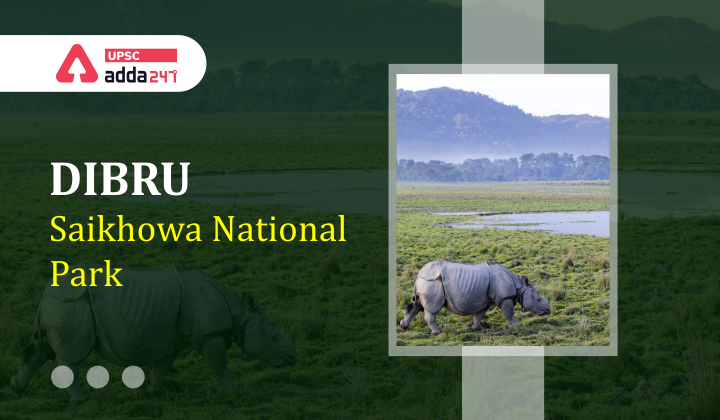
Dibru Saikhowa National Park- Relevance for UPSC Exam
- GS Paper 3: Environment: Conservation, environmental pollution and degradation.
Dibru Saikhowa National Park- Context
- Recently, the Supreme Court formed an expert committee led by former Justice B.P. Katakey to assess the damage and the cost of reparation of the Dibru-Saikhowa National Park and surrounding ecologically fragile areas of Assam, which were damaged in the Baghjan oil well fire in May 2020.
- Justice Katakey’s committee substitutes the National Green Tribunal’s 10-member committee led by the Assam Chief Secretary.
Background
- Environmental clearances for the seven proposed drilling sites in the Dibru- Saikhowa National Park were given by the Ministry of Environment to Oil India Corporation (OIL).
- Then the Baghjan pipe oil well had caught fire and caused extensive damage to flora and fauna in the area.
- NGT ordered a probe into the damage and the cost of reparation of the Dibru-Saikhowa National Park and surrounding ecologically fragile areas of Assam.
Dibru Saikhowa National Park-Key Points
- About: Dibru Saikhowa National Park is located located in Dibrugarh and Tinsukia districts of Assam.
- It is a National Park as well as a Biosphere Reserve situated in the south bank of the river Brahmaputra.
- Dibru Saikhowa National Park is bounded by the Brahmaputra and Lohit Rivers in the north and Dibru river in the south.
Dibru Saikhowa National Park– Ecological Significance
- Protection Status: It is a National Park as well as a Biosphere Reserve situated in the south bank of the river Brahmaputra.
- Dibru Saikhowa National Park was designated a Biosphere Reserve in July 1997 with an area of 765 sq.km.
- Dibru Saikhowa National Park is identified as an Important Bird Area (IBA) by Birdlife International. It is most famous for the rare white-winged wood ducks and feral horses.
- Forest Type: Dibru-Saikhowa comprises semi-evergreen forests, deciduous forests, littoral and swamp forests, and patches of wet evergreen forests.
- The Park is renowned for the natural regeneration of Salix trees.
- Maguri Motapung wetland is a part of the Reserve.
- Key wildlife: Dibru Saikhowa National Park is known to provide habitat to 36 species of mammals like Tiger, Elephant, Leopard, Jungle Cat, Bears, Small Indian Civet, Squirrels, Gangetic Dolphin, Hoolock Gibbon, etc.


 TSPSC Group 1 Question Paper 2024, Downl...
 TSPSC Group 1 Answer key 2024 Out, Downl...
 UPSC Prelims 2024 Question Paper, Downlo...