Table of Contents
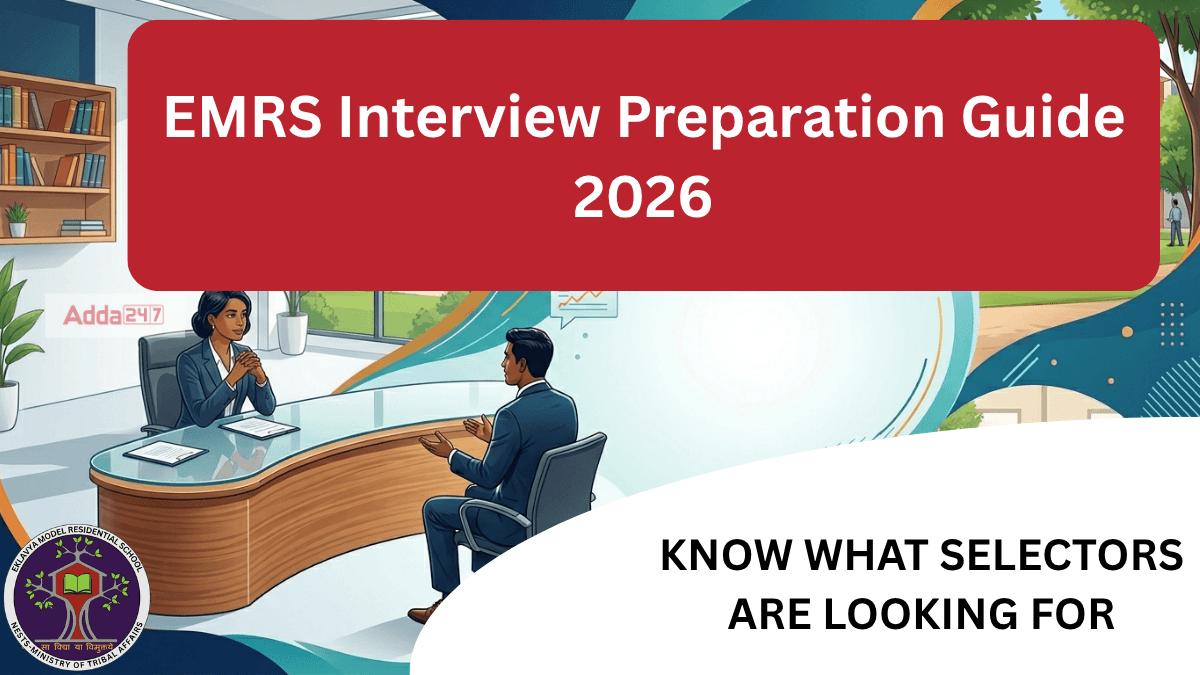
Eklavya Model Residential Schools (EMRS) are premier central government schools set up specifically to provide quality education to tribal students across India. The National Education Society for Tribal Students (NESTS) manages these schools and conducts a highly competitive recruitment process for teachers and other staff. If you are preparing for the EMRS interview in 2026, this guide will tell you exactly what the selectors look for and how you can prepare to impress them.
What Is the EMRS Interview Process in 2026?
The interview is conducted by a panel from NESTS and is designed to test not just your subject knowledge but also your personality, communication skills, and commitment to tribal education. Candidates who qualify the written exam are called for the interview, which carries significant weightage in the final merit list. Understanding the structure of this interview is the first step towards preparing for it well.
Here is a quick overview of the EMRS Interview Process 2026:
| Detail | Information |
|---|---|
| Conducted By | National Education Society for Tribal Students (NESTS) |
| Interview Type | Personal Interview (PI) |
| Who Is Called | Candidates who qualify the EMRS written exam |
| Interview Language | English or Hindi (candidate’s choice) |
| Key Focus Areas | Subject knowledge, teaching aptitude, tribal sensitivity, personality |
| Official Website | emrs.tribal.gov.in |
What Selectors Really Look For in EMRS Interview 2026
Most candidates prepare only their subject knowledge and ignore the other qualities that the EMRS panel actively looks for during the interview. The selectors are not just checking whether you can teach, they are checking whether you are the right person to teach in a remote tribal residential school where students come from disadvantaged backgrounds. They want teachers who are patient, culturally sensitive, committed, and genuinely motivated to make a difference in tribal children’s lives. Here is a detailed breakdown of what the panel evaluates:
- Subject Knowledge and Conceptual Clarity
The panel will ask questions directly from your subject to check how deeply you understand the concepts you will be teaching. For a teacher post, expect questions from your specialisation as well as the NCERT syllabus up to Class 12. - Awareness of Tribal Culture and Sensitivity
You should have basic knowledge of tribal welfare schemes like PM JANMAN, the Tribal Sub Plan, Article 46 of the Constitution, and the significance of EMRS schools in bridging the education gap. - Teaching Aptitude and Classroom Management Skills
Be ready to answer situational questions like “How will you handle a student who is not performing well academically?” or “What will you do if students are not able to understand your language?” Your answers must show empathy, creativity, and practical thinking. - Communication Skills and Confidence
You do not need to speak perfect English, but you must be clear, confident, and composed. The panel is checking whether you can express yourself without confusion and whether your body language reflects confidence. - Willingness to Work in Remote and Tribal Areas
EMRS schools are often located in remote, forested, or hilly areas with limited urban amenities. The panel will directly or indirectly check whether you are genuinely willing to live and work in such locations. - Knowledge of NEP 2020 and Modern Teaching Practices
The panel in 2026 is increasingly asking questions related to the National Education Policy (NEP) 2020, its impact on tribal education, activity-based learning, and digital tools for teaching. Be prepared to discuss at least the basics of NEP 2020.
Topic-Wise Interview Preparation Tips for EMRS 2026
Start your preparation at least 4 to 6 weeks before the interview date so you have enough time to cover all the key areas without rushing. Revise your subject thoroughly from NCERT books and make short notes on important concepts. At the same time, read about EMRS, NESTS, tribal welfare policies, and NEP 2020 so you can answer policy-related questions confidently. Practice mock interviews with a friend or record yourself answering questions to improve your delivery.
Here are topic-wise tips to guide your preparation:
| Topic | What to Prepare |
|---|---|
| Subject Knowledge | NCERT books Class 6-12, core concepts of your subject |
| EMRS & NESTS | History, objectives, number of schools, NESTS role |
| Tribal Welfare | PM JANMAN scheme, Tribal Sub Plan, Article 46, PVTG |
| NEP 2020 | Key highlights, mother tongue policy, vocational education |
| Teaching Methods | Activity-based learning, inclusive teaching, digital tools |
| Current Affairs | Education news, tribal issues, government schemes 2025-26 |
| Personality & HR | “Tell me about yourself”, strengths, why EMRS, career goals |
Do’s and Don’ts on the Day of EMRS Interview 2026
The selectors observe everything from how you enter the room to how you respond when you do not know an answer. A calm, well-dressed, and respectful candidate always leaves a better impression than someone who knows everything but acts nervously or arrogantly. Keep these key points in mind on your interview day:
DOs:
- Arrive at the venue at least 30-45 minutes early.
- Dress neatly and professionally – formal clothes in simple, decent colours.
- Carry all original documents and their attested photocopies in a file.
- Greet the panel politely when you enter and when you leave.
- Listen to each question carefully before answering.
- Be honest if you do not know an answer
DON’Ts:
- Use your mobile phone in the waiting area or interview room.
- Interrupt the panel while they are speaking.
- Speak negatively about your previous employer or school.
- Exaggerate your experience or qualifications.
- Show reluctance about being posted in a tribal or remote area.
- Use fillers like “basically,” “actually,” or “you know” too frequently.
 Common Mistakes Candidates Make in EMRS ...
 Tell Me About Yourself for KVS Interview...
 NET vs BET : Which is best for you Best?