Table of Contents
Getting shortlisted for a KVS or NVS teaching post is a big achievement. But the interview round is where most candidates struggle, not because they lack knowledge, but because they don’t know what the selection panel is actually looking for. This guide breaks it all down so you can be prepared and confident during the interview.
The KVS/NVS Selector’s Checklist: What they are looking for?
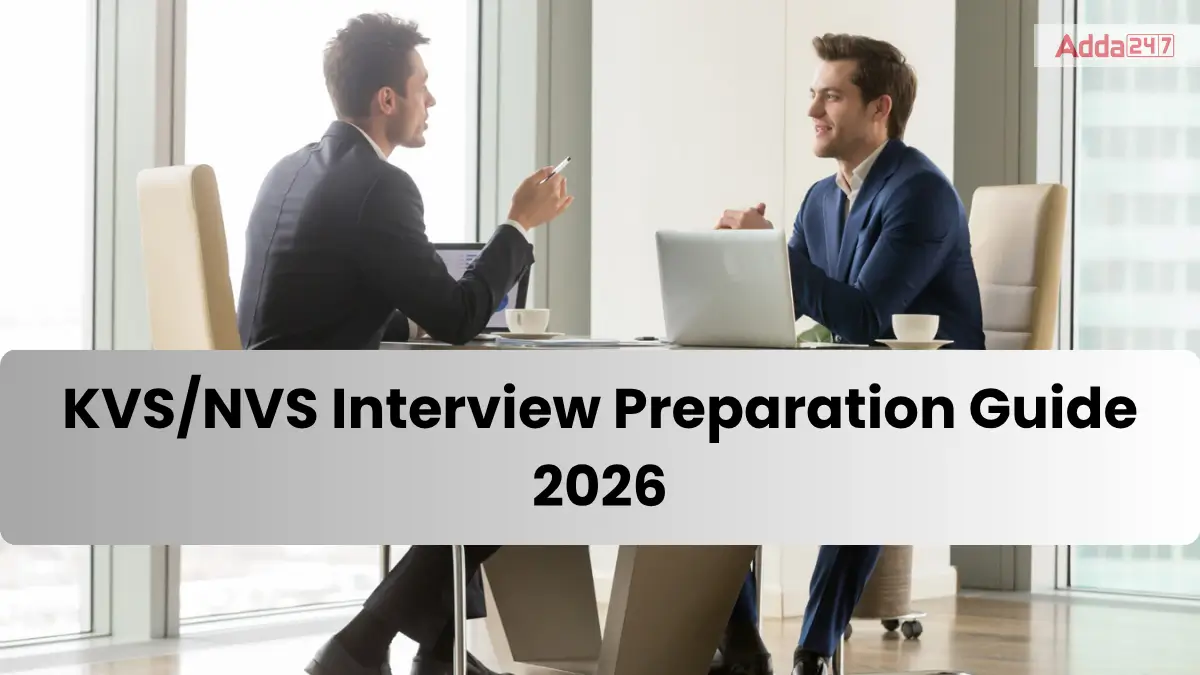
The panel already knows you cleared the written exam-that battle is won. What they are now checking is whether you are the right person to stand in front of a classroom of young students every day. They observe how you carry yourself, how clearly you speak, and whether you show the basic discipline and composure a government school teacher must have. First impressions here are formed within the first 60 seconds of your entry. Below are the pointers which interviewers will look in the candidates:
| What They Observe | What It Signals to the Panel |
|---|---|
| Body language & posture | Can you hold a classroom? |
| Communication clarity | Are you precise or do you ramble? |
| Punctuality on interview day | Basic discipline and seriousness |
| Confidence (even if nervous) | Composure under pressure |
| Dress and grooming | Professionalism |
Key pointers selectors look for:
- Speak clearly: do not over-explain simple answers
- Sit straight, maintain eye contact, avoid fidgeting
- Arrive early : late arrival is an instant red flag
- Be concise : three strong words beat ten weak ones
- Look calm even if you feel nervous inside
Most Asked KVS/NVS Interview Questions and Smart Answers
Certain questions appear in almost every KVS and NVS interview, and failing to prepare them in advance is one of the most avoidable mistakes candidates make. The panel is not just listening to what you say, they are watching how confidently and clearly you say it. A prepared candidate stands out immediately from one who is thinking on their feet.
| Question | What the Panel Is Really Checking | Quick Tip |
|---|---|---|
| Tell us about yourself | Structure, confidence, self-awareness | Start with education- experience- motivation |
| Why join KVS/NVS? | Institutional commitment, not just job-hunting | Mention NEP alignment, national reach, structured system |
| Willing to work in any state? | Flexibility and dedication to the job | Be honest, vague answers damage credibility |
| How will you handle a weak student? | Teaching approach and empathy | Mention observation, differentiated strategies, parent involvement |
| Your strengths and weaknesses (SWOT)? | Self-awareness and honesty | Weakness must not contradict your teaching ability |
| Why do you want to become a teacher? | Passion and motivation | Go beyond “I love children” be specific |
Here are Do’s and Don’ts during Interview:
| Do | Don’t |
|---|---|
| Prepare your introduction in advance | Walk in without rehearsing |
| Stay updated on current education news | Ignore NEP 2020 and policy changes |
| Ask for repetition if you miss a question | Guess and answer something wrong |
| Dress in simple, formal, neutral colours | Wear flashy or casual clothes |
| Admit if you don’t know something | Bluff, panels see through it immediately |
Current Affairs and Subject Awareness in KVS/NVS Interview
Panels frequently ask questions tied to recent education policy, NEP 2020 implementation, or developments in your subject area, and a candidate who answers with current, relevant examples immediately stands apart. You do not need to read three newspapers a day, one reliable source followed consistently is enough.
What to follow regularly:
| Source | What to Track |
|---|---|
| Ministry of Education website | NEP 2020 updates, new school policies |
| One reliable daily newspaper | Education news, national developments |
| NIEPID / NIMH updates | Essential for Special Educator candidates |
| RPwD Act 2016 | Rights and provisions for persons with disabilities |
Key pointers to remember:
- Stay updated on NEP 2020, panels frequently ask about it.
- Know recent changes in the education sector, especially for your subject area.
- Keep current affairs answers brief and accurate, show awareness, not lectures.
- Special Educators must know disability legislation and national institute updates.
KVS/NVS Interview Etiquette and Presentation
How you present yourself before you speak a single word sends a strong signal to the panel. Simple, formal clothing in neutral colours, a calm entry, and basic courtesies like greeting the panel and waiting to be seated all contribute to the overall impression you leave. Remember that the panel is also quietly asking themselves whether students’ parents would trust and respect this person.
Etiquette checklist before you walk in:
| Area | What to Do |
|---|---|
| Dress | Formal, neutral or muted colours, nothing flashy |
| Entry | Greet politely, sit only when asked |
| Listening | Let the interviewer finish before you begin answering |
| Unknown answers | Say “I’m not certain, but I know that…”; never bluff |
| Personal information | Share only when asked, don’t volunteer unnecessarily |
| Tone | Respectful, warm, and engaged throughout |
Quick interview etiquette pointers:
- Enter calmly, do not rush in looking flustered
- Saying “Could you please repeat that?” is professional, not weak
- Avoid phrases like “to be honest” or “frankly speaking”, they sound defensive
- A natural, brief smile at appropriate moments builds a positive impression
- The panel is also deciding: would parents and students be comfortable with this person?

 Best Topics for KVS/NVS Demo Teaching Ro...
 Bihar Govt to Fill 9196 Posts in New Deg...
 We Are Hiring Article Writer for Adda247