
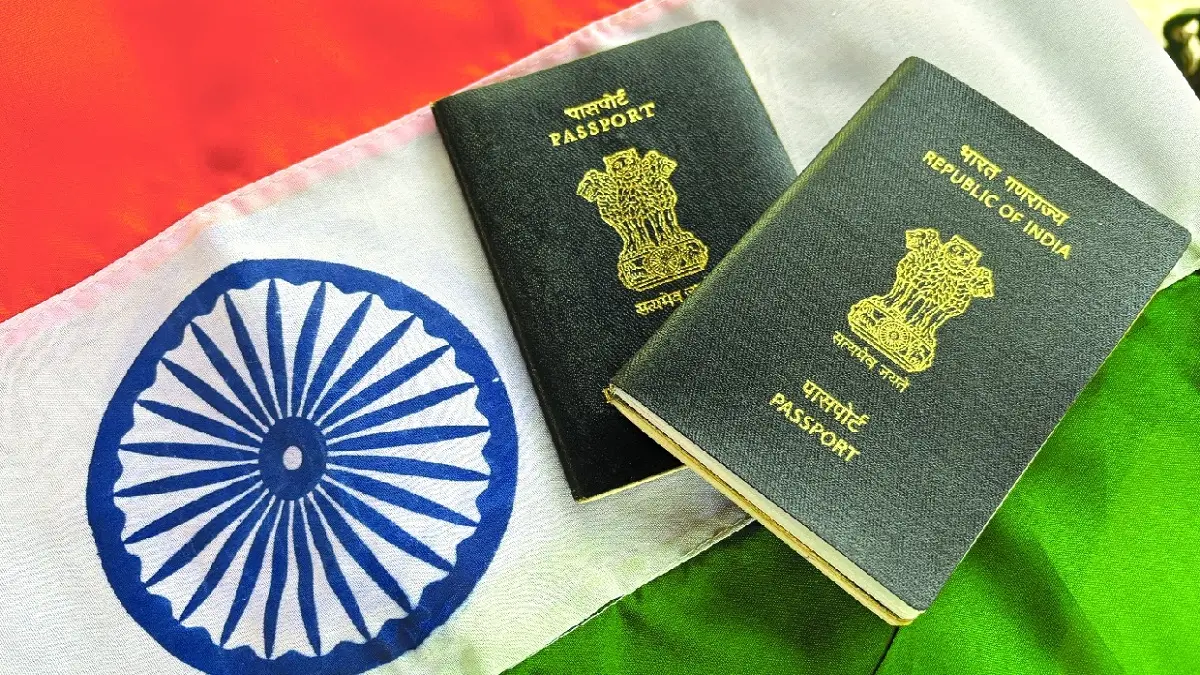
On the occasion of the 14th Passport Seva Divas, the MEA has stated that the Indian passport is primarily a travel document and it should not be considered as the definitive proof of Indian citizenship. The announcement has triggered several debates on the various social media platforms, and many citizens are now questioning why a document that is issued after extensive verification cannot serve as proof of citizenship.
Ministry of External Affairs Clarification
The Ministry of the External Affairs (MEA) has clarified that the primary purpose of the passport is to facilitate the international travel and it establish a person’s identity while staying abroad.
According to the ministry, a passport allows the Indian citizens to travel internationally for the purposes such as the,
- Tourism
- Education
- Employment
- Business
- Temporary residence abroad
- Official assignments
As the passport is issued after the intense verification of the various documents, the government maintains that it is the fundamentally a travel document rather than just a foundational proof of citizenship.
Why a Passport is Not Considered As Proof of Indian Citizenship?
The government’s position is based on the distinction between the foundational documents and the derivative documents.
Foundational Documents
These are those documents which establish the individual’s identity, date of birth and citizenship-related details at the source level. The examples includes the,
- Birth Certificate
- Aadhaar Card
- PAN Card
- Other government-recognized identity records
According to the government sources the passports are issued based on the information and verification derived from these foundational documents.
Government’s Legal Basis: Section 20 of the Passports Act
To support the MEA’s clarification, the government has referred to the Section 20 of the Passports Act, 1967.
This provision states that the Central Government may issue the passport or travel document to a person who is not an Indian citizen if it considers such issuance necessary in the matter of public interest.
This legal provision is important because it guides that possession of the passport alone does not automatically establish citizenship in every circumstance.
The government’s argument is that if the law permits passports to be issued under the exceptional conditions to non-citizens this document itself cannot be treated as the conclusive proof of citizenship.
Reference From Bombay High Court Judgment
The government has also referred to the 2013 judgment of the Bombay High Court.
The court has observed that possession of the Indian passport, by itself, does not conclusively establish that the individual is an Indian citizen.
Several legal experts also noted that courts generally examine the multiple documents and facts when the citizenship-related disputes arise rather than relying solely on the passport.
Difference Between Identity Proof and Citizenship Proof
One main reason for the public confusion is that passports are widely accepted as the identity documents across India.
However, there is an important distinction.
Identity Proof
A passport can serve as the,
- Identity proof
- Address proof
- Date of birth proof
- International travel document
Citizenship Proof
Citizenship determination may require the examination of the multiple additional legal and foundational records depending on to circumstances involved.
Therefore, a document may establish the identity without necessarily being treated as the final legal proof of citizenship in all situations.
Why Has the Clarification Triggered Debate?
The ministry’s statement has generated the strong reactions because many people have long considered the passport as one of the most reliable government-issued documents.
Critics argue that the,
- Passport issuance involves the extensive verification.
- Police verification is also conducted before approval.
- The document is recognized internationally.
- Foreign governments treat it as evidence of nationality.
As a result of this many citizens questioned why a passport should not be accepted as the proof of citizenship if it is issued after the confirming an individual’s identity and background.
What Does This Mean for Passport Holders?
For the ordinary passport holders, this clarification does not affect the validity of their individual passports.
Indian passports remain as the,
- Valid travel documents
- Accepted identity proofs
- Recognized internationally
- Essential for the overseas travel
Practically in day to day use the passports will continue to be widely accepted for the identification and travel-related purposes.







 TNPSC Group 2 Notification 2026 Out Soon...
 UPSSSC AGTA Admit Card 2026 Out, Downloa...
 ONGC Medical Officer Recruitment 2026 Ou...






 Adda247 Job portal has complete information about all Sarkari Jobs and Naukri Alerts, its latest recruitment notifications, from all state and national level jobs and their updates.