hamburger menu
All Coursesall course arrow
adda247
reward-icon
adda247
    arrow
    arrow
    arrow
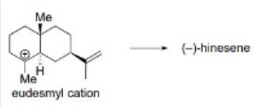
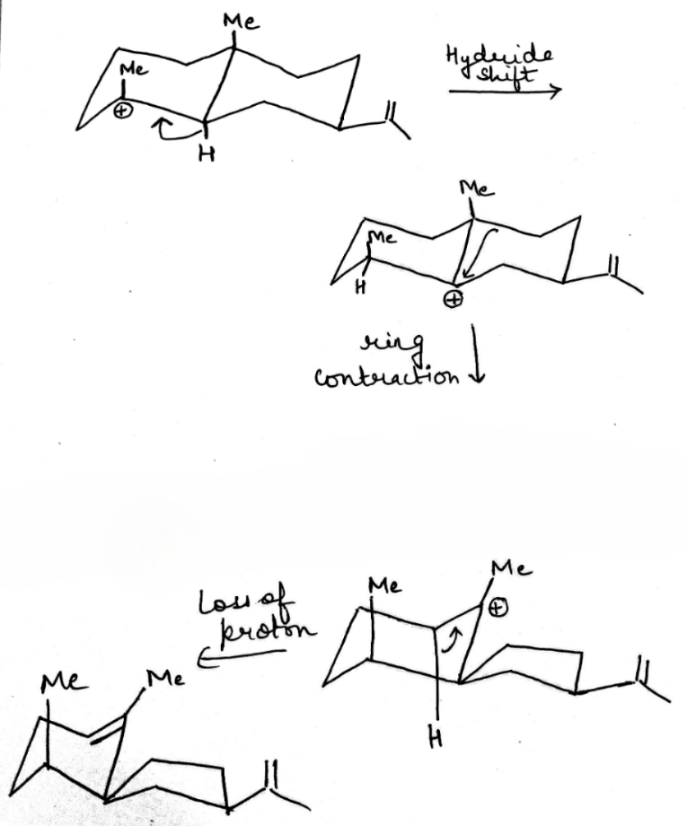
    Upon catalysis by hinesene synthase, eudesmyl cation shown below undergoes a sequential hydride shift, ring contraction and loss of proton to form (–)
    Question


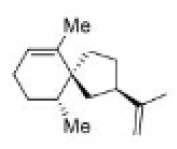
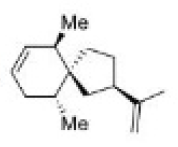
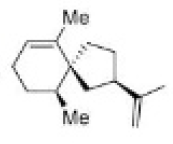
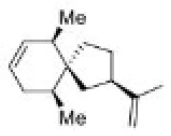
    Upon catalysis by hinesene synthase, eudesmyl cation shown below undergoes a sequential hydride shift, ring contraction and loss of proton to form (–)–hinesene. The correct structure of (–)–hinesene is

    A.


    B.


    C.


    D.


    Correct option is C

    A carbocation is any cation containing an even number of electrons in which a significant portion of the positive charge resides on a carbon atom.
    Carbocations can be stabilized by the migration of hydrogen, alkyl, or aryl groups, and occasionally, functional groups. Carbocations tend to change or shift their positive charge to the most stable configuration. This process is known as carbocation rearrangement.
    In the first step, hydride migration occurs rather than hydrogen (or proton) because the H atom migrates with its pair of electrons. Thereafter, ring contraction converts the six membered ring to a five membered ring. Finally, loss of proton gives the desired product.
    test-prime-package

    Access ‘CSIR NET Chemical Sciences’ Mock Tests with

    • 60000+ Mocks and Previous Year Papers
    • Unlimited Re-Attempts
    • Personalised Report Card
    • 500% Refund on Final Selection
    • Largest Community
    students-icon
    354k+ students have already unlocked exclusive benefits with Test Prime!
    test-prime-package

    Access ‘CSIR NET Chemical Sciences’ Mock Tests with

    • 60000+ Mocks and Previous Year Papers
    • Unlimited Re-Attempts
    • Personalised Report Card
    • 500% Refund on Final Selection
    • Largest Community
    students-icon
    354k+ students have already unlocked exclusive benefits with Test Prime!
    Our Plans
    Monthsup-arrow