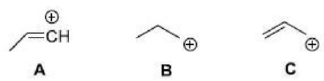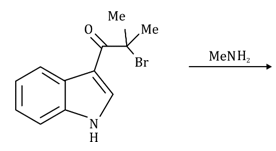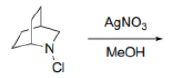
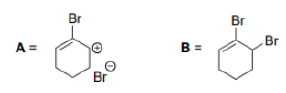
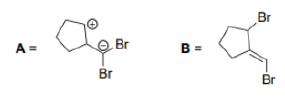
Correct option is C
Ring strain is a type of instability that exists when bonds in a molecule form angles that are abnormal. Strain is most commonly discussed for small rings such as cyclopropanes and cyclobutanes, whose internal angles are substantially smaller than the idealized value of approximately 109°. Because of their high strain, the heat of combustion for these small rings is elevated.
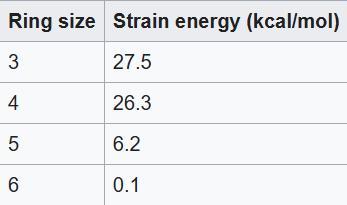
In some molecules, torsional strain can contribute to ring strain in addition to angle strain. One example of such a molecule is cyclopropane. Cyclopropane's carbon-carbon bonds form angles of 60°, far from the preferred angle of 109.5° angle in alkanes, so angle strain contributes most to cyclopropane's ring strain. However, as shown in the Newman projection of the molecule, the hydrogen atoms are eclipsed, causing some torsional strain as well.
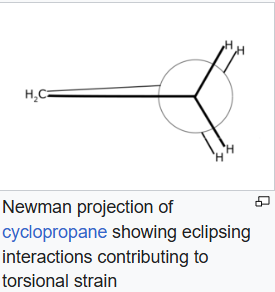
Cyclopropane (29 kcal/mol), C3H6 — the C-C-C bond angles are 60° whereas tetrahedral 109.5° bond angles are expected. The intense angle strain leads to nonlinear orbital overlap of its sp3 orbitals. Because of the bond's instability, cyclopropane is more reactive than other alkanes. Since any three points make a plane and cyclopropane has only three carbons, cyclopropane is planar. The H-C-H bond angle is 115° whereas 106° is expected as in the CH2 groups of propane.
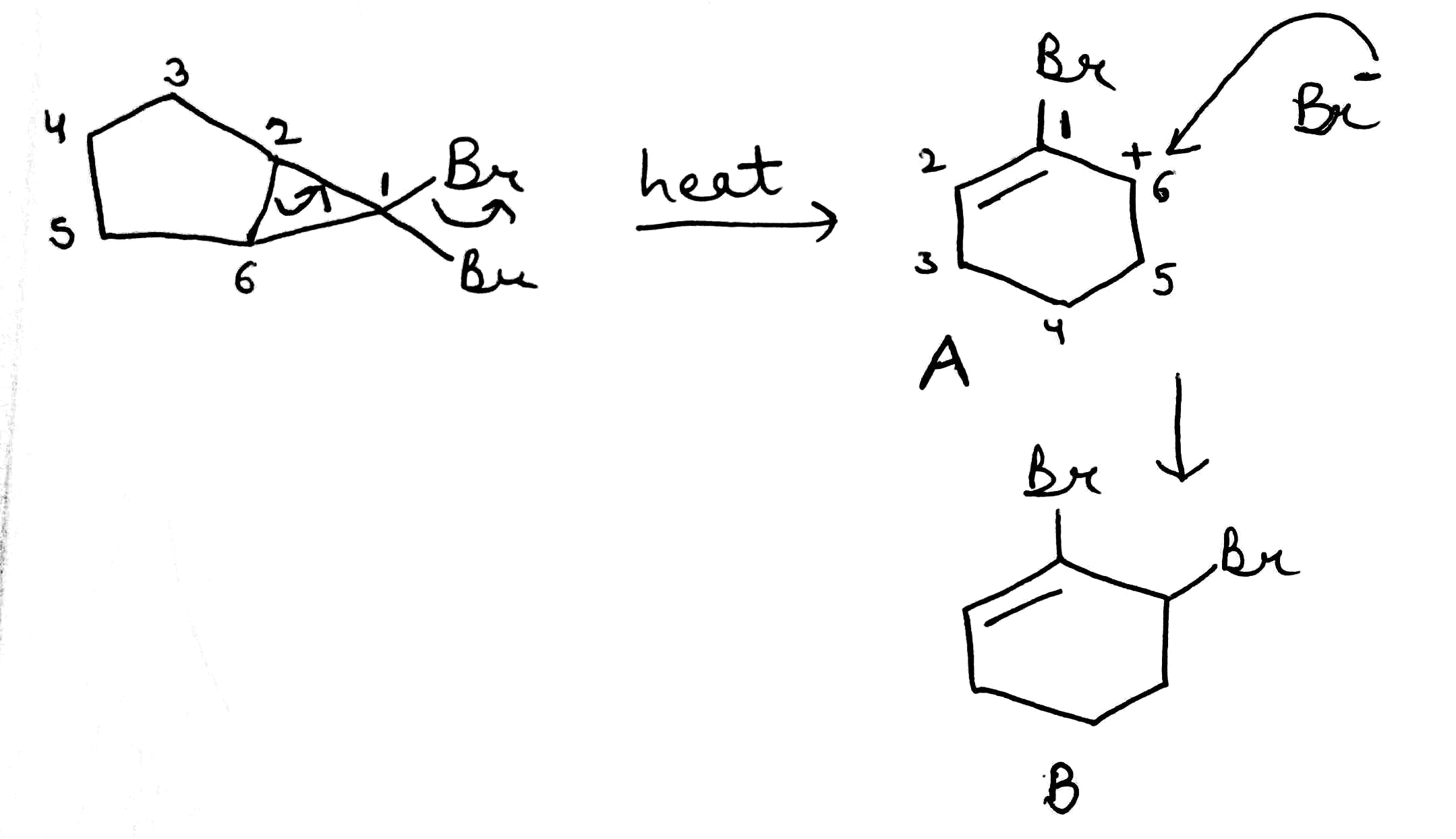
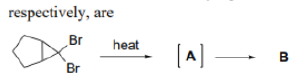
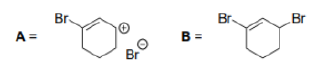
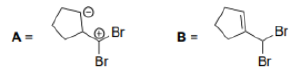
In the given reaction, upon opening the three membered ring, a carbocation will form. The lost Br- will attack the positively charged carbon.