arrow
arrow
arrow
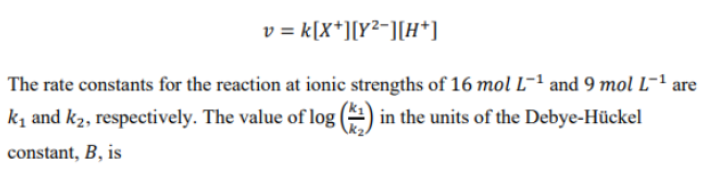
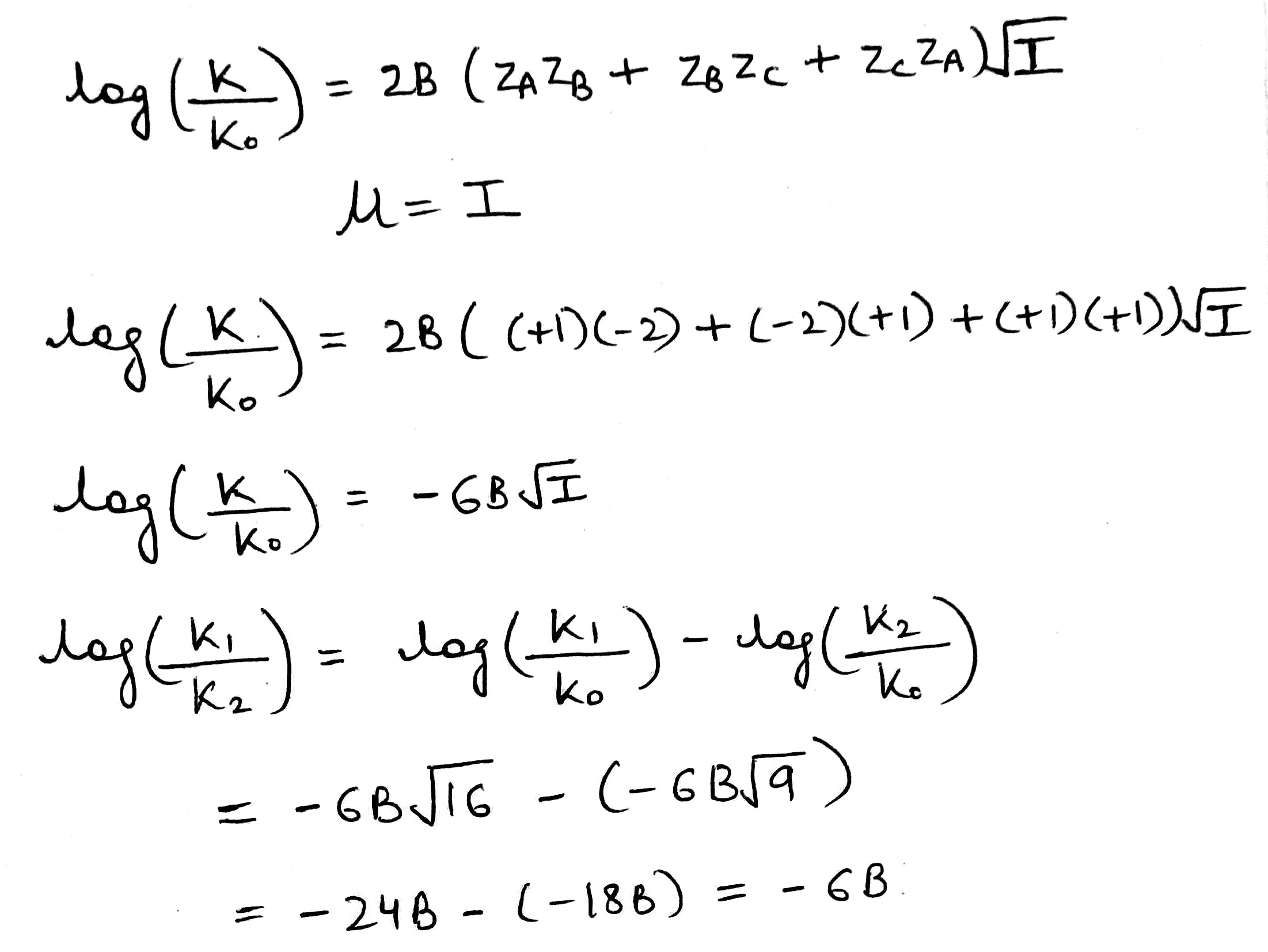
​The rate of an acid-catalyzed reaction in aqueous solution follows the rate equation given below.
Question

​The rate of an acid-catalyzed reaction in aqueous solution follows the rate equation given below.

A.

4/3

B.

16/9

C.

-6

D.

-2

Correct option is C

​Effect of Ionic Strength (Primary and Secondary Salt Effects)
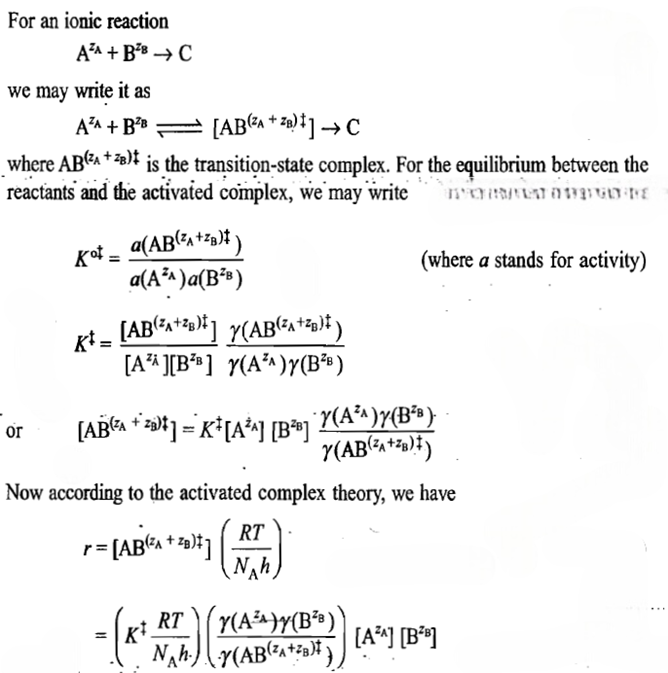
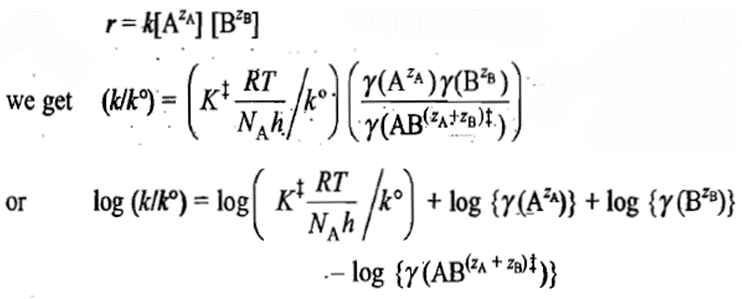
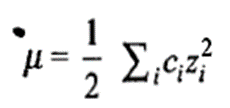
The activity coefficient of the ion depends upon the ionic strength µ of the solution. The latter is defined as
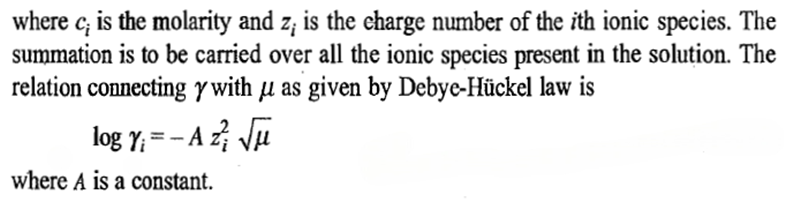
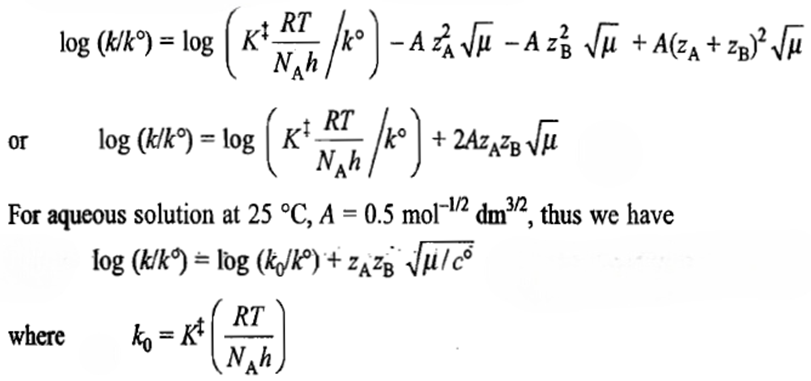
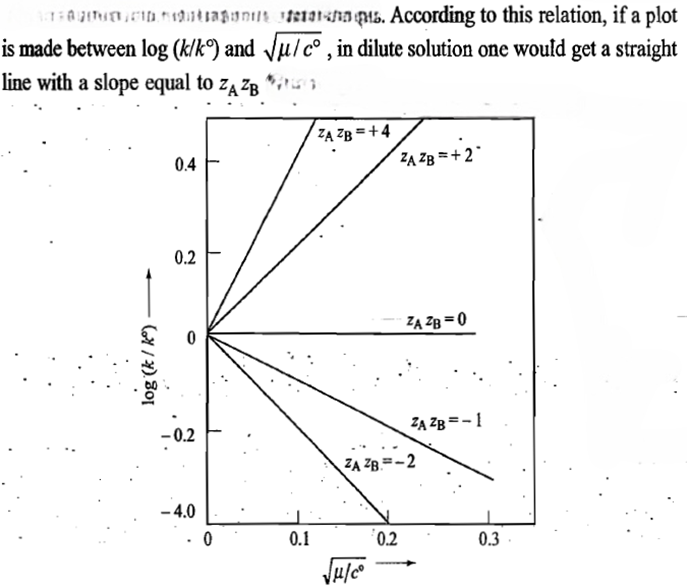
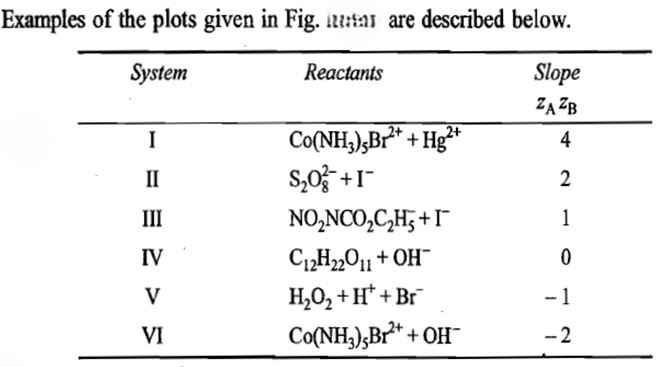
​The change in k with ionic strength is known as the primary salt effect.
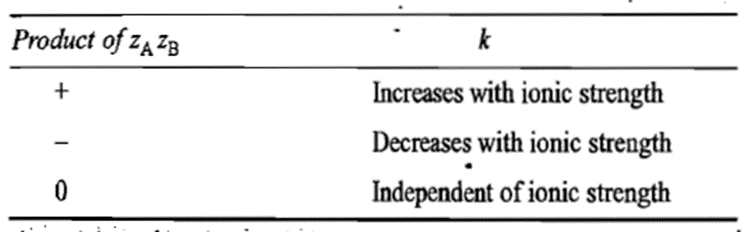
The primary salt effect is due to the change in the value of activity coefficients of reactants and intermediate complex due to the ionic strength of the solution.

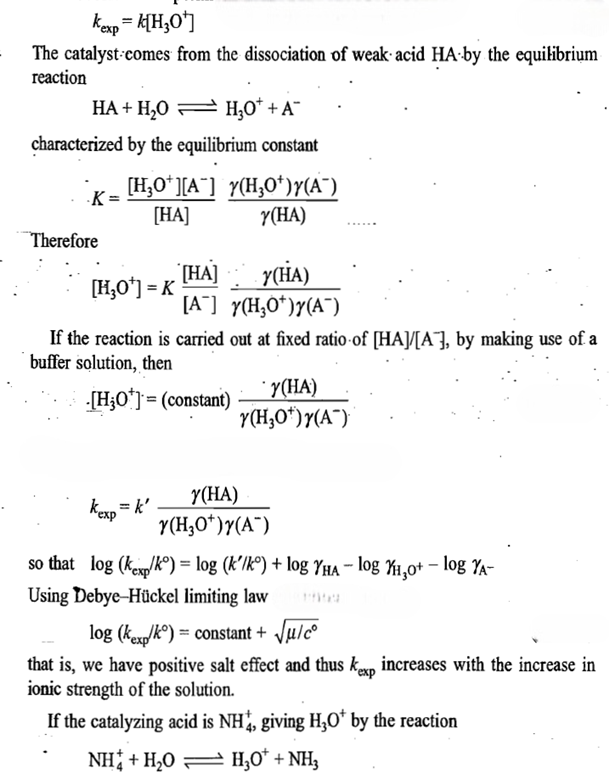
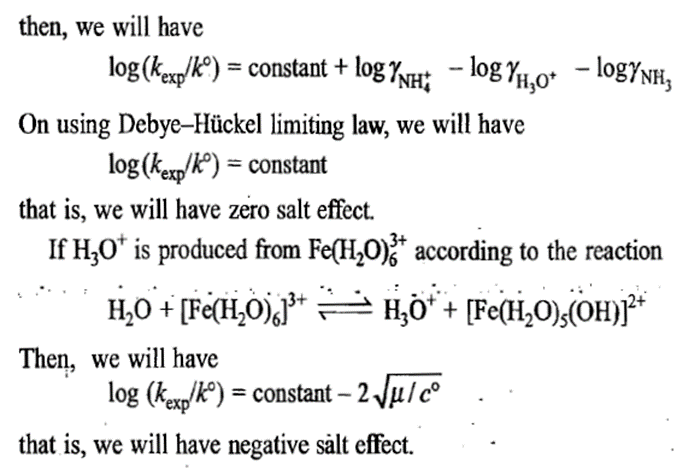
There is another type of salt action, known as the secondary salt effect which influences the rate of reaction by altering the effective concentration of the catalyzing species. Take, for example, the hydrolysis of cane sugar catalyzed by a weak acid. The experimental rate constant is given by
Similar Questions

test-prime-package

Access ‘CSIR NET Chemical Sciences’ Mock Tests with

  • 60000+ Mocks and Previous Year Papers
  • Unlimited Re-Attempts
  • Personalised Report Card
  • 500% Refund on Final Selection
  • Largest Community
students-icon
354k+ students have already unlocked exclusive benefits with Test Prime!
test-prime-package

Access ‘CSIR NET Chemical Sciences’ Mock Tests with

  • 60000+ Mocks and Previous Year Papers
  • Unlimited Re-Attempts
  • Personalised Report Card
  • 500% Refund on Final Selection
  • Largest Community
students-icon
354k+ students have already unlocked exclusive benefits with Test Prime!
Our Plans
Monthsup-arrow