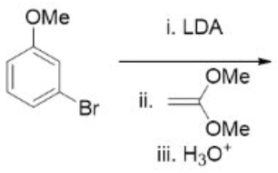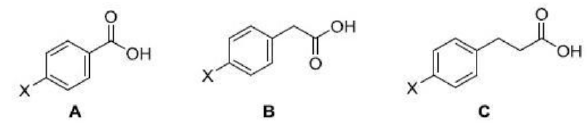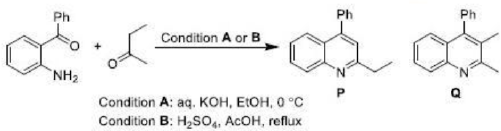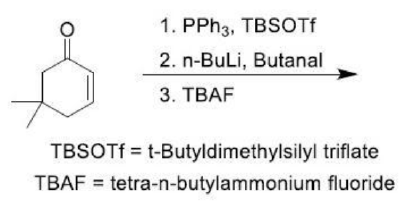
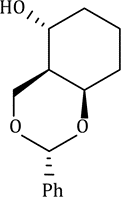
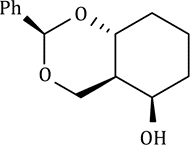
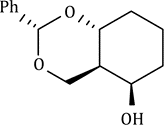
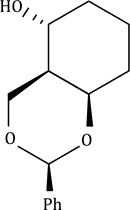
Correct option is C
The presence of several functional groups in a molecule can greatly complicate the design of a synthesis, especially if a reagent reacts indiscriminately with the various functional groups present (for example, sugars). When a chemical reaction is to be carried out selectively at one reactive site in a multifunctional compound, other reactive sites must be temporarily blocked. Thus, selection of protective groups plays an important part in planning a synthesis.
A protecting group must fulfill a number of requirements:
1. The protecting group reagent must react selectively (kinetic chemoselectivity) in good yield to give a protected substrate that is stable to the projected reactions.
2. The protecting group must be selectively removed in good yield by readily available reagents.
3. The protecting group should not have additional functionality that might provide additional sites of reaction.
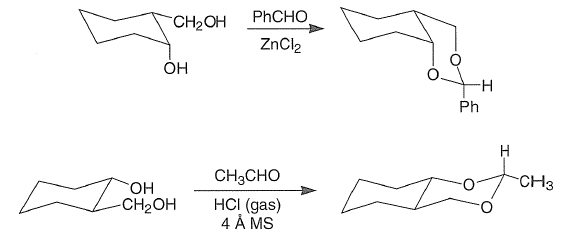
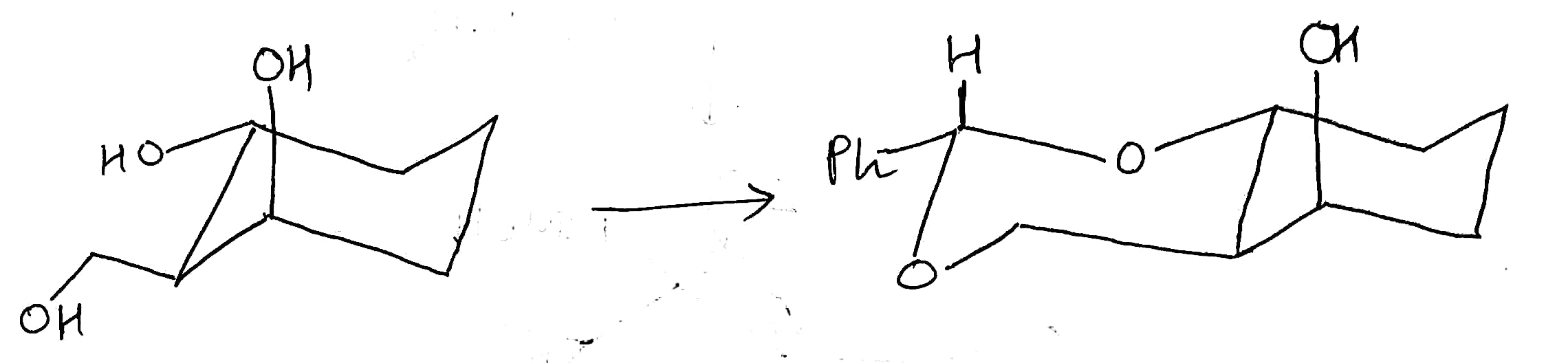
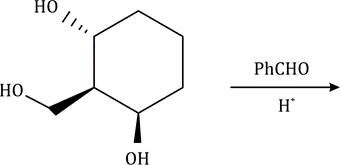
Both cis- and trans-1,3-diols form cyclic acetals with aldehydes in the presence of an acid catalyst to furnish the corresponding benzylidene and ethylidene derivatives, respectively.