
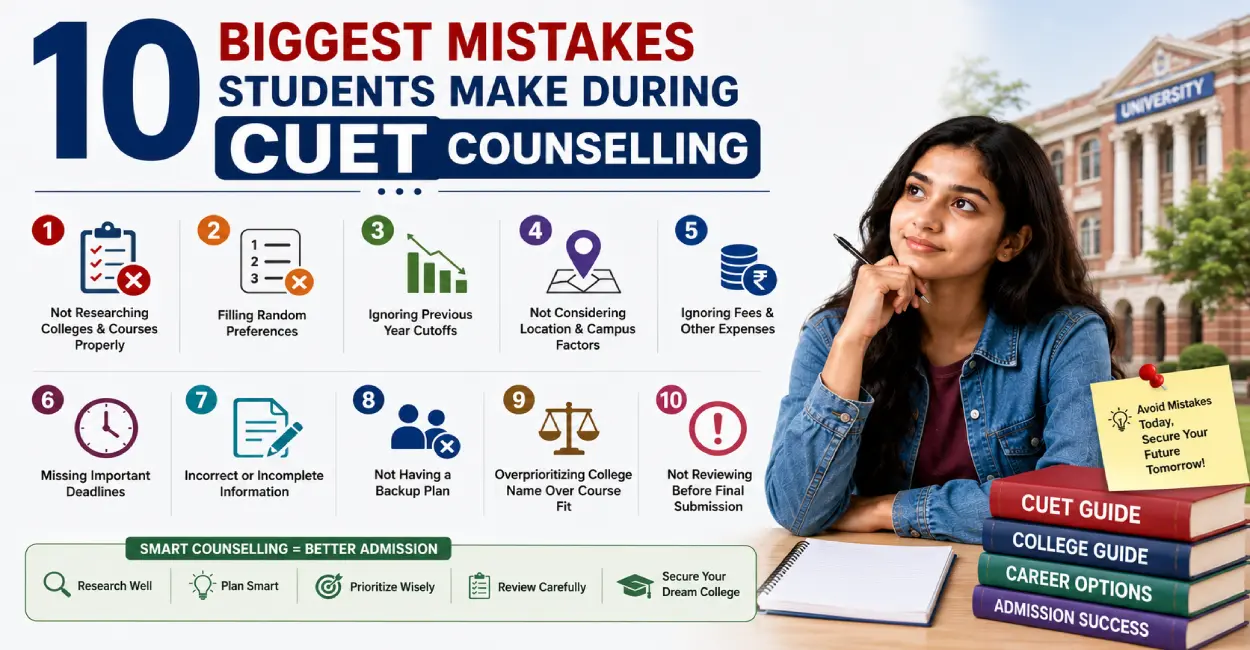
CUET result is not the end of the admission process. In many ways, it is just the beginning. After the exam, students enter the counselling and admission stage, and this is where many of them make avoidable mistakes. Some students have decent CUET scores but still miss good admission chances because they do not understand the counselling process properly. Sometimes the mistake is small, but the result becomes big.

One important thing students should understand is that CUET gives access to admissions, but many universities handle their own admission process through separate portals and systems. That means students have to stay alert during registration, preference filling, document upload, and seat acceptance.
If you want to avoid trouble later, here are the 10 biggest CUET counselling mistakes students usually make.
Not Understanding the Counselling Process Properly
This is the first and biggest mistake.
Many students prepare hard for CUET, but after the result they get confused about what to do next. They assume admission will happen automatically. It does not work like that.
Also Read: Free CUET Counselling 2026 By Adda247
Different universities may have different portals, different dates, and different rules. If a student does not read the official instructions properly, they may miss an important step. And once a deadline is gone, there is usually no easy fix.
So before doing anything, understand the full process first. That one step saves a lot of stress later.
Filling Preferences Randomly
Preference filling is not just a formal thing. It is actually one of the most important parts of counselling.
A lot of students place colleges and courses randomly without thinking much. Some just follow what friends are doing. Some copy a list from YouTube. Some keep changing the order till the last minute and then end up confused.
Your preference order should be based on what you really want, what you are eligible for, and where your chances are realistic. Wrong order can create regret later, and that regret feels very bad honestly.
Choosing Only Famous Colleges
This is one of the most common CUET counselling mistakes.
Students often become too focused on top colleges only. They fill only famous names and ignore all other good options. This looks ambitious, but many times it is not practical.
A smart preference list should include:
- dream options
- realistic options
- safer options
If you fill only top colleges and your score does not match, then you may lose out on colleges that were actually within reach. That is why balance matter a lot here.
Ignoring Course Preference and Focusing Only on College Name
Some students care only about getting into a known college, even if the course is not something they really want.
That can become a problem later. A good college name is nice, yes. But if you are stuck in a course you do not enjoy, the excitement does not last long. Students should think clearly about both things, college and course.
Sometimes a slightly less famous college with a better course choice is the smarter decision. This part students often ignore.
Not Checking Eligibility Carefully
This mistake can waste a lot of good preferences.
Different universities and courses may have different eligibility rules. Subject requirements, minimum marks, category conditions, or language-related requirements may vary. If students do not check these properly, they may apply for courses where they are not even fully eligible.
Then later they feel shocked when the seat does not move forward.
So always check:
- Subject combination
- Class 12 requirements
- Category rules
- Programme-specific conditions
This sounds basic, but many students still skip it.
Filling Too Few Preferences
Some students think filling fewer preferences makes their list look more focused. Actually, in many cases, it just makes the list more risky.
If the portal allows many preferences, then students should use that wisely. More relevant choices usually means more admission chances. A short list can leave you with very limited possibilities if top options do not work out.
Of course, do not add random choices only for numbers. But yes, filling too few preferences is definitely one of the biggest counselling mistakes.
Waiting Till the Last Minute
This is such a common problem, and still students repeat it every year. They delay registration. They delay preference filling. They delay document upload. Then one technical issue happens, or the website becomes slow, and everything turns into panic mode.
Last-minute work is always dangerous during counselling. There can be server problems, payment issues, login errors, or confusion in forms. If you wait till the last hour, even a small issue can cost you badly. Try to complete things early. It gives you time to recheck too, which helps more than students realise.
Not Keeping Documents Ready
A lot of students focus so much on scores and preferences that they forget the document part. Then when the portal asks for certificates, mark sheets, photos, category proof, or other papers, they start searching in a hurry.
That creates mistakes.
Wrong upload, blurry file, missing certificate, size issue, format issue — all these things can slow down the process. And counselling is not the time when you want extra confusion.
Keep your documents ready in advance. It makes the process smoother, and your mind stays more calm too.
Copying Someone Else’s Strategy Blindly
This is a very underrated mistake.
Students often ask seniors, friends, Telegram groups, or random influencers for preference lists. Taking guidance is fine. But copying someone else’s full strategy without thinking is not smart.
- Your score is different.
- Your category may be different.
- Your course interest is different.
- Your budget, city preference, and backup plan are also different.
So why should your entire list be the same?
Take ideas from others, yes. But make the final list according to your own profile. Blind copying usually creates blind mistakes too.
Not Reading Official Updates After Registration
Some students register once and then become too relaxed. That is another big error.
Counselling does not end after form submission. Universities keep releasing updates about correction windows, preference editing, seat allocation rounds, document verification, fee payment, and reporting timelines. If students stop checking the portal, they can miss an important update very easily.
This is why staying active after registration is important. One missed notice can spoil the whole process. Sounds harsh, but it is true.




 Best Books for CBSE Class 12 Commerce St...
 CBSE Class 12th Accountancy Important Qu...
 CBSE 2026 Preparation Tips for Class 12