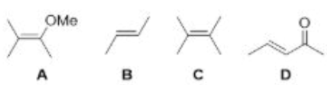
Correct option is D
On the basis of forces of attraction between adsorbent and adsorbate, adsorption has been classified into two categories, namely, Van der Waals adsorption (or physical adsorption) and chemisorption (or activated adsorption).
Chemisorption
1.The forces of attraction between adsorbent and absorbate are of chemical nature (strong forces).
2.This usually occurs at high temperature.
3.It is highly specific in nature.
4.The enthalpy of adsorption is high and has a value of the order of 80 to 420 kJ mol-1.
5.This type of adsorption is relatively slower.
6.This is usually irreversible in nature. For example, O2 adsorbed on charcoal, when desorbed also contains CO and CO2.
7.The activation energy involved in this adsorption is high. It is for this reason this is attained only at high temperatures.
8.Adsorption in this case is monolayer and thus Langmuir adsorption isotherm is applicable.
Physical Adsorption
1. The forces of attraction between adsorbent and adsorbate are of van der Waals type (weak forces).
2. This predominates at low temperatures.
3. Almost all gases show this type of adsorption at low temperatures.
4. The enthalpy of adsorption is low and has a value of about 20 kJ mol-1 or less.
5.This type of adsorption attains equilibrium very rapidly on changing the temperature and pressure of the system.
6.This is reversible in nature.
7.The activation energy involved in this adsorption is small and is often less than 5 kJ mol-1. It is for this reason, this is even attained at low temperatures.
8.Adsorption in this case is often multilayer.