

hamburger menu
All Coursesall course arrow
adda247
reward-icon
adda247
    arrow
    arrow
    arrow
    The absorption spectrum of Ln3+ is normally sharp and weak in intensity. However, Sm3+(4f5) in dil. acidic solution shows a broad and moderately
    Question


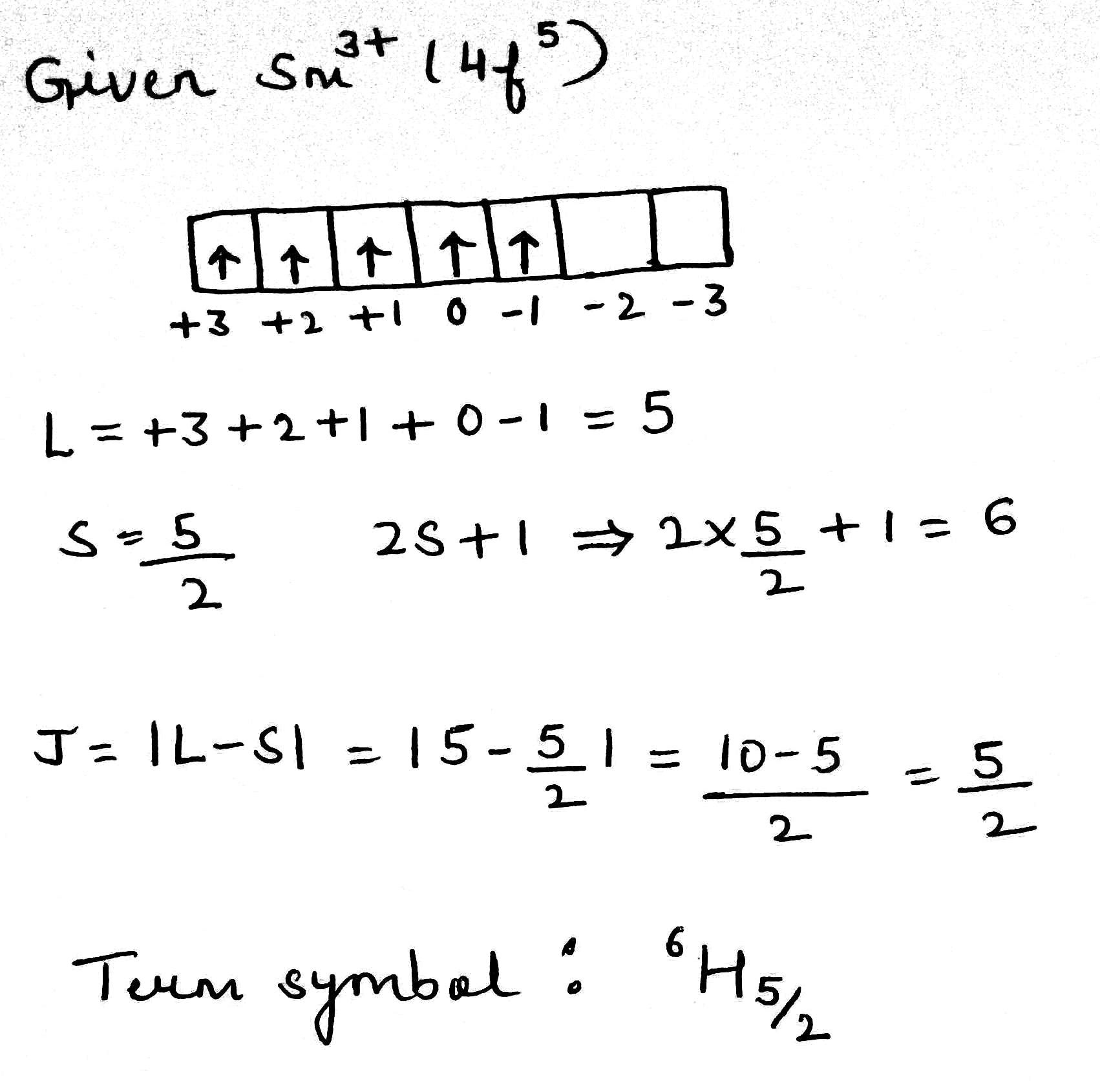
    The absorption spectrum of Ln3+ is normally sharp and weak in intensity. However, Sm3+(4f5in dil. acidic solution shows a broad and moderately intense transition at 495nm. This transition is

    A.

    6H5/26H7/2^{6}H_{5/2} \rightarrow ^{6}H_{7/2}​​

    B.

    6H5/24G5/2^{6}H_{5/2} \rightarrow ^{4}G_{5/2}​​

    C.

    6H5/26H9/2^{6}H_{5/2} \rightarrow ^{6}H_{9/2}​​

    D.

    4G5/24G7/2^{4}G_{5/2} \rightarrow ^{4}G_{7/2}​​

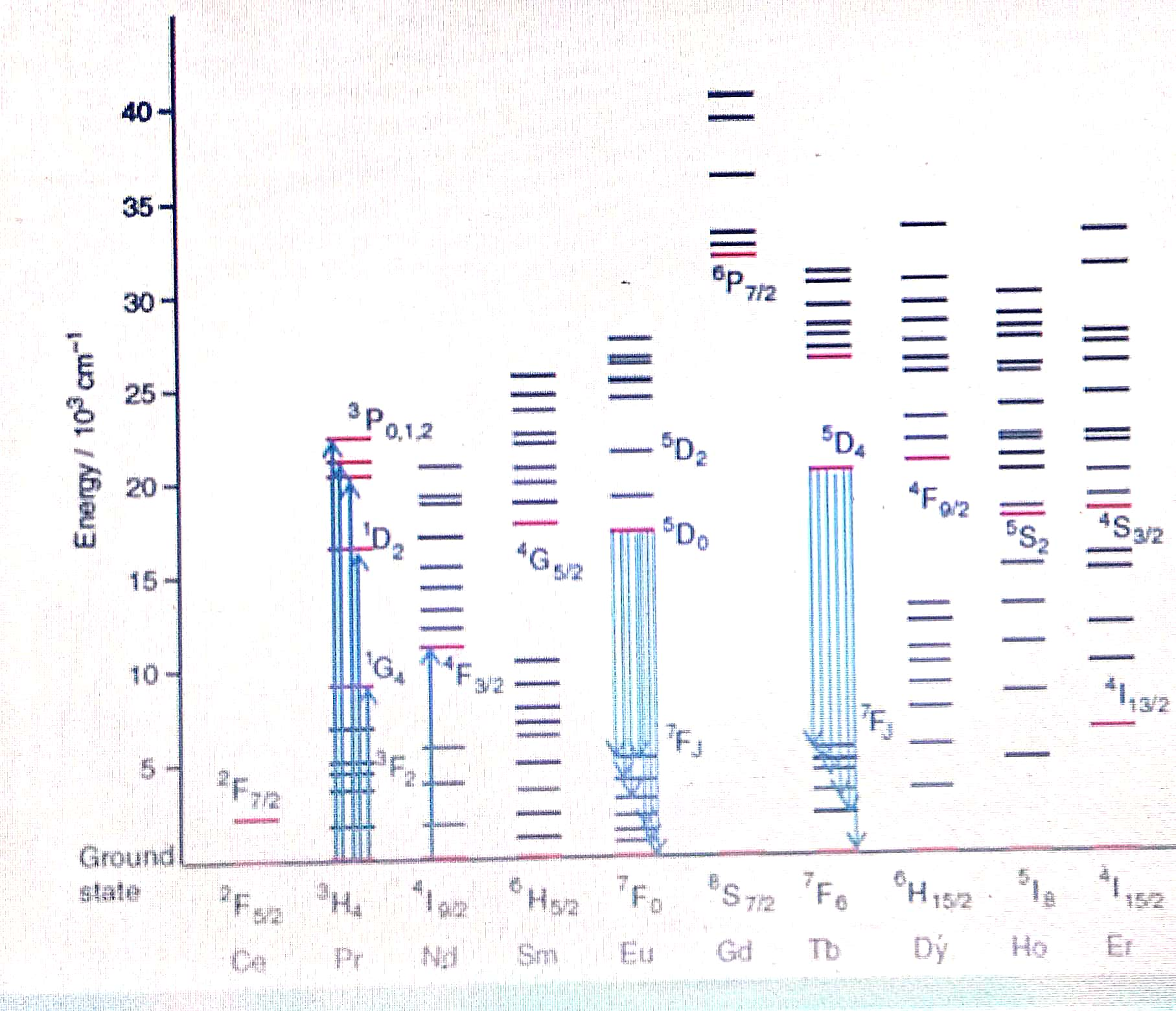
    Correct option is B

    The notation for a full term symbol is:
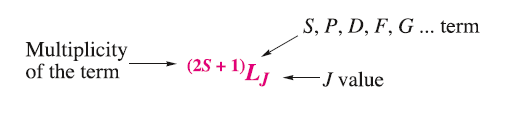

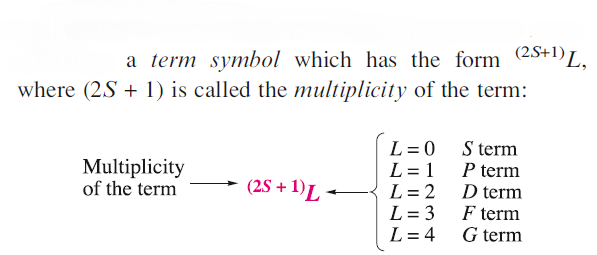
    The energy and the orbital angular momentum of a multielectron species are determined by a quantum number, L. Energy states for which L=0, 1, 2, 3, 4... are known as S, P, D, F, G... terms, respectively.
    For any system containing more than one electron, the energy of an electron with principal quantum number n depends on the value of l, and this also determines the orbital angular momentum which is given by the equation:



    The spin quantum number, s, determines the magnitude of the spin angular momentum of an electron and has a value of 1/2. For a 1-electron species, ms is the magnetic spin angular momentum and has a value of +1/2 or -1/2. The spin angular momentum for a multielectron species is given by the following equation, where S is the total spin quantum number.


    The quantum number MS is obtained by algebraic summation of the ms values for individual electrons:
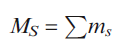
    For each value of S, there are (2S+1) values of MS.
    The interaction between the total angular orbital momentum, L, and the total spin angular momentum, S is defined by the total angular momentum quantum number, J.
    The following equation gives the relationship for the total angular momentum for a multi-electron species.


    The value of J for the ground state is given by (L-S) for a sub-shell that is less than half-filled, and by (L+S) for a sub-shell that is more than half-filled.

    Similar Questions

    test-prime-package

    Access ‘CSIR NET Chemical Sciences’ Mock Tests with

    • 60000+ Mocks and Previous Year Papers
    • Unlimited Re-Attempts
    • Personalised Report Card
    • 500% Refund on Final Selection
    • Largest Community
    students-icon
    383k+ students have already unlocked exclusive benefits with Test Prime!
    test-prime-package

    Access ‘CSIR NET Chemical Sciences’ Mock Tests with

    • 60000+ Mocks and Previous Year Papers
    • Unlimited Re-Attempts
    • Personalised Report Card
    • 500% Refund on Final Selection
    • Largest Community
    students-icon
    383k+ students have already unlocked exclusive benefits with Test Prime!
    Our Plans
    Monthsup-arrow

