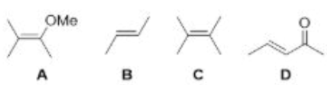
Correct option is A
Surface tension is the tendency of liquid surfaces at rest to shrink into the minimum surface area possible. Surface tension is what allows objects with a higher density than water such as razor blades and insects (e.g. water striders) to float on a water surface without becoming even partly submerged.
At liquid–air interfaces, surface tension results from the greater attraction of liquid molecules to each other (due to cohesion) than to the molecules in the air (due to adhesion).
There are two primary mechanisms in play. One is an inward force on the surface molecules causing the liquid to contract. Second is a tangential force parallel to the surface of the liquid. This tangential force is generally referred to as the surface tension. The net effect is the liquid behaves as if its surface were covered with a stretched elastic membrane. But this analogy must not be taken too far as the tension in an elastic membrane is dependent on the amount of deformation of the membrane while surface tension is an inherent property of the liquid–air or liquid–vapour interface.
Causes
Due to the cohesive forces, a molecule located away from the surface is pulled equally in every direction by neighboring liquid molecules, resulting in a net force of zero. The molecules at the surface do not have the same molecules on all sides of them and therefore are pulled inward. This creates some internal pressure and forces liquid surfaces to contract to the minimum area.
There is also a tension parallel to the surface at the liquid-air interface which will resist an external force, due to the cohesive nature of water molecules. The forces of attraction acting between molecules of the same type are called cohesive forces, while those acting between molecules of different types are called adhesive forces.
Surface tension is visible in other common phenomena, especially when surfactants are used to decrease it:
Soap bubbles have very large surface areas with very little mass. Bubbles in pure water are unstable. The addition of surfactants, however, can have a stabilizing effect on the bubbles. Surfactants actually reduce the surface tension of water by a factor of three or more.
The surface tension of a dilute soap solution is less than pure water because pure water does not contain any impurity and behaves as a strong stretched strong bond but when soap is added the bond becomes loose due to the presence of stearate ions and hydrogen ions.
The soap molecules accumulate more at the surface than in the bulk solutions due to interaction with water molecules by the hydrophilic functional group.
The hydrophilic chain lowers the dipole-dipole interaction between the water molecules very much and the surface tension decreases abruptly.