Correct option is A
The correct answer is: (1) Parental type = 585, Single cross over between y and cv = 95, Single cross over between cv and f = 275, Double cross over = 45.
Explanation:
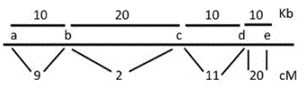
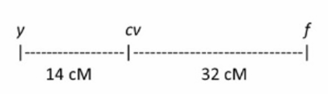
This problem involves calculating the recombination frequencies for three genes located on the X chromosome. The recombination frequencies can be interpreted as the number of recombination events between the genes. The gene map indicates the distances between the genes: 14 cM between y and cv, and 32 cM between cv and f, with zero interference.
From the information provided:
The total number of F2 progeny is 1000.
The parental types are the most common types, and they are the ones that occur with the highest frequency.
Single crossovers occur when two genes cross over, but not both genes at the same time. The recombination frequencies between y and cv (95 progeny) and between cv and f (275 progeny) suggest single crossover events between these gene pairs.
Double crossovers involve both genes switching, and there are 45 double crossover progeny.
Information Booster:
Recombination frequencies are used to estimate the relative positions of genes on a chromosome, with 1 cM representing a 1% recombination frequency.
Parental types are the most frequent progeny and indicate the combinations of alleles inherited from the parents.
The single crossover between y and cv (95 progeny) indicates that these two genes are relatively close to each other on the chromosome (14 cM apart).
The single crossover between cv and f (275 progeny) indicates that these genes are further apart on the chromosome (32 cM apart).
Double crossover progeny (45) are rare and represent events where both gene pairs experienced crossover.
Interference = 0 means that the crossover events between these genes are independent of each other and there are no corrections for multiple crossovers.