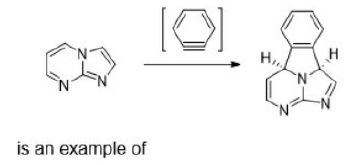




Correct option is C
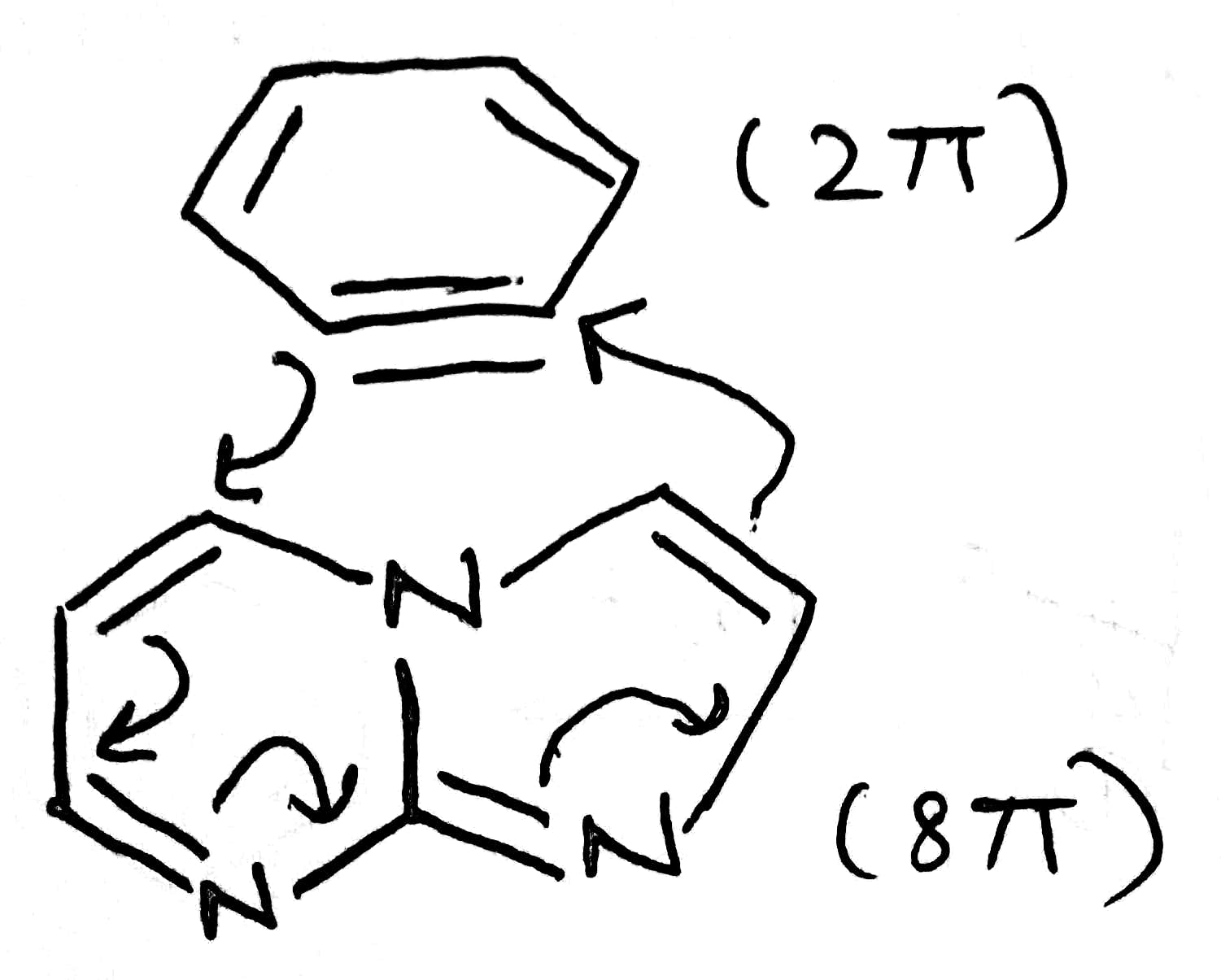
In organic chemistry, a cycloaddition is a chemical reaction in which "two or more unsaturated molecules (or parts of the same molecule) combine with the formation of a cyclic adduct in which there is a net reduction of the bond multiplicity". The resulting reaction is a cyclization reaction. Many but not all cycloadditions are concerted and thus pericyclic. Nonconcerted cycloadditions are not pericyclic. As a class of addition reaction, cycloadditions permit carbon–carbon bond formation without the use of a nucleophile or electrophile.
Thermal cycloadditions are those cycloadditions where the reactants are in the ground electronic state. They usually have (4n + 2) π electrons participating in the starting material, for some integer n. These reactions occur for reasons of orbital symmetry in a suprafacial-suprafacial (syn/syn stereochemistry) in most cases. Very few examples of antarafacial-antarafacial (anti/anti stereochemistry) reactions have also been reported. There are a few examples of thermal cycloadditions which have 4n π electrons (for example the [2 + 2]-cycloaddition).