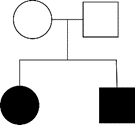
Correct option is B
The best description of the wild type allele of phenylalanine hydroxylase (PAH) is haplosufficient. In the case of phenylketonuria (PKU), the wild type allele of PAH produces a functional enzyme that can compensate for the nonfunctional allele. This means that having only one copy of the normal (wild type) PAH gene is sufficient to prevent the disease, indicating haplosufficiency. In other words, a single functional copy of the PAH gene provides enough enzyme activity to maintain normal phenylalanine metabolism, and the mutation causing PKU is recessive.
Information Booster:
- Haplosufficiency occurs when one copy of a gene (the wild type allele) is sufficient to produce enough gene product (in this case, the enzyme phenylalanine hydroxylase) for normal function. In PKU, individuals with one normal allele and one mutated allele (heterozygotes) do not show symptoms of the disease, further indicating that the wild type allele can fulfill the normal function on its own.
- In PKU, only when an individual inherits two null alleles (homozygous for the mutation) does the disease manifest, as there is no functional PAH enzyme produced to break down phenylalanine.
Additional Information:
- Gain-of-function: This term refers to mutations that result in a gene product with a new or enhanced function, which is not relevant to PKU, as the mutation in PKU leads to the loss of function of the PAH enzyme.
- Epistatic: Epistasis occurs when the effect of one gene is masked or modified by another gene. This term is not appropriate in describing the PAH allele in PKU, as the mutation is not influenced by another gene in this case.
- Allele with additive effect: This term refers to a situation where multiple alleles contribute to a trait in a cumulative manner. It does not apply to PKU, as PKU is caused by a recessive mutation and does not involve an additive effect between alleles.