Correct option is D
Explanation:
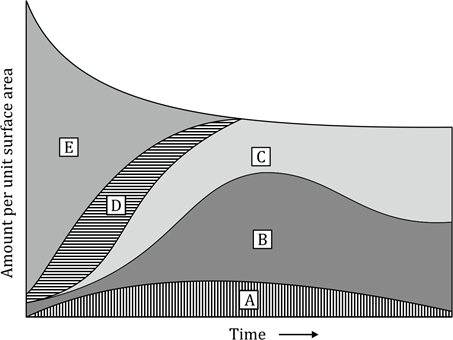
The phosphorus dynamics graph shows how different phosphorus pools change over time during primary succession. The regions (A to E) in the graph correspond to different phosphorus pools as follows:
A. The first region (A) corresponds to plant organic phosphorus (v). This is the phase where phosphorus is accumulated in plants as part of their metabolic processes. The graph shows the buildup of phosphorus in the plants over time, indicating that plant organic phosphorus is the dominant pool at this point.
The second region (B) corresponds to soil organic phosphorus(iv). This pool represents phosphorus stored in the soil's organic matter, which gradually builds up as organic matter decomposes and phosphorus is integrated into the soil.
C. The third region (C) corresponds to occluded inorganic phosphorus (iii). This phase represents phosphorus being trapped in mineral forms in the soil, making it unavailable for plant uptake. As time progresses, more phosphorus becomes occluded in soil minerals.
D. The fourth region (D) corresponds to labile (available) phosphorus (ii). This pool represents phosphorus that is readily available for uptake by plants and microbes. The graph shows an increase in this available form of phosphorus over time as it becomes more accessible.
E. The fifth region (E) corresponds to mineral inorganic phosphorus (i). This pool represents phosphorus in its mineral form, which is not immediately available for plant uptake but contributes to the long-term phosphorus pool in the ecosystem.
Information Booster:
Plant organic phosphorus (v) is phosphorus that is stored in plant tissues, used in biological processes like DNA, RNA, and protein synthesis.
Occluded inorganic phosphorus (iii) is phosphorus trapped in soil minerals, which is less accessible to plants until soil weathering or other processes release it.
Soil organic phosphorus (iv) is phosphorus that accumulates in the soil’s organic matter, eventually becoming available to plants through decomposition and mineralization.
Labile phosphorus (ii) is phosphorus in the soil solution that is readily available to plants and microorganisms for immediate use.
Mineral inorganic phosphorus (i) is phosphorus in a mineralized form, and it accumulates in the soil over time as the ecosystem matures.