Correct option is A
A is correct: Pepsin contains aspartic acid residues in its active site that are essential for its enzymatic activity, which involves peptide bond hydrolysis.
B is incorrect: Pepsin is not rich in lysine residues, and its acidic nature ( pI≈1) does not favor the presence of basic amino acids like lysine.
C is correct: Pepsin hydrolyzes peptide bonds, a characteristic of proteolytic enzymes.
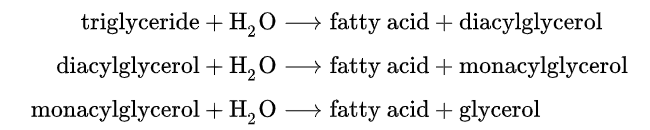
D is incorrect: Pepsin does not degrade fatty acids; this is the role of lipases.
Pepsin is an endopeptidase that breaks down proteins into smaller peptides and amino acids. It is one of the main digestive enzymes in the digestive systems of humans and many other animals, where it helps digest the proteins in food. Pepsin is an aspartic protease, using a catalytic aspartate in its active site.
Pepsin is most active in acidic environments between pH 1.5 to 2.5. Accordingly, its primary site of synthesis and activity is in the stomach (pH 1.5 to 2). In humans the concentration of pepsin in the stomach reaches 0.5 – 1 mg/mL. Pepsin is inactive at pH 6.5 and above, however pepsin is not fully denatured or irreversibly inactivated until pH 8.0.
Lipase refers to a class of enzymes that catalyzes the hydrolysis of fats.