
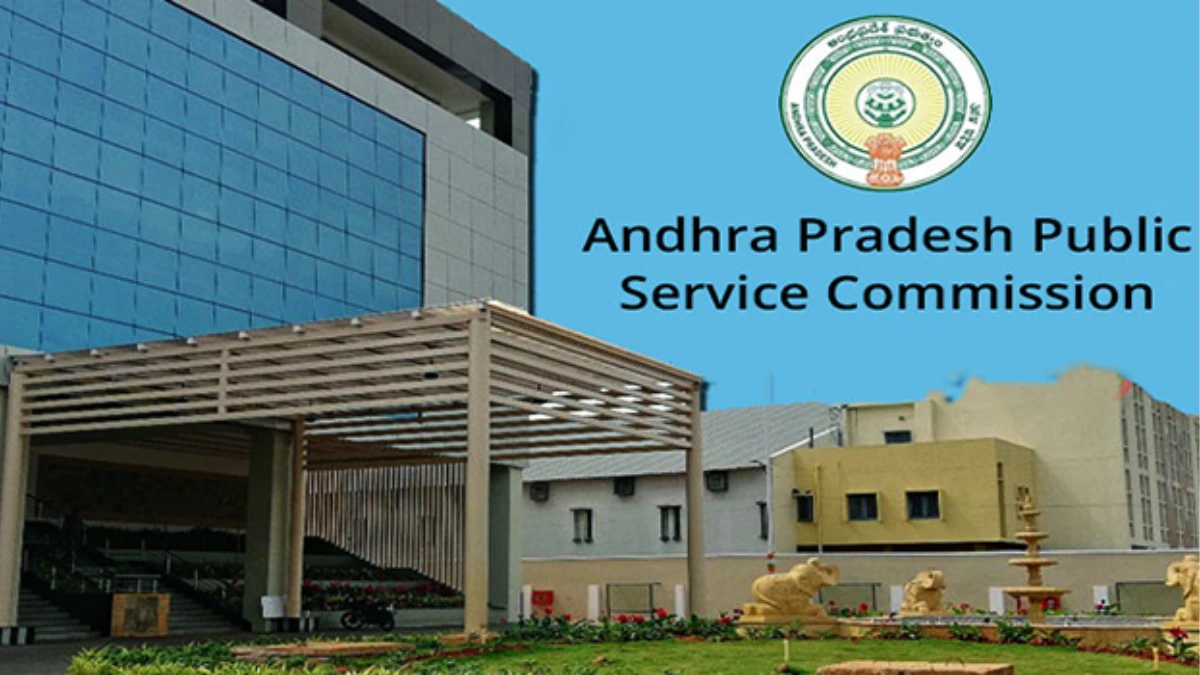
Candidates preparing for the APPSC Group 1 recruitment should clearly understand the APPSC Group 1 Syllabus and Exam Pattern 2026 for their preparation. The syllabus outlines the important subjects and topics that require focused study, while the exam pattern explains the question format, marking scheme, and different stages of selection conducted by the Andhra Pradesh Public Service Commission.
APPSC Group 1 Syllabus and Exam Pattern 2026
For candidates preparing for the APPSC Group 1 Recruitment 2026, the syllabus acts as a roadmap to keep preparation focused and well-organized. Going through the prescribed topics along with previous years’ question papers helps aspirants understand the exam pattern, identify important sections, and gauge the overall difficulty level of the paper conducted by the Andhra Pradesh Public Service Commission. This approach makes it easier to plan studies effectively and build confidence ahead of the examination.
APPSC Group 1 Exam Pattern 2026
The APPSC Group 1 Exam Pattern 2026 includes a multi-stage selection process conducted by the Andhra Pradesh Public Service Commission, starting with a Preliminary Examination, followed by the Main Examination and Interview. The Prelims are objective in nature and serve as a screening stage, while the Mains is descriptive and evaluates candidates’ in-depth understanding of subjects. Understanding the exam structure in advance helps aspirants plan effectively, focus on important areas, and approach each stage with clarity.
| Paper | Subjects | No. of Questions | Marks | Duration |
| Paper 1 | History & Culture; Constitution, Polity, Social Justice & International Relations; Indian & Andhra Pradesh Economy and Planning; Geography | 120 | 120 | 120 Minutes |
| Paper 2 | General Mental Ability; Administrative & Psychological Abilities; Science & Technology; Current Events (Regional, National & International) | 120 | 120 | 120 Minutes |
Key Points (Prelims):
- Objective type (MCQs)
- Negative marking: 1/3rd mark for each wrong answer
- Prelims is a screening stage for shortlisting candidates for the Mains
APPSC Group 1 Mains Exam Pattern 2026
| Paper | Name of Paper | Duration | Marks |
| Paper 1 | Telugu (Qualifying Nature) | 180 Minutes | 150 |
| Paper 2 | English (Qualifying Nature) | 180 Minutes | 150 |
| Paper 3 | General Essay (Contemporary regional, national & international issues) | 180 Minutes | 150 |
| Paper 4 | History, Culture & Geography of India and Andhra Pradesh | 180 Minutes | 150 |
| Paper 5 | Polity, Constitution, Governance, Law & Ethics | 180 Minutes | 150 |
| Paper 6 | Economy & Development of India and Andhra Pradesh | 180 Minutes | 150 |
| Paper 7 | Science, Technology & Environmental Issues | 180 Minutes | 150 |
| Interview | Personal Interview | — | 75 |
Important Notes (Mains):
- Mains is descriptive and conducted in offline mode
- Telugu and English papers are qualifying only (marks not added to merit)
- Final merit is based on five General Studies papers + Interview
APPSC Group 1 Syllabus 2026-Subject Wise
The table below presents the APPSC Group 1 Prelims Syllabus 2026 in a subject-wise format for both Paper 1 and Paper 2. It highlights all major topics from General Studies and General Aptitude.
Paper I – General Studies (120 Questions | 120 Marks | 120 Minutes)
| Section | Topics / Coverage |
| A. History & Culture |
|
| B. Constitution, Polity, Social Justice & International Relations |
|
| C. Indian & Andhra Pradesh Economy & Planning |
|
| D. Geography |
|
Paper II – General Aptitude (120 Questions | 120 Marks | 120 Minutes)
| Section | Topics / Coverage |
| A. General Mental Ability & Psychological Abilities |
|
| B. Science & Technology + Current Events |
|
APPSC Group 1 Syllabus- Download PDF
Candidates can download the APPSC Syllabus 2026 PDF from the official APPSC website to get complete details of the Prelims and Mains syllabus. Downloading the syllabus PDF helps in planned preparation and focused study for the examination
APPSC Group 1 Syllabus PDF- Click To Download
Tips To Prepare For APPSC Group 1 Exam 2026
To prepare well for the APPSC Group 1 Exam 2026, candidates should follow the official syllabus closely, focus on building strong fundamentals, and practice MCQs and answer writing regularly.
- Start with the official syllabus and exam pattern, then break it into weekly study targets for Prelims and Mains.
- Build strong basics in History, Polity, Economy, Geography, Science & Technology, and Current Affairs before moving to advanced topics.
- Read a daily newspaper and make short notes on Andhra Pradesh–specific issues, government schemes, and national developments.
Practice MCQs regularly for Prelims and analyze mistakes to improve accuracy (negative marking makes this critical). - For Mains, focus on answer writing practice structured answers with introductions, body, conclusions, and relevant examples.
- Prepare separate notes for essay topics like governance, economy, environment, and social issues.
- Prepare separate notes for essay topics like governance, economy, environment, and social issues.
- Revise regularly using short, self-made notes instead of starting new material again and again.
- Take mock tests for both Prelims and Mains to improve time management and identify weak areas.
- Give importance to Telugu/English qualifying papers, as they should not be ignored.
- Stay consistent with a realistic study plan and dedicate the final weeks to revision and mock tests.
APPSC Group 1 Selection Process 2026
The APPSC Group 1 selection process is conducted in three stages: Preliminary Exam, Mains Exam, and Interview.
- The Preliminary Exam includes two papers, with 120 questions of 120 marks each. Candidates who qualify the prelims will be eligible to appear for the Mains Exam.
- The Mains Exam consists of seven papers, and each paper carries 150 marks. Candidates who clear the mains exam will be called for the Interview round.
- The final merit list is prepared based on the marks scored in the Mains and Interview.
| Also check |
| APPSC Group 1 Previous Year Question Papers |
| APPSC Group 1 Salary |
 IRB GD Constable Syllabus 2026, Check La...
 DSSSB ASO Syllabus And Exam Pattern 2026...
 Adda247 Job portal has complete information about all Sarkari Jobs and Naukri Alerts, its latest recruitment notifications, from all state and national level jobs and their updates.