
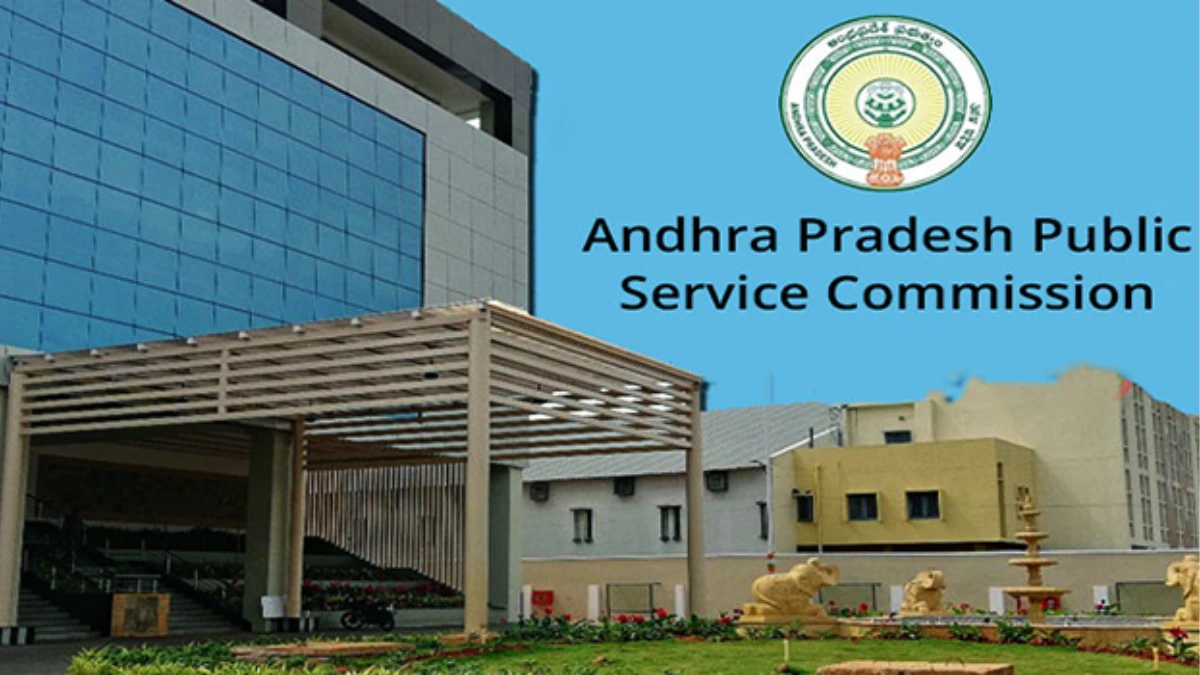
The APPSC Group 1 Syllabus 2026 outlines the subjects and topics included in the Preliminary and Main examinations conducted by the Andhra Pradesh Public Service Commission. Candidates should carefully review the paper-wise syllabus and examination pattern to plan their preparation effectively. The selection process consists of the Preliminary Examination, Main Examination, and Interview/Personality Test. Understanding the syllabus for each stage enables candidates to create a structured study plan, allocate sufficient time to important topics, and prepare according to the requirements of the examination.
APPSC Group 1 Syllabus and Exam Pattern 2026
For candidates preparing for the APPSC Group 1, the syllabus acts as a roadmap to keep preparation focused and well-organized. Going through the prescribed topics along with previous years’ question papers helps aspirants understand the exam pattern, identify important sections, and gauge the overall difficulty level of the paper conducted by the Andhra Pradesh Public Service Commission. This approach makes it easier to plan studies effectively and build confidence ahead of the examination.
Must Check: AP Job Calendar 2026
Must Read: APPSC Group 1 Recruitment 2026
APPSC Group 1 Selection Process 2026
The APPSC Group 1 Selection Process 2026 comprises the following stages:
- Stage 1: Screening Test (Objective Type / OMR Based)
- Stage 2: Main Written Examination
- Stage 3: Interview/Personality Test
The Preliminary Examination is used for screening candidates for the Main Examination. The marks obtained in the Main Examination and Interview are considered for the final selection.
APPSC Group 1 Exam Pattern 2026
The APPSC Group 1 Exam Pattern 2026 includes an objective-type Preliminary Examination and a descriptive Main Examination, followed by the Interview.
APPSC Group 1 Prelims Exam Pattern
The Preliminary Examination has two papers of 120 marks each. Both papers contain objective-type questions, with negative marking for incorrect answers.
- Objective type (MCQs)
- Negative marking: 1/3rd mark for each wrong answer
- Prelims is a screening stage for shortlisting candidates for the Mains
| Paper | Subjects | No. of Questions | Marks | Duration |
| Paper 1 | History & Culture; Constitution, Polity, Social Justice & International Relations; Indian & Andhra Pradesh Economy and Planning; Geography | 120 | 120 | 120 Minutes |
| Paper 2 | General Mental Ability; Administrative & Psychological Abilities; Science & Technology; Current Events (Regional, National & International) | 120 | 120 | 120 Minutes |
APPSC Group 1 Mains Exam Pattern
The Main Examination consists of seven papers. Telugu and English are qualifying papers, while the General Essay and General Studies papers contribute to merit.
| Paper | Name of Paper | Duration | Marks |
| Paper 1 | Telugu (Qualifying Nature) | 180 Minutes | 150 |
| Paper 2 | English (Qualifying Nature) | 180 Minutes | 150 |
| Paper 3 | General Essay (Contemporary regional, national & international issues) | 180 Minutes | 150 |
| Paper 4 | History, Culture & Geography of India and Andhra Pradesh | 180 Minutes | 150 |
| Paper 5 | Polity, Constitution, Governance, Law & Ethics | 180 Minutes | 150 |
| Paper 6 | Economy & Development of India and Andhra Pradesh | 180 Minutes | 150 |
| Paper 7 | Science, Technology & Environmental Issues | 180 Minutes | 150 |
| Interview | Personal Interview | — | 75 |
APPSC Group 1 Syllabus 2026
The APPSC Group 1 Syllabus 2026 is divided into Prelims and Mains. The Preliminary syllabus focuses on General Studies and General Aptitude, whereas the Main syllabus covers descriptive papers on Essay, History, Geography, Polity, Economy, Science and Technology, along with qualifying language papers.
APPSC Group 1 Prelims Syllabus 2026
The APPSC Group 1 Prelims consists of two papers. Paper 1 focuses mainly on General Studies, while Paper 2 includes aptitude, psychological abilities, science and technology, and current affairs.
Paper I – General Studies (120 Questions | 120 Marks | 120 Minutes)
| Section | Important Topics |
|---|---|
| History & Culture | Indus Valley Civilisation, Vedic Age, Mahajanapadas, Jainism and Buddhism, Mauryas, Kushans, Satavahanas, Sangam Age, Gupta Empire, South Indian dynasties, Delhi Sultanate, Vijayanagara and Mughal Empires, Bhakti and Sufi movements, European trading companies, Governor Generals and Viceroys, Revolt of 1857, social reform movements, Indian freedom movement, Gandhi, Sardar Patel, Subhas Chandra Bose, post-independence consolidation, Dr B.R. Ambedkar and reorganisation of states. |
| Constitution, Polity, Social Justice & International Relations | Evolution and features of the Constitution, Preamble, Fundamental Rights, Fundamental Duties, DPSP, constitutional amendments, basic structure, Centre-State relations, Parliament, State Legislatures, federal issues, local governance, constitutional bodies, Panchayati Raj, governance, public policy, statutory and regulatory bodies, human rights, women, SC/ST and child-related issues, India’s foreign policy and international organisations. |
| Indian & Andhra Pradesh Economy and Planning | Economic development after independence, NITI Aayog, growth and distributive justice, HDI, sustainable development, national income, population, poverty, inequality, employment, agriculture, irrigation, MSP, rural development, industries, Make in India, Start-ups, SEZs, energy, economic reforms, WTO, balance of payments, RBI, banking, NPAs, financial markets, SEBI, GST, Centre-State finances, public expenditure and debt. AP-specific areas include the economy after bifurcation, resources, revenues, water issues, infrastructure, IT, e-governance, welfare, AP Reorganisation Act 2014 and related provisions. |
| Geography | Physical geography, earth, climate, oceans, landforms, rocks, minerals, soils, natural vegetation, national parks, population, literacy, migration, urbanisation, social groups, agriculture, industries, services, transport and trade, with focus on the world, India and Andhra Pradesh. |
Paper II – General Aptitude (120 Questions | 120 Marks | 120 Minutes)
| Section | Important Topics |
|---|---|
| General Mental Ability & Psychological Abilities | Logical reasoning, number series, coding-decoding, relationships, Venn diagrams, clocks, calendars, ages, number system, ratio and proportion, averages, HCF and LCM, percentages, profit and loss, simple and compound interest, time and work, time and distance, geometry, basic algebra, data interpretation, data sufficiency, probability, emotional intelligence, social intelligence, decision-making, critical thinking and personality assessment. |
| Science & Technology and Current Events | Science in everyday life, ICT, e-governance, cyber security, space and defence technology, ISRO, DRDO, energy resources, environmental science, biodiversity, climate change, biotechnology, nanotechnology and current events of regional, national and international importance. |
APPSC Group 1 Mains Syllabus 2026-Subject Wise
The APPSC Group 1 Mains Syllabus 2026 consists of seven papers. The Telugu and English papers are qualifying in nature, while the remaining papers are used for merit as prescribed by the Commission.
- Paper-I (General Essay): Three essays (about 800 words each) from current affairs, socio-political/economic/environmental issues, cultural/historical aspects, civic awareness, and reflective topics
- Paper-II (History, Culture, and Geography of India and AP): Pre-historic cultures to modern Indian nationalism, Andhra history from ancient to modern periods, bifurcation impacts, and physical, economic, social, and environmental geography of India and AP
- Paper-III (Polity, Constitution, Governance, Law, and Ethics): Indian constitution, federalism, local governance, judiciary, public administration, good governance, ethics in public service, human values, attitude, emotional intelligence, and basic knowledge of Indian laws (civil, criminal, labour, cyber, and tax laws)
- Paper-IV (Economy and Development of India and AP): Major economic challenges, resource mobilization, budgeting, inclusive growth, agricultural and industrial development, infrastructure, and AP-specific economic development/bifurcation issues
- Paper-V (Science, Technology, and Environmental Issues): Integration of S&T, IT/ICT, space and defence programmes, energy resources, environmental pollution, legislation, biotechnology, nanotechnology, human diseases, and agriculture/animal husbandry biotechnology
APPSC Group 1 Interview 2026
The APPSC Group 1 Interview 2026 is the final stage of the selection process and carries 75 marks. The Personality Test assesses candidates’ overall suitability for administrative responsibilities, including communication, judgement, awareness, leadership and personality.
Candidates should revise current affairs, Andhra Pradesh-specific developments, government schemes, governance, economy and important national and international issues before the interview.
APPSC Group 1 Syllabus 2026 PDF
Candidates can use the APPSC Group 1 Syllabus 2026 PDF to keep the complete Prelims and Mains syllabus available during preparation. Referring to the syllabus regularly can help candidates track completed topics and plan revision systematically.
How to Prepare APPSC Group 1 Syllabus 2026?
Preparing for the APPSC Group 1 Exam 2026 requires a structured approach because the syllabus covers a wide range of subjects, including General Studies, Andhra Pradesh-specific topics, mental ability, current affairs, and other important areas. Candidates should first understand the syllabus and exam pattern, then divide the preparation into manageable sections. The following strategies can help candidates prepare effectively:
- Understand the Syllabus: Go through the complete APPSC Group 1 syllabus and exam pattern before starting preparation. Mark the topics that carry greater importance and identify areas that need more attention.
- Focus on AP-Specific Topics: Give special priority to Andhra Pradesh history, culture, geography, economy, government schemes, current affairs, and state-related developments.
- Build Strong Basics: Read standard school-level textbooks and reliable study material to strengthen concepts in History, Geography, Polity, Economy, and Science before moving to advanced preparation.
- Follow Current Affairs Regularly: Read daily current affairs and revise important national and Andhra Pradesh-related events. Prepare short notes for government schemes, appointments, awards, reports, policies, and important developments.
- Practise Previous Year Papers: Solve APPSC Group 1 previous-year question papers to understand the type, difficulty level, and recurring themes of questions. Analyse mistakes after every practice session.
- Practise Mental Ability Daily: Dedicate regular time to reasoning, percentages, profit and loss, data interpretation, logical reasoning, and other quantitative topics included in the syllabus.
- Revise Frequently: Keep separate short notes for factual topics and revise them at regular intervals. Multiple rounds of revision are more useful than studying a large amount of material only once.
- Take Mock Tests: Once the basic syllabus is covered, start attempting full-length and sectional mock tests. Focus not only on the score but also on accuracy, time management, and questions left unattempted.
- Make a Realistic Study Plan: Divide the available study hours between static subjects, AP-specific topics, current affairs, mental ability, revision, and mock-test practice. Maintain consistency rather than following an unnecessarily lengthy timetable.
| Also check |
| APPSC Group 1 Previous Year Question Papers |
| APPSC Group 1 Salary |


 DSSSB ASO Syllabus And Exam Pattern 2026...
 HP High Court Clerk Syllabus 2026, Check...
 APPSC ASWO Syllabus 2026 & Exam Patt...


 Adda247 Job portal has complete information about all Sarkari Jobs and Naukri Alerts, its latest recruitment notifications, from all state and national level jobs and their updates.