

The Andhra Pradesh Public Service Commission (APPSC) has published the revised syllabus and examination pattern for the Forest Beat Officer (FBO) and Assistant Beat Officer (ABO) Recruitment 2026. The syllabus covers the subjects, key topics, marks allocation, and marking rules applicable to the different stages of recruitment. Candidates should review the Preliminary and Main Examination structures to understand the exam requirements and organise their preparation effectively. The complete subject-wise syllabus and stage-wise exam pattern are outlined below.
APPSC Forest Beat Officer Syllabus 2026
The APPSC FBO and ABO examination syllabus is divided into Part A and Part B for the Screening Test. Part A includes General Studies and Mental Ability, while Part B covers General Science and General Mathematics at the SSC standard. The Main Examination includes a qualifying descriptive essay along with two objective papers.
APPSC FBO and ABO Syllabus Overview
Candidates preparing for the Andhra Pradesh FBO and ABO Exam should be aware of the syllabus and exam pattern.
| Particulars | Details |
|---|---|
| Recruiting Organisation | Andhra Pradesh Public Service Commission |
| Posts | Forest Beat Officer, Assistant Beat Officer |
| Selection Process | Screening Test, Main Examination, Walking Test, Medical Examination |
| Screening Test | Objective Type |
| Screening Test Marks | 150 Marks |
| Screening Test Questions | 150 Questions |
| Screening Test Duration | 150 Minutes |
| Negative Marking | 1/3 mark for each wrong answer |
| Main Examination | Essay + 2 Objective Papers |
Must Check: APPSC Forest Beat Officer Notification 2026
APPSC Forest Beat Officer Syllabus 2026: Screening Test
The APPSC FBO and ABO Screening Test consists of two parts. Each part carries 75 marks, making the total examination 150 marks. The detailed syllabus is given below.
Part A syllabus:
The topics include
- General Science – Contemporary developments in Science and Technology and their implications, including matters of everyday observation and experience, as may be expected of an individual who has passed Intermediate and not made a special study of any scientific discipline.
- Current events – National and Andhra Pradesh-specific
- Indian History – Social, economic, cultural, and political aspects with a focus on AP and National Movement
- Indian Geography – Focus on Andhra Pradesh
- Indian Polity & Economy – including the country’s political system- rural development Planning and economic reforms in India.
- Mental Ability – Reasoning & inferences
- Disaster Management – Types, causes, effects, mitigation, and strategies
- Sustainable Development & Environmental Protection
Part B – General Science (SSC Standard) (75 Marks)
- Sources of Energy: Renewable and Non-renewable sources of energy.
a) Renewable sources: Solar energy (Solar Cooker, Solar water heater, Solar Cell); Wind energy, Hydro energy (Tides of Ocean, Hydroelectric), Geothermal wood, Biogas, Hydrogen and Alcohol.
b) Non-renewable sources: – Fossil fuel (Coal, Petroleum and Natural gas), conditions for combustion choice of a good fuel, fuel efficiency, nuclear fusion and nuclear fission, chain reaction, nuclear reactor (basic principles; safety measures), advantages and hazards of nuclear energy, mangal Turbine (Fuel less turbine)- Principle, working and uses.
2. Living World
- Life Processes such as nutrition, modes of nutrition – Autotrophic, heterotrophic,
- Parasitic and saprophytes.
- Nutrition of plants – Photosynthesis & factors affecting the photosynthesis
- Nutrition in animals like Amoeba & grasshopper.
- Human digestive system.
- Respiration in Plants and Animals.
- Type of respiration- Aerobic and anaerobic respiration.
- Respiration through Skin, Gills, trachea lungs. (Earthworm, Fishes, Grasshopper and Human)
- Knowledge of structure and function of human respiratory system.Life processes (nutrition, respiration)
- Plant & animal systems (photosynthesis, digestion, respiration types)
3. Transportation & Excretion
- Transportation in Plants and animals. (Water, minerals, food).
- Transportation in Human – Composition and function of blood, clotting of blood, blood Groups, transfusion of blood, heart, structure and functions of blood vessel (elementary knowledge) and lymphatic system.
- Excretion in animals (Amoeba and earth worm), excretion in human, Osmoregulation.
- Nervous system and hormones in Human- reflex action.
4. Reproduction, Heredity & Evolution
A) Reproduction and growth:
- Types of Reproduction:
- Asexual: Fission budding, regeneration, vegetative propagation in plants, cutting, grafting and layering, Parthenogenesis.
- Sexual reproduction and its significance- reproductive parts of plants, pollination and fertilization.
- Human reproductive system, mental and physical change during human development.
B) Heredity and Evolution:
- Heredity and Variations,
- Physical basis of Heredity-chromosomes; D.N.A. (elementary knowledge), Genes, Sex determination.
- Elementary knowledge of evolution.
- Asexual/sexual reproduction, heredity, DNA, genes, evolution basics
5. Natural Resources
a)Metals: Ores and minerals, metallurgy, Enrichment of ores, extraction of metal from ores, refinement and purification of metal with reference to Iron and aluminium, Activity series of metals, general properties and corrosion of metals, Alloys, Components, properties and uses of steel; stainless steel, Brass, magnalium, alloys of gold.
b) Non-metals: Importance and general properties, method of preparation of hydrogen, properties and its uses, manufacturing of ammonia (Only reactions), properties and uses, sulphur – occurrence, extraction, properties (allotropy and effect of heat) and uses. Properties and uses of Sulphur dioxide, manufacture of sulphuric acid (Only reactions), its properties and uses.
6. Carbon Compounds: Functional groups (only oxygen containing) Alcohols -preparation, properties and uses, preparation methods, properties and uses of formaldehyde, Acetone and Acetic acid. Some common synthetic polymers, soaps and detergents.
7. Environment and Environmental Problems:
a) Causes, prevention and control of environmental problems, Land, water, Air, noise pollution and accumulation of waste materials.
b) Biodegradable and Non-biodegradable materials,
c) Interaction between biotic and non-biotic components of ecosystem.
d) Ecological balance, efforts and measures for conservation of environment.
e) Process of water management and conservation:
- Rain water harvesting
- Ground water recharging
- Conservation of forests
- Land management and conservation
- Public awareness for environmental protection
- Green House effect
- Global warming
- Ozone layer depletion
- Acid rain.
8. Ethnobotany
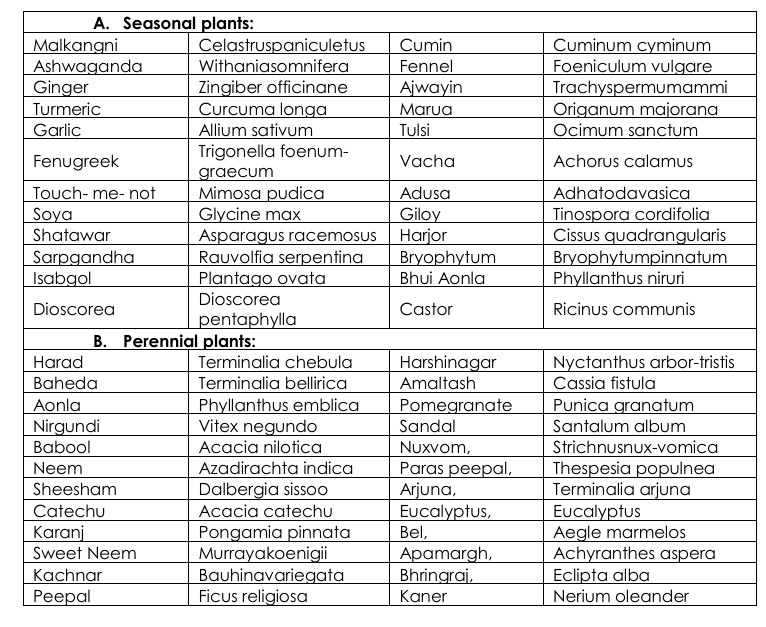
a) Morphological study of medicinal plants, their classification on the basis of their use and life span.
b) Study of botanical names and medicinal use of the following seasonal and perennial plants.
General Mathematics (SSC Standard)
General Mathematics is based on the prescribed SSC standard. The major areas of preparation are given below.
1. Arithmetic
- Number System-Natural numbers, Integers.
- Rational and Real numbers.
- Fundamental operations, addition, subtraction, multiplication, division, square roots, Decimal fractions.
- Unitary method-time and distance, time and work, percentages, applications to simple and compound interest, profit and loss, ratio and proportion, variation.
- Elementary Number Theory – Division algorithm, Prime and composite numbers. Tests of divisibility by 2,3,4,5,9 and 11.
- Multiples and factors, factorisation Theorem. H.C.F. and L.C.M. Euclidean algorithm. Logarithms to base 10, laws of logarithms, use of logarithmic tables.
2. Geometry
Lines and angles, Plane and plane figures.
Theorems on
a) Properties of angles at a point.
b) Parallel lines.
c) Sides and angles of a triangle.
d) Congruency of triangles.
e) Similar triangles.
f) Concurrence of medians and altitudes.
g) Properties of angles, sides and diagonals of a parallelogram, rectangle and square.
h) Circles and its properties including tangents and normals.
i) Loci.
3. Statistics
- Collection and tabulation of statistical data,
- Graphical representation – frequency polygons, histograms, bar charts, pie charts etc.
- Measures of central tendency.
APPSC FBO ABO Exam Pattern 2026
The APPSC FBO and ABO Screening Test is objective in nature and consists of 150 questions for 150 marks. Each question carries one mark, and 1/3 mark is deducted for every incorrect answer. The total duration is 150 minutes.
APPSC FBO ABO Prelims Exam Pattern
The preliminary examination is an objective type. The exam pattern consists of two parts i.e Part A and B. Each question carries 1 mark, and there is negative marking for each incorrect answer i.e -1/3rd. The duration of the exam is 150 minutes
| Parts | Subjects | Questions | Marks | Duration |
| Part A | General Studies & Mental Ability | 75 | 75 | 150 minutes |
| Part B | General Science& General Mathematics | 75 | 75 |
APPSC FBO ABO Mains Exam Pattern
Candidates shortlisted for the Main Examination have to appear for a qualifying descriptive essay and two objective papers. The essay can be written in English, Telugu or Urdu. The two objective papers carry 100 marks each and are counted for the merit.
| Paper | Subject / Type | Questions | Marks | Duration | Qualifying |
|---|---|---|---|---|---|
| Essay | Writing in English, Telugu, or Urdu (Descriptive) | 1 Question | 50 Marks | 30 Minutes | Qualifying (Not scored) |
| Paper 1 | General Studies & Mental Ability (Objective) | 100 Questions | 100 Marks | 100 Minutes | Scored |
| Paper 2 | General Science & General Mathematics (Objective) | 100 Questions | 100 Marks | 100 Minutes | Scored |
| Total 200 Objective + 1 Essay | |||||
APPSC Forest Beat Officer Syllabus PDF
Candidates preparing for the APPSC Forest Beat Officer Exam 2026 can now download the official syllabus PDF, which serves as a crucial tool for smart and effective preparation. The APPSC Forest Beat Officer Syllabus 2026 PDF outlines all the important topics, enabling aspirants to prioritize high-weightage subjects, manage their time efficiently, and reduce last-minute exam stress. This downloadable syllabus is designed to support focused study by clearly defining the subject-wise content for both Prelims and Mains exams.
APPSC Forest Beat Officer Preparation Tips
You can follow these simple and effective strategies to prepare for the APPSC Forest Beat Officer Exam:
- Know the Syllabus: Focus on General Studies, General Science, and Mathematics, with special attention to scoring topics.
- Study Smart: Cover Science from Class 8–10 books and focus on AP History, Geography, schemes, forests, and current affairs.
- Practise Maths: Solve arithmetic, geometry, and statistics questions daily to improve speed and accuracy.
- Attempt Mocks: Take regular mock tests and analyse mistakes, especially due to negative marking.
- Prepare for PET: Include regular walking/jogging sessions to build stamina for the physical test.
- Solve PYQs: Practise previous APPSC FBO, ABO, and FSO papers and revise important notes regularly.
| Also check |
| APPSC Forest Beat Officer Exam Date 2025 |
| APPSC Forest Section Officer Syllabus |
| APPSC Forest Beat Officer Salary |
| APPSC Forest Beat Officer Previous Year Question Papers |




 Odisha Police Constable Syllabus & E...
 RBI Grade A Syllabus 2026, Check Exam Pa...
 TNPSC Group 4 Syllabus 2026, Download Ex...


 Adda247 Job portal has complete information about all Sarkari Jobs and Naukri Alerts, its latest recruitment notifications, from all state and national level jobs and their updates.