Table of Contents
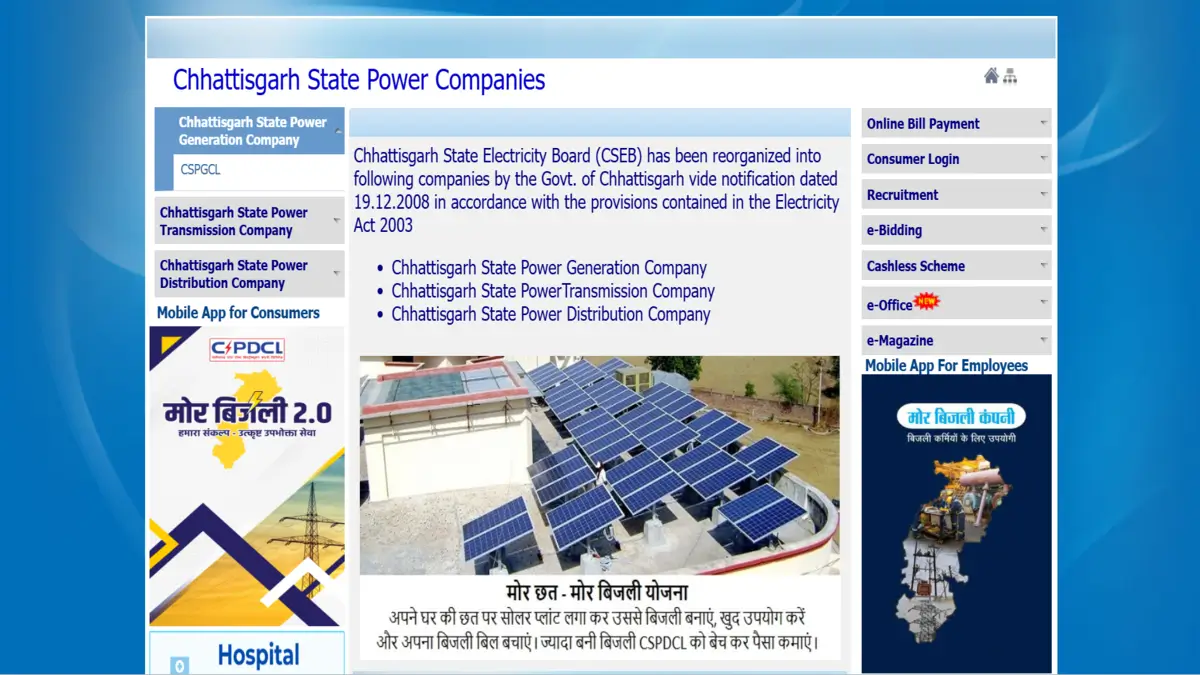
The Chhattisgarh State Power Distribution Company Limited (CSPDCL) has announced the Assistant Engineer (AE) Recruitment 2026, offering an important opportunity for engineering graduates looking for government jobs. Candidates preparing for this examination should understand the complete CSPDCL AE Syllabus 2026 and exam pattern before starting their preparation.
The CSPDCL AE examination covers two major areas: General Awareness and the candidate’s core engineering subject. The technical section carries the highest weightage, making it important for candidates to revise their engineering fundamentals and practise subject-wise questions.
CSPDCL AE Syllabus 2026: Overview
Candidates can check the important details of the CSPDCL Assistant Engineer examination in the table below.
| Particulars | Details |
|---|---|
| Organisation | Chhattisgarh State Power Companies |
| Post Name | Assistant Engineer (AE) |
| Examination Name | CSPDCL AE Exam 2026 |
| Advertisement Number | 1/2026 |
| Total Vacancies | 152 |
| Exam Mode | Computer-Based Test (CBT) |
| Total Questions | 100 |
| Total Marks | 100 |
| Exam Duration | 2 Hours |
| Technical Questions | 80 |
| General Section Questions | 20 |
| Selection Process | CBT, Document Verification and Interview |
| Exam Date | To be announced |
| Official Website | cspc.co.in |
CSPDCL AE Exam Pattern 2026
Understanding the exam pattern is the first step towards effective preparation. It helps candidates understand the number of questions, marks distribution and time available for the examination.
As per the available examination scheme, the CSPDCL AE CBT consists of 100 objective-type questions carrying 100 marks. The paper is divided into two sections.
| Section | Subject | Questions | Marks |
|---|---|---|---|
| Section A | General Knowledge, Reasoning and Aptitude | 20 | 20 |
| Section B | Concerned Engineering Discipline | 80 | 80 |
| Total | 100 | 100 |
Important Points About the Exam Pattern
- The examination will be conducted in Computer-Based Test (CBT) mode.
- The question paper will contain 100 multiple-choice questions.
- Candidates will get 120 minutes to complete the examination.
- The technical section carries 80% of the total marks.
- The general section carries the remaining 20% of the marks.
CSPDCL AE Syllabus 2026: Subject-Wise Topics
The CSPDCL Assistant Engineer syllabus includes General Knowledge, Reasoning and Arithmetic, along with the technical subject related to the candidate’s engineering discipline.
Candidates should give sufficient time to both sections. However, since the technical section carries 80 marks, core engineering preparation should remain a major priority.
1. CSPDCL AE General Knowledge Syllabus 2026
The General Knowledge section tests candidates’ awareness of national events, Indian governance and Chhattisgarh’s history, geography and culture.
| Topics | Important Subtopics |
|---|---|
| Current Affairs | National and International Current Affairs |
| Indian Constitution | Constitution of India, Fundamental Rights and Political System |
| Indian Administration | Administrative System and Governance |
| Chhattisgarh Geography | Geographical Location, Natural Resources and Industries |
| Chhattisgarh History | Ancient History and Freedom Movement |
| Chhattisgarh Culture | Traditions, Cultural Heritage and Important Tourist Places |
| State Administration | Administrative Structure and Education |
2. CSPDCL AE Reasoning and Arithmetic Syllabus
The Reasoning and Arithmetic section is common to candidates across engineering disciplines. This section checks logical thinking, numerical ability and problem-solving skills.
| Reasoning Topics | Arithmetic Topics |
|---|---|
| Coding and Decoding | Basic Calculations |
| Number Series | Multiplication |
| Alphabet Series | Division |
| Non-Verbal Reasoning | Addition and Subtraction |
| Direction Test | Numerical Reasoning |
| Blood Relations | Arithmetic Problems |
| Decision Making | Number-Based Questions |
| Clocks and Calendars | – |
| Number Ranking | – |
| Cube and Dice | – |
| Mirror Images | – |
| Embedded Figures | – |
3. CSPDCL AE Civil Engineering Syllabus 2026
Candidates appearing for the Assistant Engineer Civil examination should focus on the major subjects of Civil Engineering. The syllabus includes surveying, construction materials, structural engineering, hydraulics, transportation and other core subjects.
| Subject | Important Topics |
|---|---|
| Surveying | Chain Surveying, Compass Surveying, Levelling, Contouring, Plane Table Surveying, Theodolite and Tacheometry |
| Construction Materials | Bricks, Cement, Aggregates, Concrete, Testing of Materials and IS Specifications |
| Transportation Engineering | Highway Alignment, Highway Geometrics, Pavement Materials, Road Construction and Bridges |
| Hydraulics | Hydrostatics, Bernoulli’s Theorem, Continuity Equation, Flow Through Pipes, Venturimeter and Weirs |
| Geotechnical Engineering | Soil Classification, Index Properties, Permeability, Shear Strength, Earth Pressure and Bearing Capacity |
| Hydrology | Hydrological Cycle, Rainfall, Infiltration, Evaporation, Runoff and Hydrographs |
| Water Resource Engineering | Reservoirs, Dams, Spillways, Canals, Irrigation Systems and Water Distribution |
| Public Health Engineering | Water Demand, Water Quality, Water Treatment, Sewage Collection and Drainage |
| Structural Engineering | Stress and Strain, Bending Moment, Shear Force, Deflection, RCC Design and Retaining Walls |
| Estimating and Costing | Rate Analysis, Building Estimates, Earthwork, Valuation and Depreciation |
| Construction Management | Project Planning, Gantt Charts, CPM, Measurement, Billing and Construction Organisation |
4. CSPDCL AE Electrical Engineering Syllabus 2026
Electrical Engineering candidates should focus on fundamental concepts, electrical machines, power systems, network theory and electrical measurements.
| Subject | Important Topics |
|---|---|
| Electrical Circuits and Network Theory | Network Theorems, AC and DC Circuits, Circuit Analysis |
| Electrical Machines | Transformers, DC Machines, Induction Motors, Synchronous Machines |
| Power Systems | Power Generation, Transmission, Distribution and Protection |
| Power Generation | Thermal, Hydro, Nuclear and Renewable Energy |
| Transmission and Distribution | Transmission Lines, Substations, Distribution Systems and Power Factor |
| Electrical Measurements and Instrumentation | Measuring Instruments, Energy Meters, Measurement Errors |
| Control Systems | Feedback Systems, Stability, Transfer Functions and Block Diagrams |
| Power Electronics | Rectifiers, Inverters, Converters and Choppers |
| Analog and Digital Electronics | Diodes, Transistors, Amplifiers, Logic Gates and Digital Circuits |
| Electrical Materials | Conductors, Insulators, Magnetic Materials and Dielectrics |
| Utilisation of Electrical Energy | Electric Traction, Illumination, Heating and Electric Drives |
| Basic Electrical Engineering | Ohm’s Law, Kirchhoff’s Laws, Electrical Power and Energy |
5. CSPDCL AE Mechanical Engineering Syllabus 2026
Mechanical Engineering candidates should revise the important subjects studied during their B.E./B.Tech. course.
| Subject | Important Topics |
|---|---|
| Engineering Mechanics | Force Systems, Equilibrium, Friction and Motion |
| Strength of Materials | Stress, Strain, Bending Moment, Shear Force and Torsion |
| Theory of Machines | Mechanisms, Gears, Flywheel, Governors and Vibrations |
| Machine Design | Design of Machine Elements, Bearings, Shafts and Gears |
| Thermodynamics | Laws of Thermodynamics, Entropy, Heat Engines and Cycles |
| Fluid Mechanics | Fluid Properties, Bernoulli’s Equation, Flow Through Pipes and Pumps |
| Heat Transfer | Conduction, Convection, Radiation and Heat Exchangers |
| Manufacturing Processes | Casting, Welding, Machining, Forming and Metal Cutting |
| Industrial Engineering | Production Planning, Inventory Control and Work Study |
| Refrigeration and Air Conditioning | Refrigeration Cycles, Compressors and Psychrometry |
| Power Plant Engineering | Thermal Power Plants, Hydroelectric Plants and Nuclear Power |
| Engineering Materials | Material Properties, Steel, Alloys and Heat Treatment |
6. CSPDCL AE Electronics and Telecommunication Engineering Syllabus 2026
Candidates from Electronics and Telecommunication Engineering should prepare the following important subjects:
| Subject | Important Topics |
|---|---|
| Electronic Devices and Circuits | Diodes, Transistors, FETs and Semiconductor Devices |
| Analog Electronics | Amplifiers, Oscillators, Feedback Circuits and Filters |
| Digital Electronics | Logic Gates, Boolean Algebra, Flip-Flops and Counters |
| Network Theory | Network Theorems, Circuit Analysis and AC/DC Networks |
| Signals and Systems | Continuous and Discrete Signals, Fourier and Laplace Transforms |
| Communication Systems | Analog Communication, Digital Communication and Modulation |
| Electromagnetic Theory | Electromagnetic Waves, Fields and Waveguides |
| Microprocessors and Microcontrollers | 8085, 8086, Microcontroller Architecture and Programming |
| Control Systems | Transfer Functions, Stability and Feedback Control |
| Electronic Measurements and Instrumentation | Measuring Instruments, Sensors and Transducers |
| Integrated Circuits | Operational Amplifiers, IC Applications and Linear Circuits |
7. CSPDCL AE Computer Science and Information Technology Syllabus 2026
Candidates appearing from Computer Science and Information Technology backgrounds should revise the following technical subjects:
| Subject | Important Topics |
|---|---|
| Programming and Data Structures | C, C++, Arrays, Linked Lists, Stacks, Queues and Trees |
| Algorithms | Sorting, Searching, Complexity Analysis and Graph Algorithms |
| Database Management Systems (DBMS) | SQL, Normalisation, Keys, Transactions and Relational Models |
| Operating Systems | Process Management, Memory Management, Scheduling and Deadlocks |
| Computer Networks | Network Models, TCP/IP, Routing, Switching and Network Security |
| Computer Organisation and Architecture | CPU, Memory Organisation, Instruction Sets and I/O Systems |
| Software Engineering | SDLC, Software Testing, Design Models and Project Management |
| Theory of Computation | Finite Automata, Regular Expressions, Grammars and Turing Machines |
| Compiler Design | Lexical Analysis, Parsing, Syntax Analysis and Code Generation |
| Digital Logic | Boolean Algebra, Logic Gates, Combinational and Sequential Circuits |
| Discrete Mathematics | Set Theory, Relations, Functions, Graph Theory and Logic |
| Web Technologies and IT Fundamentals | HTML, CSS, JavaScript, Internet Concepts and Information Technology Basics |
CSPDCL AE Marking Scheme 2026
The marking scheme helps candidates understand how their answers will be evaluated. As per the available 2026 recruitment exam information, the marking details are as follows:
| Particulars | Details |
|---|---|
| Correct Answer | +1 Mark |
| Incorrect Answer | -0.25 Mark |
| Unattempted Question | 0 Marks |
| Total Marks | 100 |
| Exam Duration | 120 Minutes |
How to Prepare for the CSPDCL AE Exam 2026?
A proper study plan can help candidates cover the syllabus without missing important topics. Here are some useful preparation tips:
- Understand the Syllabus: Start by checking the topics related to your engineering branch. Divide the syllabus into smaller sections.
- Focus on Technical Subjects: Since 80 questions are from the professional subject, give more preparation time to core engineering topics.
- Prepare Chhattisgarh GK: Study the state’s history, geography, culture, important industries and current affairs.
- Practise Reasoning and Aptitude: Solve questions on number series, coding-decoding, arithmetic and logical reasoning every day.
- Revise Important Formulas: Maintain a separate notebook for engineering formulas, definitions and important concepts.
- Attempt Mock Tests: Take regular mock tests to improve speed, accuracy and time management.
- Solve Previous Year Questions: Practise relevant engineering questions to understand the difficulty level and question patterns.
Suggested Daily Study Plan
| Subject | Daily Time |
|---|---|
| Technical Subject | 3 Hours |
| General Knowledge | 45 Minutes |
| Reasoning and Aptitude | 45 Minutes |
| English and Hindi | 30 Minutes |
| Revision and Practice | 1 Hour |
| Total | 6 Hours |
CSPDCL AE Selection Process 2026
The selection process for Assistant Engineer recruitment includes the following stages:
- Computer-Based Test (CBT)
- Document Verification
- Personal Interview
FAQs on CSPDCL AE Syllabus 2026
Q1. How many questions are asked in the CSPDCL AE Exam 2026?
A. The CSPDCL AE examination consists of 100 objective-type questions carrying 100 marks.
Q2. What is the duration of the CSPDCL Assistant Engineer examination?
A. Candidates will get 2 hours (120 minutes) to complete the CBT.
Q3. How many questions are asked from the technical subject?
A. The technical section consists of 80 questions carrying 80 marks.
Q4. How many questions are asked from General Awareness and Aptitude?
A. The general section consists of 20 questions covering areas such as GK, English, Hindi, reasoning and quantitative ability.
Q5. Is there negative marking in the CSPDCL AE Exam 2026?
A. The available 2026 recruitment information indicates a negative marking of 0.25 marks for each incorrect answer. Candidates should confirm this from the official examination instructions.
Q6. Which subjects are included in the CSPDCL AE Civil syllabus?
A. The Civil Engineering syllabus includes Surveying, Building Materials, Structural Engineering, Hydraulics, Geotechnical Engineering, Transportation Engineering, Hydrology and Environmental Engineering.
Q7. What are the important topics for CSPDCL AE Electrical Engineering?
A. Electrical Machines, Power Systems, Network Theory, Electrical Measurements, Control Systems and Power Electronics are important preparation areas.
Q8. Is the CSPDCL AE syllabus the same for all engineering branches?
A. No. The general section is common, while the technical syllabus differs according to the candidate’s engineering discipline.
Q9. What is the selection process for CSPDCL AE Recruitment 2026?
A. The selection process includes a Computer-Based Test, Document Verification and Personal Interview.



 Assam Rifles Recruitment 2026 Out, Apply...
 UPSSSC JE Recruitment 2026 Out, 1,536 Va...
 CSPDCL JE Syllabus 2026, Check Exam Patt...