
Best Schools in Delhi
Delhi is among the best cities to live in India. Best Schools in Delhi are the one of the Best Schools in India. Schools are one of the first things a family looks for when relocating, and Delhi boasts some of the greatest ones in the nation.
Top 10 Best Schools in Delhi Near Me Name List
Following is the list of top 10 best schools in Delhi.
First Best Schools in Delhi: Modern School
The highly esteemed co-ed Modern School was founded in 1920 and is consistently rated among the best schools. It is associated with CBSE and provides curriculum for grades 6 through 12. The faculty at the school is highly qualified, and there are 1:35 teachers to students. There are two libraries in the school, one for juniors and one for seniors. They also have a medical area, canteen, and CD library in addition to this. The school even features a technological block that houses, to name a few, the Departments of Ceramic Design and Pottery, Electronics & Robotics, Fashion and Jewellery Designing, Home Science & Interiors, and Photography.
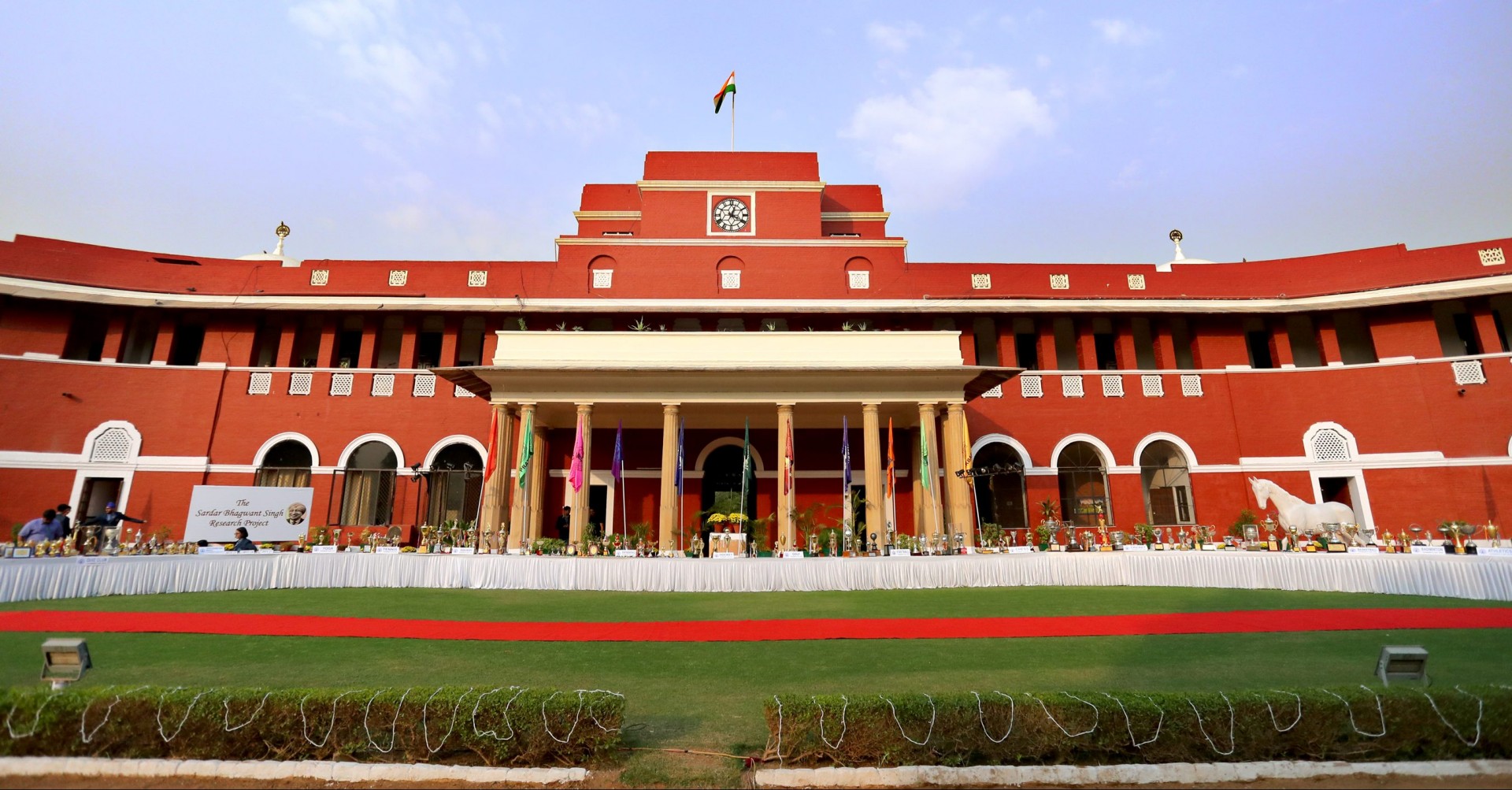
2nd Best Schools in Delhi: The British School New Delhi
Even without Delhi, the British school is one of the best foreign institutions in the nation. This 57-year-old non-profit school, which received the Top British International School Award in 2018, has been offering high-quality education to the many expatriate and local families by utilising the best aspects of a culturally varied society. You’ll want to enrol your children here because of the stunning facilities, excellent student-teacher contact, extracurricular activities, and even the air purifying system that is in place.
3rd Best Schools in Delhi: Shiv Nadar School
Shiv Nadar School has been at the top of the list of educational institutions for a while now and is well known for making waves in the K–12 (Kindergarten–Grade 12) education sector in India. They intend to build a pan–Indian chain of excellent schools that will give kids a chance to succeed and emerge as leaders in the quickly evolving modern world. So register your kids for admissions as soon as possible! The school is now even offering the Cambridge International General Certificate of Secondary Education (IGCSE), for students aged 14 to 16.
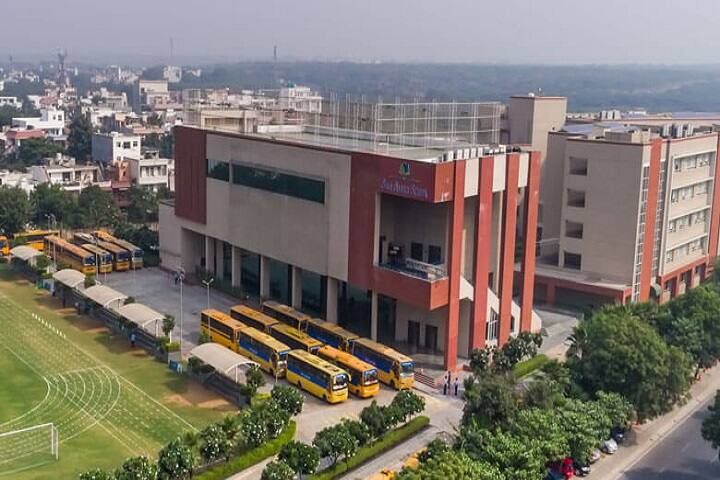
4th Best Schools in Delhi: The Shri Ram School
In Delhi, this school offers lessons for kindergarten through fifth grade, and for grades sixth through twelfth (Gurgaon). It provides its students with the best resources in addition to an innovative and successful curriculum. Instead of learning through tests, students are instead assessed based on their exploration of their surroundings and their comprehension of fundamental mathematical and scientific concepts through various creative projects and methods.
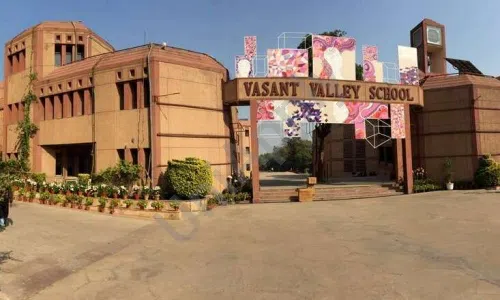
5th Best Schools in Delhi: Vasant Valley School
One of the top universities in the nation is this one. The school is connected with CBSE and offers education for students in grades 1 through 12. Along with supporting students’ academic success, the school offers extracurricular activities like robotics, quizzing, music, and the arts. Since its founding in 1990, the school has grown to include more than 1300 students.
6th Best Schools in Delhi: Heritage Xperiential Learning School
This should be the school at the top of your list if you’ve been thinking about giving your ward a top-notch education. At the primary and high school levels, they adhere to the PYP (Primary Years Programme) and IBDP (International Baccalaureate Diploma Programme). Heritage Xperiential School will provide your child with a learning atmosphere unlike any other with its expansive, 12 acre, completely air-conditioned campus, enormous swimming pool, basketball court, and football field.

7th Best Schools in Delhi: Sanskriti School
The Civil Services Society, which is made up of the wives of Indian civil officers, planned and founded Sanskriti School in 1996. Today, the school has about 2500 pupils and is organised into Junior, Middle, and Senior Schools. There are very spacious classrooms, libraries for the junior, middle, and senior sections, scientific labs, home science labs, computer labs, math labs, etc. Students that attend this school develop as people in addition to learning new things.
8th Best Schools in Delhi: The Ardee School
The Ardee School, a far more recent addition to Delhi’s elite schools, opened its doors as a secular, child-focused co-educational day-boarding institution in New Friends Colony in 2017. They are invested in preparing their children for community service and the green movement because they think that students must be the change they wish to see in the world. In addition to the National Curriculum of England and Wales and the International Cambridge Curriculum, this very remarkable school also offers the IGCSE beginning in the tenth grade.
9th Best Schools in Delhi: Pathways World School
The Pathways World School is a beautiful educational institution with locations throughout lush vegetation. Additionally, it has been named the greatest international school network in North India, offering the best instruction, facilities, faculty, and career preparation. The International Baccalaureate Organization of Geneva’s Primary Years, Middle Years, and Diploma Programs are taught at this IB school, which opened its doors in 2013. This IB school uses the Multiple Intelligences approach, created by Dr. Howard Gardner of Harvard University.
10th Best Schools in Delhi: Delhi Public School
High academic standards, highly qualified faculty, a vibrant learning atmosphere, and first-rate facilities are some of the school’s most well-known attributes. The learning environment at the school is excellent for encouraging pupils to think creatively and grow into confident adults. Students in grades 6 through 12 are enrolled at this location. The 10th, 11th, and 12th grades all offer science, commerce, and humanities courses.

Best Schools in India 2023- Check CBSE, Govt, ICSE List, Fees
Top 5 Best Schools in Delhi for CBSE Board Education
Following are the Top 5 CBSE Best schools in Delhi:
1. CBSE Best Schools in Delhi: Ravindra Public School
A pioneering school in North-West Delhi, Ravindra Public School is located in Pitampura’s SD/QD blocks, next to the T.V. Tower. The school, which bears the name of its founder, Late Sh. Ravindra Malhotra Ji, a brilliant educationist and visionary, is currently being handled with skill by his illustrious son, Sh. Sanjeev Malhotra. Eminent personality Late Shri Ravindra Malhotra Ji formed the Sushila Devi Ram Lal Memorial Society in 1979. The organisation is registered under the Society Act of 1860.
2. CBSE Best Schools in Delhi: Gitarattan Jindal Public School
Under the direction of the Rohini Educational Society, the Gitarattan Jindal Public School in Rohini was established in 1988. The school is conveniently close to the community, accessible to the Delhi Metro, and situated in a centralised region. The building is covered in CCTV cameras, and our nerve centre keeps an eye on the systems.
3. CBSE Best Schools in Delhi: Mayur Public School
Mayur Public School can be proud of itself since we at Mayur think that a student’s career is primarily shaped by the quality of their education, with all other factors being considered as ancillary. Mayur Public School has become one of Delhi’s most prestigious, best, and top CBSE schools over the years. The senior secondary public school was established in 1989 and has the motto “Service before self.” It is an autonomous, recognised institution.
4. CBSE Best Schools in Delhi: Rajdhani Public School
In Delhi’s north-west, Rajdhani Public School is located on one acre of land and has a good infrastructure. The Rajdhani Educational & Welfare Society is in charge of the school. The school is accredited by the Directorate of Education, Government of NCT, Delhi, and is associated with the Central Board of Secondary Education (CBSE), an independent body overseen by the Ministry of Human Resource Development, Government of India, up to the Secondary level.
5. CBSE Best Schools in Delhi: Vardhman Shiksha Mandir
In the centre of Delhi, in Darya Ganj, is the famed co-educational English-medium school VARDHMAN SHIKHA MANDIR. Under the direction of the Jain Society for the Protection of Orphans of India, it is a Jain Minority Institution. It is one of the Best CBSE Schools in Delhi and is recognised by the Directorate of Education Delhi. The school is also associated with the Central Board of Secondary Education (CBSE).
Top 5 ICSE Best Schools in Delhi
Following are the Top 5 ICSE Best schools in Delhi:
1. ICSE Best Schools in Delhi: The Frank Anthony Public School
One of India’s first schools, the Frank Anthony Public School, was established in 1860. It adheres to the ICSE syllabus for the Indian School Certificate Examinations. The Frank Anthony Public School has excellent facilities and a lot of infrastructure, which promotes the kids’ overall development. It is also regarded as one of Delhi’s top ICSE schools.
2. ICSE Best Schools in Delhi: Mount St Mary’s School
The St.Patricks Society founded Mount St. Mary’s School in 1963, and it is currently under its management. The school’s curriculum, which is focused on the concepts of shared responsibility, love, and compassion, fosters intellectual development and talent. The Christian pupils also receive religious instruction, and they are instructed to go to mass on the first Friday of each month.
3. ICSE Best Schools in Delhi: Swami Hariharanand Public School
One of the top ICSE schools in Delhi is Swami Hariharanand Public School. The education of Swami Hariharanand Public School has a strong track record. It encourages students to be responsible citizens of the nation while providing them with first-rate amenities.
4. ICSE Best Schools in Delhi: The British School, New Delhi
One of Delhi’s reputable and progressive schools is The British School New Delhi. The curricular structure for the school makes it clear that it supports a student body that is multicultural and has an open mind. For their ingenuity and leadership, the British school has won numerous important educational honours.
5. ICSE Best Schools in Delhi: Little Flower Public School, Vijay Park Yamuna Vihar
The Little Flower Public School was founded in 1975. Parents love this school and consider it to be the best CBSE school in Delhi’s Yamuna Vihar neighbourhood. Little Flower Public School encourages pupils to build their mental and physical endurance through a variety of physical activities.






 PSEB Class 8th Result 2026 Release Date,...
 RBSE 12th Result 2026 Released, Check Sc...
 DDU Result 2026 Out, Check Even Semester...