SSC JE Electrical Questions with Detailed Solutions

Get SSC JE Electrical Questions to prepare for your upcoming exam. Solve the most expected questions and detailed solutions that can be asked in the exam.

Important SSC JE Electrical Questions

Q1.

​In CE configuration, the collector supply voltage VCC=10 V, and RC=8 kΩ.Determine the Quiescent point Q for zero signal if the base current is IB=15 μA and β=40.\text{In CE configuration, the collector supply voltage } V_{CC} = 10\,\text{V}, \text{ and } R_C = 8\,\text{k}\Omega. \\[4pt]\text{Determine the Quiescent point Q for zero signal if the base current is } I_B = 15\,\mu\text{A} \text{ and } \beta = 40.​​

  • A.

    IC=0.6 mAandVCE=6 VI_C = 0.6\,\text{mA}\quad\text{and}\quad V_{CE} = 6\,\text{V}​​

  • B.

    IC=0.6 mAandVCE=5.2 VI_C = 0.6\,\text{mA}\quad\text{and}\quad V_{CE} = 5.2\,\text{V}​​

    ✓ Correct
  • C.

    IC=1 mAandVCE=7 VI_C = 1\,\text{mA}\quad\text{and}\quad V_{CE} = 7\,\text{V}​​

  • D.

    IC=1 mAandVCE=5.2 VI_C = 1\,\text{mA}\quad\text{and}\quad V_{CE} = 5.2\,\text{V}​​

Answer & Solution

Correct option is B

​Given Values:VCC=10 VRC=8 kΩIB=15 μAβ=40Formulas Used:∙ Collector current:IC=β⋅IB∙ Emitter current:IE=IC+IB∙ Collector-emitter voltage:VCE=VCC−IC⋅RCFirst, calculate the collector current (IC):IC=40×15×10−6=0.6 mANow calculate the collector-emitter voltage (VCE):VCE=10−(0.6×8)=5.2 V\text{Given Values:} \\[4pt]V_{CC} = 10\,\text{V} \\[4pt]R_C = 8\,\text{k}\Omega \\[4pt]I_B = 15\,\mu\text{A} \\[4pt]\beta = 40 \\[8pt]\textbf{Formulas Used:} \\[4pt]\bullet \; \text{Collector current:} \quad I_C = \beta \cdot I_B \\[6pt]\bullet \; \text{Emitter current:} \quad I_E = I_C + I_B \\[6pt]\bullet \; \text{Collector-emitter voltage:} \quad V_{CE} = V_{CC} - I_C \cdot R_C \\[8pt]\text{First, calculate the collector current (} I_C \text{):} \\[4pt]I_C = 40 \times 15 \times 10^{-6} = 0.6\,\text{mA} \\[8pt]\text{Now calculate the collector-emitter voltage (} V_{CE} \text{):} \\[4pt]V_{CE} = 10 - (0.6 \times 8) = 5.2\,\text{V}​​

Q2.

In case of installations in commercial buildings, evenly distributed lights can be obtained by the use of lenses, which reduces ____________.

  • A.

    spot light

  • B.

    brightness

    ✓ Correct
  • C.

    decoration

  • D.

    colour

Answer & Solution

Correct option is B

In commercial buildings, lenses are used to distribute light evenly, which reduces brightness. 
Lenses can refract light, spreading it out over a wider area, which results in a more diffused and less intense light, effectively lowering the perceived brightness. 
Spot light: A spotlight is designed to concentrate light into a focused beam, the opposite of what lenses are used for in this scenario. 
Decoration: Decoration is not directly related to the function of lenses in lighting. 
Colour: Lenses primarily affect brightness and distribution of light, not its color. 

Q3.

In internal wiring estimation, if the connected load is 2 kW and the supply voltage is 240 V, then the maximum load current will be __________.

  • A.

    4.33 A

  • B.

    80 A

  • C.

    8.33 A

    ✓ Correct
  • D.

    1.14 A

Answer & Solution

Correct option is C

To calculate the current, we can use the formula:I=PVWhere:∙P=2 kW=2000 W (Power)∙V=240 V (Voltage)Now, applying the values:I=2000240=8.33 A\text{To calculate the current, we can use the formula:} \\[6pt]I = \dfrac{P}{V} \\[10pt]\text{Where:} \\[4pt]\bullet P = 2\,\text{kW} = 2000\,\text{W (Power)} \\[4pt]\bullet V = 240\,\text{V (Voltage)} \\[8pt]\text{Now, applying the values:} \\[6pt]I = \dfrac{2000}{240} = 8.33\,\text{A}​​

Q4.

How many types of dependent sources are there?

  • A.

    2

  • B.

    5

  • C.

    4

    ✓ Correct
  • D.

    6

Answer & Solution

Correct option is C

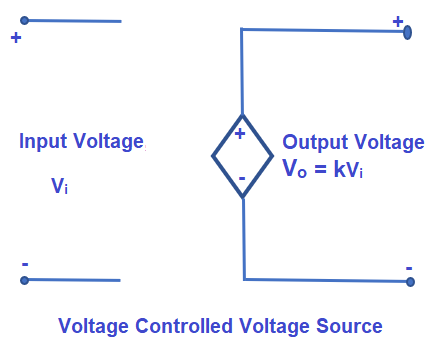
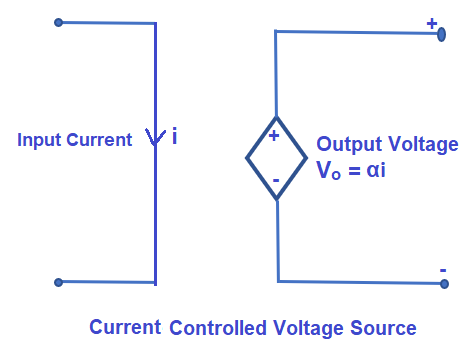
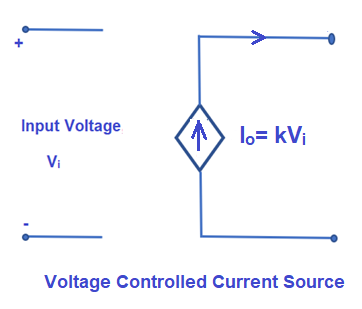
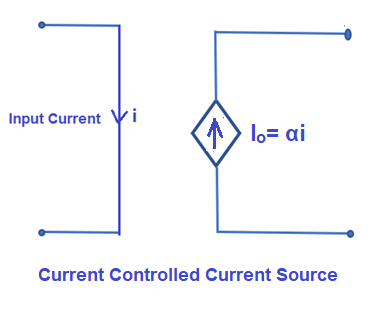
Dependent sources are categorized based on their type of control. There are two types of dependent sources:
Voltage-controlled voltage source (VCVS):

Current-controlled voltage source (CCVS):


Voltage-controlled current source (VCCS):


Current-controlled current source (CCCS):

Q5.

In heating effect, if ‘I’ is the current flowing through the conductor in ‘t’ seconds having a resistance ‘R’, then the electrical energy supplied is _________.

  • A.

    I²Rt joules

    ✓ Correct
  • B.

    IR²/t joules

  • C.

    IR²t joules

  • D.

    I²R/t joules

Answer & Solution

Correct option is A

Given:∙I=Current flowing through the conductor∙t=Time in seconds∙R=Resistance of the conductorThe electrical energy supplied in the heating effect is given by:E=I2RtWhere:E=Electrical energy supplied (in joules)I=Current (in amperes)R=Resistance (in ohms)t=Time (in seconds)\text{Given:} \\[4pt]\bullet I = \text{Current flowing through the conductor} \\[4pt]\bullet t = \text{Time in seconds} \\[4pt]\bullet R = \text{Resistance of the conductor} \\[8pt]\text{The electrical energy supplied in the heating effect is given by:} \\[6pt]E = I^2 R t \\[8pt]\text{Where:} \\[4pt]E = \text{Electrical energy supplied (in joules)} \\[4pt]I = \text{Current (in amperes)} \\[4pt]R = \text{Resistance (in ohms)} \\[4pt]t = \text{Time (in seconds)}​​

Q6.

To prevent rusting in electric iron, the plates of the bottom surface and edges are made of ________.

  • A.

    mica

  • B.

    heavy chromium

    ✓ Correct
  • C.

    asbestos

  • D.

    heavy iron

Answer & Solution

Correct option is B

To prevent rusting and corrosion in electric irons, the plates of the bottom surface and edges are typically made of heavy chromium. Chromium is highly resistant to rust and corrosion, which is why it is commonly used as a protective coating for metals exposed to moisture and heat. This coating helps to maintain the durability and functionality of the electric iron.
 Mica is used for insulation purposes, not for preventing rusting.
 Asbestos was once used for heat resistance but is not used for rust prevention.
 Heavy iron may rust over time and does not provide the same protection as chromium.

Q7.

A battery source of 20 V when connected to a load of 19Ω draws a current of 1 A. What is the value of internal resistance of battery?

  • A.

    0.5Ω

  • B.

    39Ω

  • C.

    2Ω

  • D.

    1Ω

    ✓ Correct

Answer & Solution

Correct option is D

V=I×(R+r)Where:∙ V is the total voltage∙ I is the current∙ R is the load resistance∙ r is the internal resistance of the batteryCalculation:Given:∙ V=20 V∙ R=19 Ω∙ I=1 AUsing the formula:20=1×(19+r)20=19+rr=20−19r=1 ΩV = I \times (R + r) \\[8pt]\text{Where:} \\[4pt]\bullet \; V \text{ is the total voltage} \\[4pt]\bullet \; I \text{ is the current} \\[4pt]\bullet \; R \text{ is the load resistance} \\[4pt]\bullet \; r \text{ is the internal resistance of the battery} \\[8pt]\textbf{Calculation:} \\[4pt]\text{Given:} \\[4pt]\bullet \; V = 20\,\text{V} \\[4pt]\bullet \; R = 19\,\Omega \\[4pt]\bullet \; I = 1\,\text{A} \\[8pt]\text{Using the formula:} \\[4pt]20 = 1 \times (19 + r) \\[4pt]20 = 19 + r \\[4pt]r = 20 - 19 \\[4pt]r = 1\,\Omega​​

Q8.

Which of the following factors will NOT affect the selection of a resistor?

  • A.

    Power rating (in watts)

  • B.

    Thermal resistivity

  • C.

    Tolerance

  • D.

    Frequency range

    ✓ Correct

Answer & Solution

Correct option is D

Resistance is a property that is independent of frequency in direct current circuits. This means that the frequency of the current flowing through a resistor does not influence the value of its resistance. Therefore, when selecting a resistor, the frequency range is not a relevant consideration.

Q9.

The value of a series resistor required to limit the current through an electric bulb to 40 mA with a forward voltage drop of 4V when connected to 16 V supply is ________.

  • A.

    20 Ω

  • B.

    1000 Ω

  • C.

    100 Ω

  • D.

    300 Ω

    ✓ Correct

Answer & Solution

Correct option is D

Given:∙ Supply Voltage, VT=16 V∙ Forward Voltage of Bulb, VBulb=4 V∙ Current, I=40 mA=0.04 A∙ Voltage drop across the series resistor, VR=VT−VBulb∙ The value of the series resistor is given by R=VRICalculate VR:VR=VT−VBulb=16 V−4 V=12 VNow calculate the value of the resistor R:R=VRI=12 V0.04 A=300 Ω\text{Given:} \\[4pt]\bullet \; \text{Supply Voltage, } V_T = 16\,\text{V} \\[4pt]\bullet \; \text{Forward Voltage of Bulb, } V_{\text{Bulb}} = 4\,\text{V} \\[4pt]\bullet \; \text{Current, } I = 40\,\text{mA} = 0.04\,\text{A} \\[4pt]\bullet \; \text{Voltage drop across the series resistor, } V_R = V_T - V_{\text{Bulb}} \\[4pt]\bullet \; \text{The value of the series resistor is given by } R = \frac{V_R}{I} \\[8pt]\text{Calculate } V_R: \\[4pt]V_R = V_T - V_{\text{Bulb}} = 16\,\text{V} - 4\,\text{V} = 12\,\text{V} \\[8pt]\text{Now calculate the value of the resistor } R: \\[4pt]R = \frac{V_R}{I} = \frac{12\,\text{V}}{0.04\,\text{A}} = 300\,\Omega​​

Q10.

In the context of electrical signals, if the signal generated has a definite pattern that repeats itself at regular intervals of time, such a signal is called ________.

  • A.

    dependent signal

  • B.

    independent signal

  • C.

    periodic signal

    ✓ Correct
  • D.

    non-periodic signal

Answer & Solution

Correct option is C

Explanation: A periodic signal is a signal that repeats its pattern at regular intervals, meaning it has a definite pattern that keeps coming back after a specific time period. 
Dependent signal: This term might refer to a signal that depends on another signal's values, but it doesn't necessarily imply a repeating pattern.
Independent signal: An independent signal is one that doesn't depend on any other signal, but it also doesn't necessarily have a repeating pattern. 

Q11.

The line voltage of a delta connected three phase circuit is 415 V. The phase voltage is:

  • A.

    230 V

  • B.

    240 V

  • C.

    220 V

  • D.

    415 V

    ✓ Correct

Answer & Solution

Correct option is D

The line voltage of a delta-connected three-phase system is VL=415 V.For a delta-connected system:VL=VpWhere:∙ VL is the line voltage.∙ Vp is the phase voltage.Since it is a delta-connected system, the line voltage is equal to the phase voltage. Therefore:Vp=VL=415 V\text{The line voltage of a delta-connected three-phase system is } V_L = 415\,\text{V.} \\[8pt]\text{For a delta-connected system:} \\[4pt]V_L = V_p \\[8pt]\text{Where:} \\[4pt]\bullet \; V_L \text{ is the line voltage.} \\[4pt]\bullet \; V_p \text{ is the phase voltage.} \\[8pt]\text{Since it is a delta-connected system, the line voltage is equal to the phase voltage. Therefore:} \\[4pt]V_p = V_L = 415\,\text{V}​​

Q12.

What will be the total active power consumed by a 3-phase, delta-connected system, which is supplied with a line voltage of 230 V, when the value of the phase current is 15 A and the current lags the voltage by 30°?

  • A.

    12.26 kW

  • B.

    14.63 kW

  • C.

    8.963 kW

    ✓ Correct
  • D.

    10.25 kW

Answer & Solution

Correct option is C

Given:∙ Type of connection: Delta∙ Line voltage VL=230 V∙ Phase current Ip=15 A∙ Power factor angle ϕ=30∘For a delta-connected system, active power is given by:P=3×Vp×Ip×cos⁡ϕ(Since in delta, Vp=VL)P=3×230×15×cos⁡(30∘)P=3×230×15×0.866P=8.963 kW\text{Given:} \\[4pt]\bullet \; \text{Type of connection: Delta} \\[4pt]\bullet \; \text{Line voltage } V_L = 230\,\text{V} \\[4pt]\bullet \; \text{Phase current } I_p = 15\,\text{A} \\[4pt]\bullet \; \text{Power factor angle } \phi = 30^\circ \\[10pt]\text{For a delta-connected system, active power is given by:} \\[4pt]P = 3 \times V_p \times I_p \times \cos \phi \\[8pt]\text{(Since in delta, } V_p = V_L \text{)} \\[6pt]P = 3 \times 230 \times 15 \times \cos(30^\circ) \\[6pt]P = 3 \times 230 \times 15 \times 0.866 \\[6pt]P = 8.963\,\text{kW}​​

Q13.

Which of the following statements is/are true regarding symmetrical balanced three phase supply:

  1. Instantaneous values of power in all of the 3 phases become zero at same instant.

2. Phase displacement between different phases of an n-phase system is (360°/n) electrical except for the two-phase system.

​​

  • A.

    Neither 1 nor 2

  • B.

    Only 2

    ✓ Correct
  • C.

    Both 1 and 2

  • D.

    Only 1

Answer & Solution

Correct option is B

In a three-phase system, the phase displacement between the phases is 360°/3 = 120°, and the instantaneous power is constant, equal to three times the power per phase.

​​

Q14.

Which modulation technique is commonly used in power modulators to achieve variable power output?

  • A.

    Amplitude modulation

  • B.

    Delta modulation

  • C.

    Frequency modulation

  • D.

    Pulse-width modulation

    ✓ Correct

Answer & Solution

Correct option is D

Pulse-width modulation: PWM is widely used in power modulators because it allows for precise control of power output by varying the width of pulses in a square wave signal. 
Amplitude modulation (AM): AM changes the amplitude of a carrier wave, not its width, which is not how power is controlled in most modulators. 
Delta modulation (DM): DM is primarily used for signal quantization, not power control. 
Frequency modulation (FM): FM changes the frequency of a carrier wave, which is not the typical method for adjusting power output in power modulators. 

Q15.

A 4Ω resistor has a specified maximum power dissipation of 784 W. Calculate its maximum current level.

  • A.

    196 A

  • B.

    10 A

  • C.

    14 A

    ✓ Correct
  • D.

    16 A

Answer & Solution

Correct option is C

To calculate the maximum current level for a 4Ω resistor with a maximum power dissipation of 784 W, we can use the formula for power dissipation in a resistor:

​P=I2RWhere:∙ P is the power dissipation (784 W),∙ I is the current (which we need to find),∙ R is the resistance (4Ω).Rearranging the formula to solve for I:I=PRNow, substituting the known values:I=7844=196=14 AThus, the maximum current is 14 A.P = I^2 R \\[8pt]\text{Where:} \\[4pt]\bullet \; P \text{ is the power dissipation (784 W),} \\[4pt]\bullet \; I \text{ is the current (which we need to find),} \\[4pt]\bullet \; R \text{ is the resistance (4}\Omega\text{).} \\[8pt]\text{Rearranging the formula to solve for } I: \\[4pt]I = \sqrt{\frac{P}{R}} \\[8pt]\text{Now, substituting the known values:} \\[4pt]I = \sqrt{\frac{784}{4}} = \sqrt{196} = 14\,A \\[8pt]\text{Thus, the maximum current is } 14\,A.​​