hamburger menu
All Coursesall course arrow
adda247
reward-icon
adda247
    arrow
    arrow
    arrow
    Single-stranded DNA binding properties of three DNA repair proteins (A, B, and C) were investigated. A biotinylated single-stranded DNA was prepared a
    Question

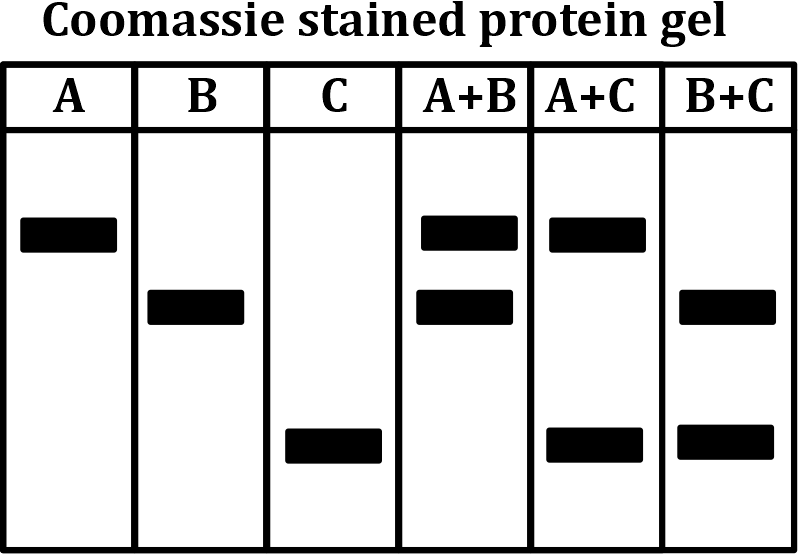
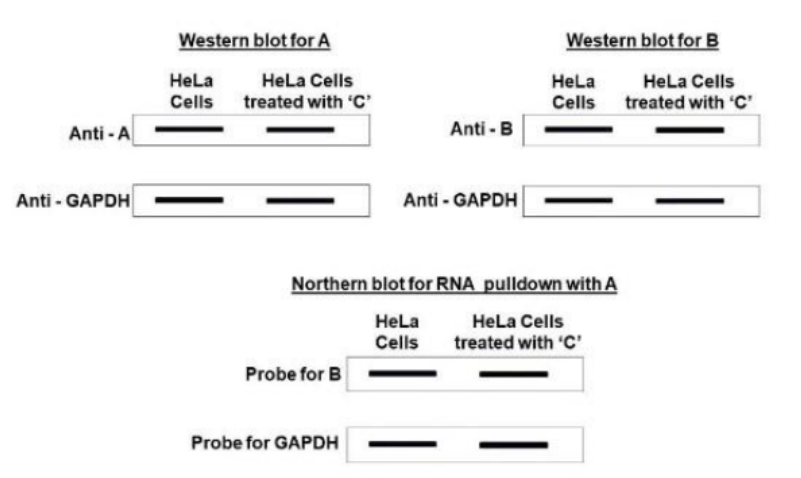
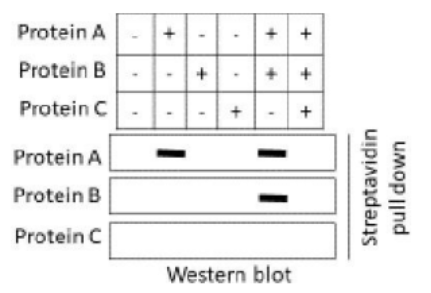
    Single-stranded DNA binding properties of three DNA repair proteins (A, B, and C) were investigated. A biotinylated single-stranded DNA was prepared and incubated with the proteins in different combinations as shown below. This was followed by streptavidin pull-down to enrich ssDNA-bound proteins, which were detected by western blot analyses using specific antibodies.

    Which one of the following statements is NOT a correct conclusion from the above study?​

    A.

    Protein A binds to the ssDNA.

    B.

    Protein B does not bind to ssDNA.

    C.

    Protein C destabilizes the binding of Protein A to ssDNA.

    D.

    Protein C interacts with Protein A but not with Protein B.

    Correct option is D

    Based on the experimental setup and results from the western blot:

    • Protein A is observed to bind to ssDNA.
    • Protein B does not show any binding to ssDNA in the western blot analysis.
    • Protein C interacts with ssDNA in combination with protein A but does not bind when protein B is present.

    Explanation: 

    1. Protein A binds to ssDNA: This is correct. The presence of protein A in the pull-down with ssDNA confirms that it binds to ssDNA.

    2. Protein B does not bind to ssDNA: This is correct. Since protein B is absent from the pull-down with ssDNA, it indicates that protein B does not interact with ssDNA.

    3. Protein C destabilizes the binding of protein A to ssDNA: This is correct. Protein C, when present with protein A, shows disruption in the interaction with ssDNA, suggesting that protein C interferes with or destabilizes protein A's binding to ssDNA.

    4. Protein C interacts with Protein A but not with Protein B: This statement is incorrect. The explanation clearly states that although protein C interacts with protein A, it does not show any interaction with protein B based on the experimental evidence. Therefore, this conclusion about protein C's interaction with protein B is not supported.
    Similar Questions

    test-prime-package

    Access ‘CSIR NET Life Sciences’ Mock Tests with

    • 60000+ Mocks and Previous Year Papers
    • Unlimited Re-Attempts
    • Personalised Report Card
    • 500% Refund on Final Selection
    • Largest Community
    students-icon
    354k+ students have already unlocked exclusive benefits with Test Prime!
    test-prime-package

    Access ‘CSIR NET Life Sciences’ Mock Tests with

    • 60000+ Mocks and Previous Year Papers
    • Unlimited Re-Attempts
    • Personalised Report Card
    • 500% Refund on Final Selection
    • Largest Community
    students-icon
    354k+ students have already unlocked exclusive benefits with Test Prime!
    Our Plans
    Monthsup-arrow