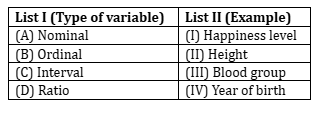
Correct option is B
The
longitudinal research design refers to the systematic study of data or phenomena over different periods of time. In the context of
qualitative content analysis of documents, longitudinal research involves analyzing how the content evolves over time by reviewing documents from various time periods. This approach helps researchers understand trends, changes, and developments within a particular context, making it distinct from a one-time or snapshot analysis.
·
Cross-sectional research (a) examines data at a single point in time, not over multiple periods.
·
Case study (c) focuses on an in-depth examination of a single case or instance rather than over time.
·
Comparative research (d) involves comparing two or more cases or phenomena, but it doesn't necessarily focus on time periods.
Information Booster: 1.
Longitudinal research: Useful for identifying changes and trends over time.
2.
Qualitative content analysis: A method for systematically analyzing textual or visual content.
3.
Cross-sectional research: Typically involves data collection at one point in time to examine a particular phenomenon.
4.
Case study research: Focuses on in-depth exploration of a single case, institution, or subject.
5.
Comparative research: Compares different cases or groups, often to highlight differences and similarities, without a time-based focus.
 English
 10 Questions
 20 Marks
 12 Mins