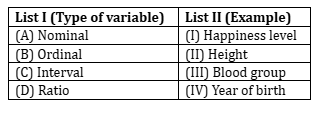
Correct option is A
Correct Option – (a)
Introduction:
In qualitative research, traditional quantitative concepts of validity and reliability are replaced by the framework of trustworthiness, where credibility serves as the direct counterpart to internal validity.
Information Booster:
· Credibility focuses on ensuring that the results of qualitative research are believable and trustworthy from the perspective of the participant in the research.
· It parallels internal validity because both are concerned with the truth-value of the findings and whether the researchers have accurately captured the phenomena they intended to study.
· Common techniques to establish credibility include triangulation (using multiple sources/methods), member checking (seeking participant feedback on data), and prolonged engagement in the field.
Additional Knowledge:
· Transferability: This parallels external validity or generalizability. It refers to the degree to which the results of qualitative research can be generalized or transferred to other contexts or settings.
· Dependability: This parallels reliability. It emphasizes the need for the researcher to account for the ever-changing context within which research occurs and ensures the research process is logical, traceable, and documented.
· Confirmability: This parallels objectivity. It refers to the degree to which the results could be confirmed or corroborated by others, ensuring that findings are shaped by the respondents and not researcher bias, motivation, or interest.
 English
 10 Questions
 20 Marks
 12 Mins