






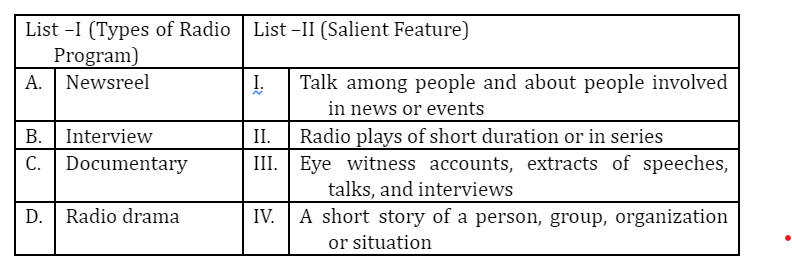
Correct option is A
·
Newsreel (A) typically includes
eyewitness accounts and speeches (III), offering a factual account of current events.
·
Interview (B) involves
talks among people (I) and focuses on discussions with individuals involved in various events or topics.
·
Documentary (C) is a detailed program that narrates
a story of a person or situation (IV), often real-life scenarios.
·
Radio drama (D) consists of
plays or stories (II) that are performed over the radio, providing entertainment in a narrative form with characters, dialogues, and sound effects.
Information Booster:
·
Newsreel: Originating from the early days of radio, newsreels provided listeners with updates on current events, often in a formal and documentary style, featuring newsworthy events, speeches, and reports from the field.
·
Interview: This format allows the audience to listen to discussions with experts or witnesses involved in important events, providing firsthand information or insights into significant occurrences.
·
Documentary: Radio documentaries offer in-depth, narrative-driven programs that explore various topics, often bringing to life the stories of individuals, communities, or historical events.
·
Radio drama: Popular before the advent of television, radio dramas engaged listeners with fully dramatized stories, using only sound and voice actors to create imagery in the minds of the audience.
 English
 10 Questions
 20 Marks
 12 Mins


