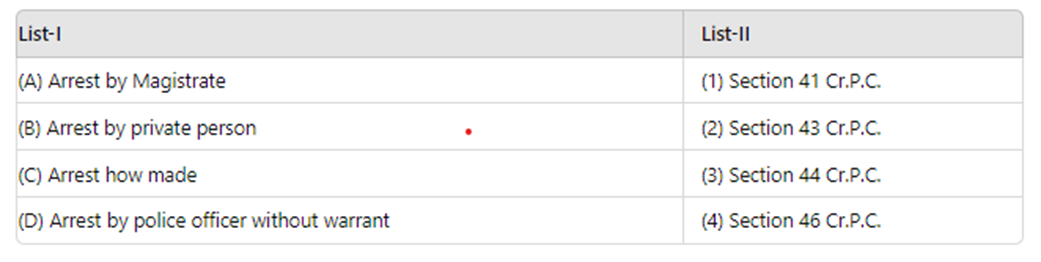
Correct option is D
Members of the armed forces are given protection from arrest under Section 45 of the Code of Criminal Procedure, 1973.
Information Booster:
·
Section 45 of the Code of Criminal Procedure, 1973: This section provides certain protections to members of the armed forces regarding arrest for offenses committed during the course of their duties. It states that no member of the armed forces shall be arrested for anything done or purported to be done in the discharge of his official duties, except after obtaining the consent of the Central Government.
·
Purpose of Protection: The protection under Section 45 is designed to ensure that members of the armed forces are not unduly hampered in the performance of their official duties by the threat of arrest. It recognizes the unique and critical nature of the functions performed by the armed forces, which often require them to act in situations that might otherwise be subject to legal scrutiny.
Additional Knowledge:
·
Judicial Officers (Option a): While judicial officers have certain protections under the law, such as immunity from being sued for acts done in their judicial capacity, they are not specifically covered under Section 45 of the CrPC for protection from arrest.
·
Members of Parliament (Option b): Members of Parliament have certain privileges, such as freedom from arrest in civil cases during sessions of Parliament and while traveling to and from Parliament, but they are not covered under Section 45 of the CrPC.
·
President of India (Option c): The President of India has immunity from legal proceedings for acts done in their official capacity under Article 361 of the Constitution of India, but this is not related to Section 45 of the CrPC.