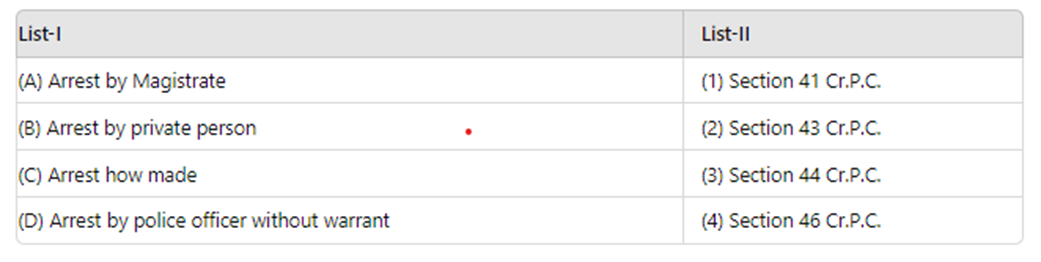
Correct option is C
Section 42 Cr.P.C.: This section allows for Arrest on refusal to give name and residence. If a person, who is suspected of having committed a non-cognizable offense, refuses to provide their name and residence to a police officer, the officer is authorized to arrest them to ascertain their identity.
Information Booster:
· Section 44 Cr.P.C.: Provides the conditions under which a police officer can arrest without a warrant, generally in cases where the offense is cognizable or when the offense is committed in the presence of the officer.
· Section 41 Cr.P.C.: Deals with Arrest by a police officer without a warrant, primarily in the case of cognizable offenses. It specifies the circumstances under which such arrests can be made, including the necessity of arresting a person if they are likely to commit further offenses.
· Section 43 Cr.P.C.: Specifies the procedures for Arrest how made, outlining how an arrest should be conducted by a private person or police officer in various circumstances. It includes provisions on the use of force and ensuring the dignity of the person arrested.
Additional Information:
· Section 44 Cr.P.C.: Covers scenarios where police can arrest without a warrant, including in cases of serious offenses where immediate action is required.
· Section 41 Cr.P.C.: Provides for the arrest of individuals involved in cognizable offenses without requiring a warrant, including under circumstances where arrest is necessary to prevent further offenses or ensure the person's presence in court.
· Section 42 Cr.P.C.: Is significant in ensuring that persons who refuse to provide their identity in the context of minor offenses can be detained for proper identification.
· Section 43 Cr.P.C.: Details how arrests should be carried out, including procedures for making arrests by private individuals and police officers, ensuring that such actions are carried out lawfully and respectfully.