






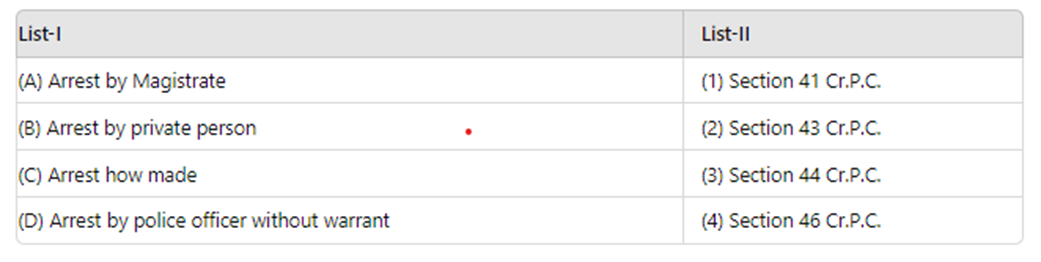
Correct option is B
The correct match between the sections of the Criminal Procedure Code (Cr.P.C.) and the types of arrests is as follows:
· (A) Arrest by Magistrate (Section 44 Cr.P.C.): Section 44 of the Cr.P.C. empowers a Magistrate to arrest or order the arrest of a person.
· (B) Arrest by private person (Section 43 Cr.P.C.): Section 43 allows a private person to arrest a person in certain circumstances.
· (C) Arrest how made (Section 46 Cr.P.C.): Section 46 describes the manner in which an arrest should be carried out.
· (D) Arrest by police officer without warrant (Section 41 Cr.P.C.): Section 41 allows a police officer to arrest a person without a warrant in specific situations.
Information Booster The Criminal Procedure Code (Cr.P.C.) outlines various methods and authorities for arresting an individual. Section 44 empowers Magistrates to arrest; Section 43 permits private individuals to arrest under particular conditions; Section 46 explains the proper method for making an arrest, ensuring it is done legally and humanely; and Section 41 provides police officers the authority to arrest without a warrant under certain situations, such as when a person is caught committing a cognizable offense.
Additional Knowledge Understanding the roles different individuals play in the arrest process is essential for maintaining law and order:
· Section 41 Cr.P.C.: Police officers have the authority to arrest without a warrant when they have reasonable grounds to believe that the person has committed a cognizable offense.
· Section 43 Cr.P.C.: Private individuals can arrest someone who commits a non-bailable and cognizable offense in their presence, and they must hand over the person to the police immediately.
· Section 44 Cr.P.C.: Magistrates have the power to arrest or direct the arrest of a person if the individual commits an offense in the Magistrate's presence or if the Magistrate is competent to try or commit the person for trial.
· Section 46 Cr.P.C.: This section describes the procedure for making an arrest, including the use of physical restraint if necessary, and emphasizes that the arrest should be made in a lawful manner, respecting the person's rights.


