
Correct option is B
The tendency of a rater to be greatly influenced by a single favorable or unfavorable trait when making an overall judgment about a person is known as the
Halo Effect.
Information Booster:
·
Cognitive Bias in Evaluation: The
Halo Effect is a classic cognitive bias where a rater's general impression or perception of a single specific characteristic (such as physical attractiveness, charm, or exceptional performance in one area) inappropriately spills over to influence their evaluation of that person's other distinct traits or overall competence.
·
Positive vs. Negative Distortion: It operates in two directions: a positive trait creates a
"halo" that causes the rater to evaluate unrelated traits overly favorably, whereas a single negative trait creates a
"horns effect" (or reverse halo effect), causing the evaluator to judge all other attributes harshly.
·
Impact on Rating Scales: In educational and psychological research, the Halo Effect severely threatens the
validity and objective accuracy of rating scales because the rater fails to assess independent dimensions of performance objectively, resulting in correlated and inflated or deflated ratings.
·
Conceptual Origin: The concept was first empirically identified and named by psychologist
Edward Thorndike in 1920 in a study evaluating military officers' ratings of their subordinates.
Additional Knowledge:
·
Middle Category Bias: Also known as the
Central Tendency Error, this occurs when raters consistently avoid giving extreme high or low scores on a scale, preferring instead to mark the
middle or neutral options (e.g., choosing "Average" or "3" on a 5-point Likert scale) regardless of the ratee's actual performance level.
·
Extreme Response Bias: This refers to the systematic tendency of a respondent or evaluator to choose only the
extreme endpoints of a rating scale (such as always selecting "Strongly Agree" or "Strongly Disagree"), completely bypassing intermediate options regardless of the actual context.
·
Tendency Effect: This is a broad descriptive term often referring to general response tendencies (such as
Central Tendency or
Leniency/Severity Tendency) rather than the specific cognitive phenomenon where a single isolated trait distorts the global judgment of an individual.
 English
 10 Questions
 20 Marks
 12 Mins
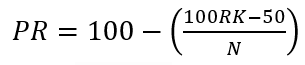 Where
Where



