Correct option is D
Explanation-
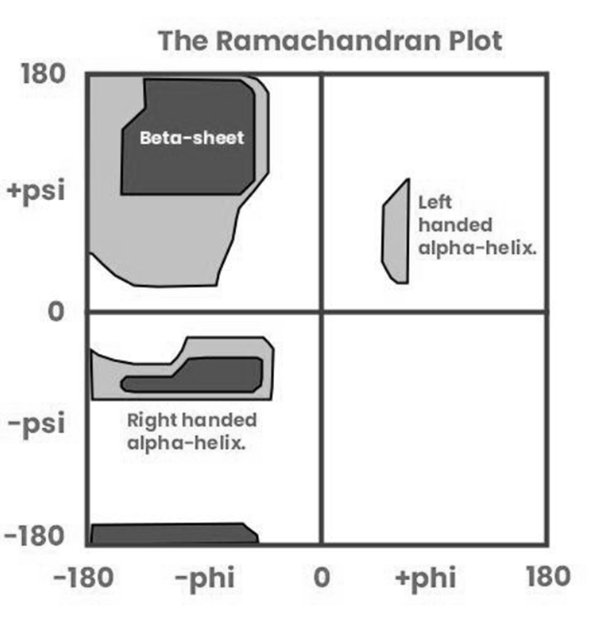
Option D - "α-helices are less likely to form than β-sheets in the earliest stages of protein folding".
In the early stages of protein folding, α-helices typically form more rapidly and more easily than β-sheets. This is because α-helices involve local interactions (hydrogen bonding between nearby residues), making them kinetically favored. In contrast, β-sheets often require long-range interactions (between distant segments), which take more time to organize.
Therefore, Option D contradicts known folding kinetics and is NOT correct.
Correct statements -
Option A - "β-sheets are more common in the interiors of proteins than surfaces"
β-sheets are often hydrophobic and tend to be buried in the protein core, away from aqueous environments.
Option B- "β-sheets are less likely to form than α-helices in the earliest stages of folding"
As explained, α-helices form faster due to local hydrogen bonds. β-sheets form later due to complex long-range interactions.
Option C - "Proline residues can occupy the N-terminal turn of an α-helix"
Proline typically disrupts α-helices in the middle but is tolerated or even favorable at the N-terminal cap of a helix, due to its rigid structure.
Since option D is the only incorrect among all other option that makes it a correct answer.