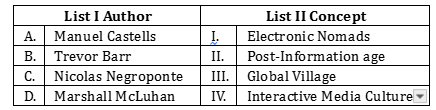
Correct option is A
Mediated communication reflects the
communicator's cultural background because the way people communicate through media, whether traditional or digital, is shaped by their cultural values, norms, and perspectives. Cultural background influences language use, symbols, and communication preferences, which are reflected in the media content and style.
Information Booster: · Cultural background shapes how individuals use symbols, language, and media.
· Mediated communication can include news, social media, television, and online platforms.
· Media content often reflects cultural values and practices of the communicator.
· Cross-cultural communication can reveal differences in mediated communication styles.
· Mediated communication adapts to the preferences of the target audience.
Additional Knowledge:
Social expectations of the under-privileged: While social expectations may influence content creation, especially in media aimed at social change, this is more about targeting specific groups rather than a characteristic of mediated communication.
Ethical desires of the society: Ethics play a role in media regulation and content creation, but mediated communication focuses more on how culture shapes message delivery than purely ethical concerns.
Majoritarian hegemony of language: Language dominance can impact media, but mediated communication typically reflects cultural nuances beyond just language imposition.
 English
 10 Questions
 20 Marks
 12 Mins