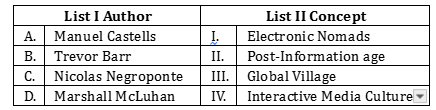
Correct option is C
Assertion (A) is true:
· Communication indeed has the power to
persuade (convince others to adopt a viewpoint),
inform (provide factual information), and
disinform (spread false or misleading information). These are key functions of communication, especially in contexts like advertising, education, media, and propaganda.
Reason (R) is false:
· The process of
propaganda typically
obscures or
blurs the line of distinction between information, persuasion, and disinformation. Propaganda is designed to manipulate public opinion, often blending facts with misleading or biased content to achieve specific goals. Therefore, it does not make the distinction transparent; rather, it intentionally makes it difficult to differentiate between genuine persuasion and deceptive content.
Information Booster: 1.
Communication Functions:
·
Persuasion: Aims to influence opinions, beliefs, or actions.
·
Information: Involves sharing factual, accurate data.
·
Disinformation: The deliberate spread of false information to mislead.
2.
Propaganda:
· A biased or misleading form of communication aimed at influencing opinions.
· Blends elements of truth, persuasion, and deception to achieve its objectives.
3.
Key Characteristics of Propaganda:
· Emotional appeals.
· Misrepresentation of facts.
· Suppression of dissenting information.
 English
 10 Questions
 20 Marks
 12 Mins