






Correct option is B
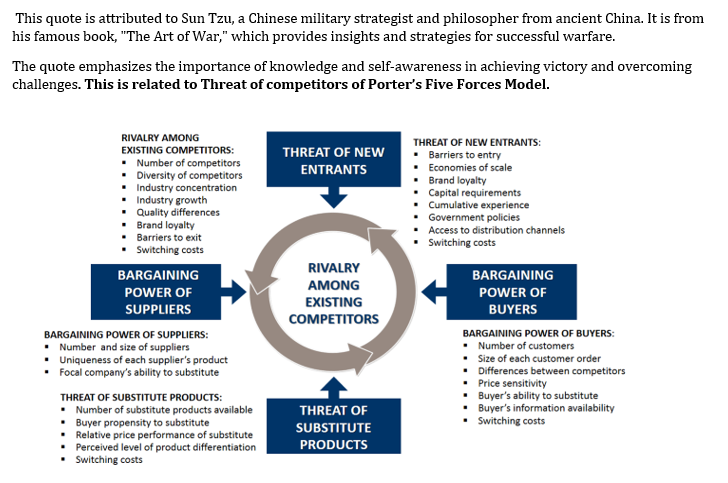
The quote by Sun Tzu emphasizes the importance of understanding both one's own capabilities and those of the opponent to achieve victory. This philosophy aligns with “Threat of Competitor” in Porter’s Five Forces Model, which highlights the impact of existing competitors on an industry's profitability and dynamics.
In a business context, knowing your competitor’s strengths, weaknesses, strategies, and market positioning is crucial for survival and success. Competitive rivalry is one of the key forces determining market attractiveness. A highly competitive industry with many rivals or aggressive pricing strategies can lead to reduced profitability.
Information Booster:
1. Porter's Five Forces Model: Developed by Michael Porter, this model assesses competitive forces shaping an industry. It includes (1) Threat of New Entrants, (2) Bargaining Power of Suppliers, (3) Bargaining Power of Buyers, (4) Threat of Substitutes, and (5) Industry Rivalry (Threat of Competitor).
2. Threat of Competitor: This force examines the intensity of rivalry among existing firms. High competition can result from many competitors, low differentiation, or high exit barriers.
3. Strategies to Tackle Competition: Companies use differentiation, cost leadership, and niche strategies to gain a competitive edge.
4. Competitive Intelligence: Businesses perform SWOT analysis (Strengths, Weaknesses, Opportunities, and Threats) to understand competitors and their impact.
5. Market Saturation: In highly competitive markets, price wars, innovation, and branding play critical roles in maintaining profitability.
6. Impact on Profitability: Strong competitive threats can reduce profit margins and force firms to invest in marketing, R&D, and operational efficiencies.
7. Examples: Rivalries like Coca-Cola vs. Pepsi, Apple vs. Samsung, and Microsoft vs. Google show how competition shapes industries.
 English
 10 Questions
 20 Marks
 12 Mins


