Correct option is C
Explanation:
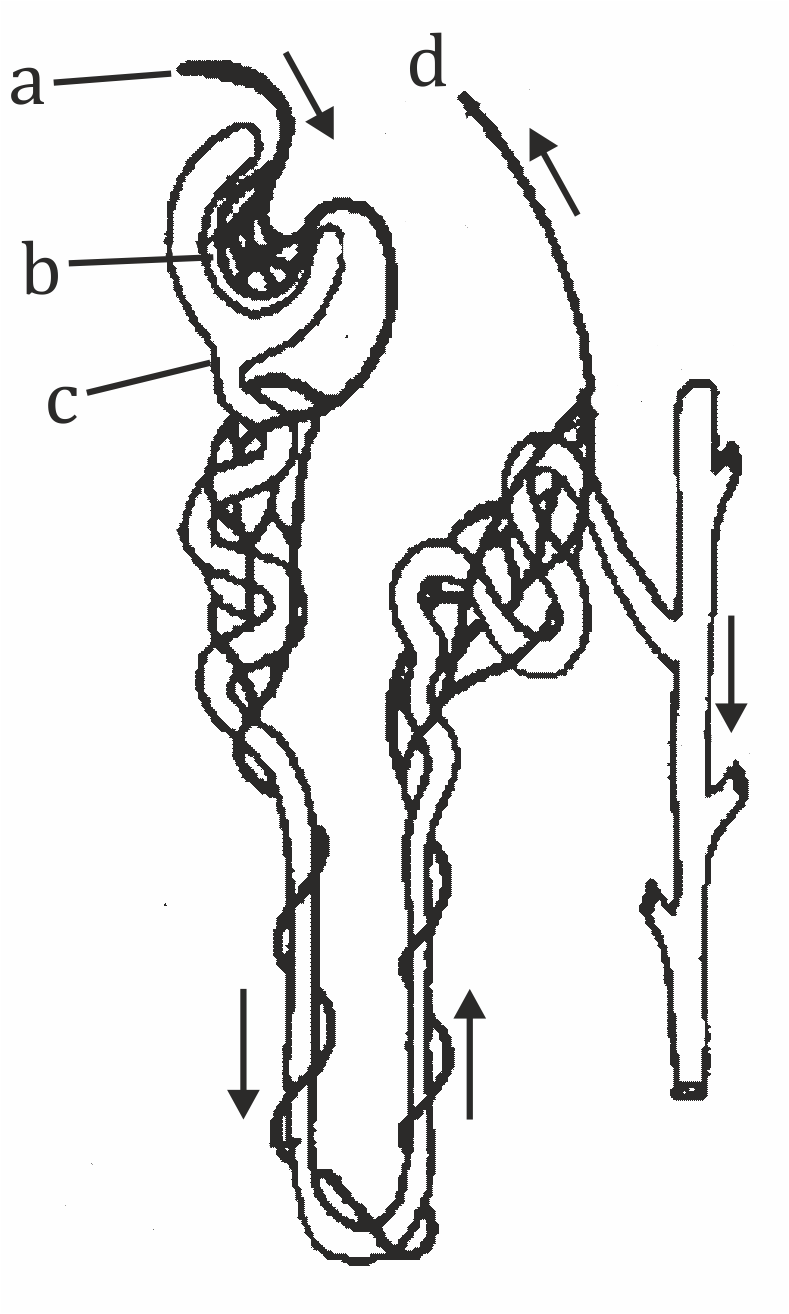
Excessive filtration and reabsorption occur during the process of excretion and urine formation in the kidneys. The kidneys filter the blood to remove waste products and excess substances, which then undergo reabsorption. This process ensures that essential substances like water, glucose, and salts are retained in the body while waste products like urea are excreted in the urine.
The kidneys filter blood through the glomerulus, where waste and excess substances are separated.
The filtrate passes through the renal tubules where reabsorption occurs to reclaim useful substances.
Approximately 99% of the water filtered by the kidneys is reabsorbed, ensuring the body's hydration balance.
Excess ions and waste products, like urea, remain in the filtrate to form urine.
This process helps in maintaining homeostasis by regulating blood composition and volume.
The kidneys' ability to filter and reabsorb is vital for fluid and electrolyte balance.
During blood circulation in vessels : While blood circulation ensures the distribution of nutrients, it does not involve filtration and reabsorption of waste.
During transport of gases through blood : Gas exchange (oxygen and carbon dioxide) occurs in the lungs and tissues, not involving filtration and reabsorption.
During exchange of gases during respiration : This process focuses on gas exchange, not filtration or reabsorption.
 English
 10 Questions
 10 Marks
 8 Mins