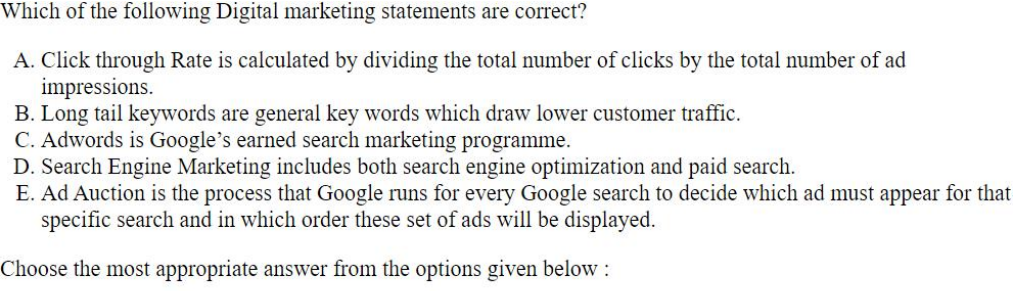
Correct option is C
Innovators are individuals who are the first to adopt new ideas, products, services, or practices. They are willing to take risks and are highly open to new experiences, making them key drivers of technological advancements and market trends. Innovators are characterized by their curiosity, willingness to experiment, and ability to accept uncertainty. They often play a significant role in influencing others by setting trends and shaping consumer behavior.
Key characteristics of innovators include:
Risk-taking attitude – They are willing to try unproven products or ideas before others.
High social status – They often belong to a well-educated and financially stable group.
Information-seeking behavior – They actively seek out new innovations and stay updated on industry trends.
Strong influence on others – Their choices often pave the way for wider adoption of a product or idea.
Early adopters of technology – They embrace technological advancements before mainstream consumers.
By being the first to experiment with innovations, they serve as opinion leaders and contribute to the diffusion of new products across the market.
Information Booster:
Innovators form approximately 2.5% of the total population in a market.
They help in the diffusion of innovation, a process studied in marketing and consumer behavior.
They often rely on self-judgment rather than waiting for social proof.
Many successful companies target innovators to create a market entry strategy for new products.
Innovators are often the first to give feedback, helping companies refine their offerings.
Additional Knowledge:
(1) Dogmatic – Dogmatic individuals are resistant to change and prefer to stick to traditional ways of thinking. They have rigid beliefs and are unlikely to adopt new products or ideas quickly. Unlike innovators, they often reject innovations and require substantial evidence before considering any change.
(2) Laggards – Laggards are the last group to adopt new products or technologies. They are skeptical of change and prefer traditional solutions. They usually adopt innovations only when they become unavoidable or mainstream. Unlike innovators, they rely heavily on past experiences and social norms before making a decision.
(4) Early Majority – The early majority consists of individuals who adopt new products only after seeing them successfully used by innovators and early adopters. They require more assurance and social proof before making a purchase. While they are open to new ideas, they are not the first to try them. Unlike innovators, they prefer safer, well-established trends.
 English
 10 Questions
 20 Marks
 12 Mins