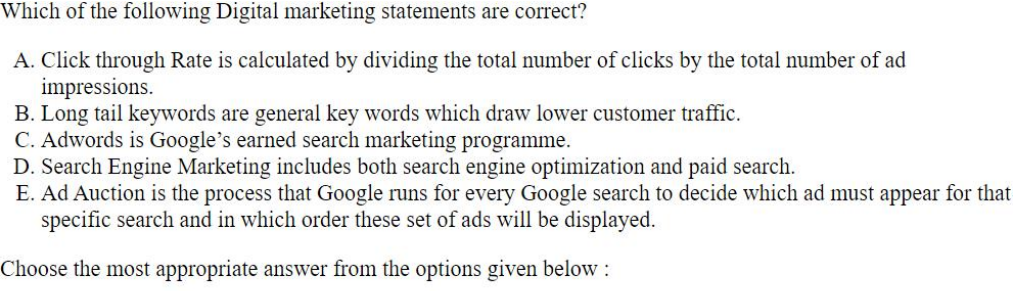
Correct option is D
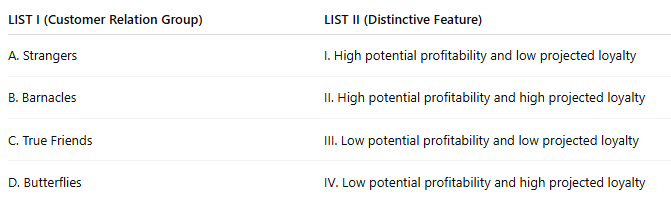
Customer Relationship Groups are classified based on projected loyalty and potential profitability. This segmentation helps marketers allocate relationship-building resources wisely:
A. Strangers → III. Low potential profitability and low projected loyalty
Strangers have little fit with the company’s offerings and show no real interest in forming a long-term relationship. They are not profitable and not loyal.
B. Barnacles → IV. Low potential profitability and high projected loyalty
Barnacles are loyal but not profitable. They stay with the company for a long time but generate very little revenue due to limited purchases or high servicing costs.
C. True Friends → II. High potential profitability and high projected loyalty
True friends are the best kind of customers—both loyal and profitable. They buy regularly and are receptive to relationship-building efforts.
D. Butterflies → I. High potential profitability and low projected loyalty
Butterflies are profitable but not loyal. They might purchase heavily for a short time but soon move on. Hence, they should be served carefully without investing in long-term relationship efforts.
Information Booster:
True Friends are the core customer segment to invest in with loyalty programs, personalized marketing, and relationship building.
Strangers should not be targeted heavily since they neither bring profit nor stay with the brand.
Butterflies may yield quick profits, but over-investment in retaining them is wasteful.
Barnacles require evaluation—if they can't be made more profitable, firms may need to stop serving them.
These classifications help firms allocate resources efficiently and optimize customer lifetime value.
 English
 10 Questions
 20 Marks
 12 Mins