Correct option is D
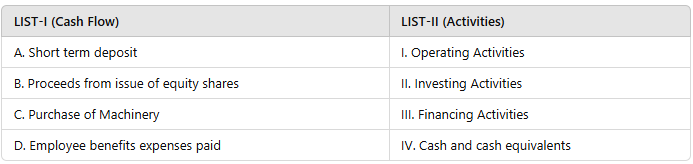
A. Short term deposit
Short-term deposits are usually classified as part of cash and cash equivalents in the context of financial statements. Cash and cash equivalents include assets that are very liquid and can easily be converted to cash within a short period. This category also covers short-term investments like deposits.
Correct Match: A-IV (Cash and Cash Equivalents)
B. Proceeds from issue of equity shares
When a company issues equity shares, it is raising capital, which falls under financing activities. Financing activities include cash transactions that affect the company's capital structure, such as issuing equity or borrowing money.
Correct Match: B-III (Financing Activities)
C. Purchase of Machinery
The purchase of machinery is an investing activity because the company is investing in a long-term asset. Investing activities involve the acquisition and disposal of physical assets (like machinery), and investments in securities.
Correct Match: C-II (Investing Activities)
D. Employee benefits expenses paid
Payments related to employee benefits (such as salaries or retirement benefits) are part of operating activities. Operating activities include cash flows from the primary activities of the business, like producing and delivering goods and services.
Correct Match: D-I (Operating Activities)
Information Booster:
Cash and Cash Equivalents (A-IV): Short-term deposits are classified as cash equivalents since they are highly liquid and can be quickly converted into cash, similar to cash in hand or in bank accounts.
Financing Activities (B-III): The proceeds from issuing equity shares are categorized as financing activities because they directly impact the company’s capital structure, either through debt or equity.
Investing Activities (C-II): The purchase of machinery represents an investment in a long-term asset, making it an investing activity. These activities typically involve spending on assets like buildings, machinery, and other equipment.
Operating Activities (D-I): Employee benefits expenses paid fall under operating activities. These are the day-to-day expenses incurred as part of running the business, including salaries, wages, and other employee benefits.
 English
 10 Questions
 20 Marks
 12 Mins