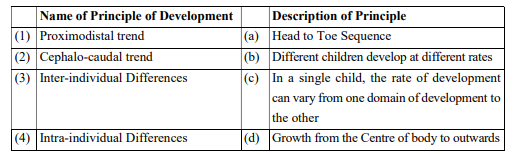
Correct option is D
Both Assertion A and Reason R are true, and Reason R is the correct explanation of Assertion A. The assertion that there is no objectively definable moment when a child enters middle childhood or adolescence reflects the understanding that developmental transitions do not occur suddenly or at the same exact time for every individual. Instead, these transitions are part of a gradual and continuous process of development. This gradual nature is precisely because development is continuous, as stated in Reason R. Continuous development means that changes and growth occur incrementally over time, without clear boundaries between developmental stages. This continuity makes it difficult to pinpoint a specific moment that marks the entry into middle childhood or adolescence for every child, as the timing and nature of these transitions can vary widely among individuals.
Information Booster:
The concept of continuous development emphasizes that changes occur gradually and cumulatively, rather than through sudden leaps or stages. This perspective is central to understanding the fluid and ongoing nature of human growth and development across the lifespan.
 English
 150 Questions
 150 Marks
 150 Mins