






Correct option is B
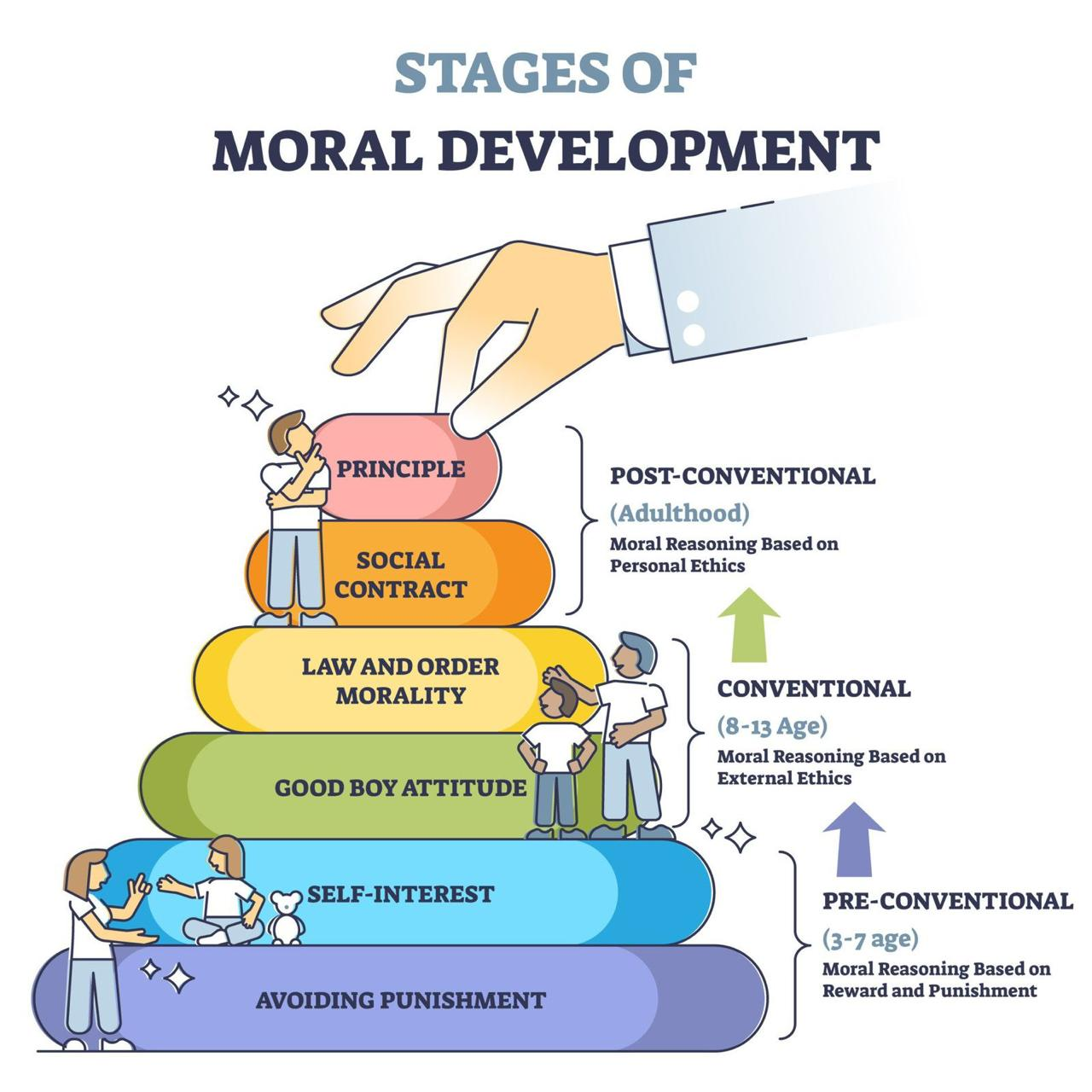
Kohlberg’s theory of Moral Development is divided into three levels with six stages. Each stage represents a different level of moral reasoning, typically developing as a person matures.
�� Level 1: Pre-Conventional Morality
1. (C) Punishment and Obedience Orientation
· Obeying rules to avoid punishment.
2. (A) Individualism, Instrumental Purpose and Exchange
· Acting in one’s own interest; fairness is seen as "what’s in it for me."
�� Level 2: Conventional Morality
3. (F) Mutual Interpersonal Expectations & Conformity
· "Good boy/good girl" stage — behavior driven by social approval.
4. (E) Social Systems Morality
· Emphasis on obeying laws, respecting authority, and maintaining the social order.
�� Level 3: Post-Conventional Morality
5. (D) Social Contract and Individual Rights
· Recognition of differing values; laws are important but can be changed for the greater good.
6. (B) Universal Ethical Principles
· Moral reasoning based on abstract reasoning using universal ethical principles (e.g., justice, equality, human rights).
Information Booster
· Kohlberg believed that moral development progresses through these stages in a fixed order, although not everyone reaches the highest stages.
· The model is used in psychology, education, and ethics to understand how people reason morally.
· Children typically operate at the pre-conventional level, adolescents and adults at the conventional, and only some adults at the post-conventional level.
 English
 10 Questions
 20 Marks
 12 Mins



