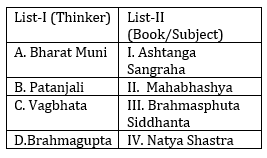
Correct option is D
In ancient Indian literature, including Banabhatta's
Kadambari and texts like the
Kamasutra,
good education was often described as having mastery over
64 arts (Kalaas). These 64 Kalaas encompassed a wide range of skills, including both practical and fine arts, that were considered essential for a well-rounded and cultured individual in ancient India. These arts included skills like painting, music, dance, poetry, carpentry, architecture, and many other intellectual, artistic, and practical disciplines.
The concept of the 64 Kalaas reflects the holistic approach to education in ancient India, aiming to develop various facets of personality, intellect, creativity, and practical skills.
Information Booster: 1.
64 Kalaas: Represented a comprehensive skill set covering intellectual, artistic, and practical knowledge.
2.
Educational Philosophy: Education was seen as encompassing various dimensions, including personal, social, and spiritual growth.
3.
Examples of Kalaas: Included singing, playing musical instruments, dancing, sculpture, gardening, and culinary arts.
4.
Significance in Society: Proficiency in these arts symbolized a well-rounded and accomplished individual.
5.
Influence on Modern Education: Some elements of this approach still influence holistic education models today.
6.
Cultural Impact: This tradition influenced literature, education, and even social expectations in ancient India.
 English
 10 Questions
 20 Marks
 12 Mins