






Correct option is B
Solution:
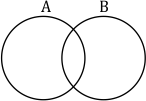
P(A) = 0.6
P(B) = 0.4
P(C) = 0.5
P(A ∪ B) = 0.8
P(A ∩ C) = 0.3
P(A ∩ B ∩ C) = 0.2
P(A ∪ B ∪ C) ≥ 0.85
We are to find the minimum value of P(B ∩ C).
Step 1: Use inclusion-exclusion principle
Formula:
P(A ∪ B ∪ C) = P(A) + P(B) + P(C)
– P(A ∩ B) – P(B ∩ C) – P(C ∩ A)
P(A ∩ B ∩ C)
Let:
P(A ∩ B) = x
P(B ∩ C) = y (we are to find the minimum value of y)
P(C ∩ A) = P(A ∩ C) = 0.3
P(A ∩ B ∩ C) = 0.2
Step 2: Find P(A ∩ B)
We know:
P(A ∪ B) = P(A) + P(B) – P(A ∩ B)
So:
0.8 = 0.6 + 0.4 – x
=> x = 1.0 – 0.8 = 0.2
Therefore, P(A ∩ B) = 0.2
Step 3: Plug values into inclusion-exclusion
P(A ∪ B ∪ C) = 0.6 + 0.4 + 0.5
– 0.2 – y – 0.3
0.2
Simplify:
P(A ∪ B ∪ C) = 1.5 – 0.5 – y + 0.2
=> P(A ∪ B ∪ C) = 1.2 – y
It is given that:
P(A ∪ B ∪ C) ≥ 0.85
So:
1.2 – y ≥ 0.85
=> y ≤ 1.2 – 0.85 = 0.35
=> Maximum value of y = 0.35
Step 4: Use constraint from intersection
We know that:
P(A ∩ B ∩ C) = 0.2
and this region is part of P(B ∩ C), so:
P(B ∩ C) ≥ P(A ∩ B ∩ C) = 0.2
Conclusion:
We now know:
0.2 ≤ P(B ∩ C) ≤ 0.35
Hence, the minimum possible value of P(B ∩ C) is:
Final Answer:
Minimum value of P(B ∩ C) = 0.2
 English
 10 Questions
 10 Marks
 10 Mins


