Correct option is B
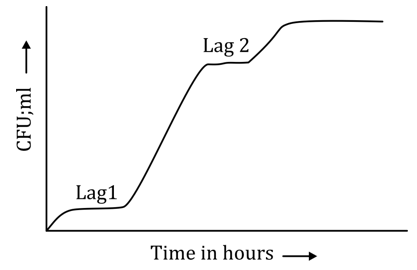
Statement 2: "In the second lag phase, yeast cells switch from fermentation to utilizing non-fermentable carbon sources and the lag is to acclimatize to this source of energy." - Correct.
Analyzing the Growth Pattern of Budding Yeast:
Lag Phases: The yeast shows two lag phases before entering the exponential phase, which suggests the yeast undergoes a couple of transitions before actively growing.
High Glucose Environment: The yeast is grown in a high glucose medium, which is typically fermented to produce energy. Initially, the cells are using glucose for fermentation (the preferred carbon source under high glucose conditions).
Why Option 2 is Correct:
Second Lag Phase: After a period of active glucose fermentation, yeast may face a shift in metabolic pathways. The second lag phase could be the result of yeast cells switching from fermenting glucose to using non-fermentable carbon sources (like ethanol, glycerol, or other substrates). This shift could happen when the glucose supply is depleted or when the yeast cells are adapting to different nutrient sources.
Acclimatization: During this second lag phase, the yeast cells would need to acclimatize to the new carbon source. This adaptation process would require time, which is reflected in the second lag phase, before the cells can resume growth in the exponential phase.
This is a common phenomenon observed in yeast cultures when growing in media with fermentable carbon sources, and the second lag phase typically represents this switch in metabolic pathways as the cells adjust to utilizing alternative carbon sources.
Why Other Options Are Incorrect:
Option 1: Talks about acclimatization and selective cell death, but doesn't fit well with the metabolic shift implied in the question.
Option 3: Incorrectly mentions sucrose in the second phase, while the experiment specifies high glucose.
Option 4: Refers to meiotic division, which typically occurs in low glucose or nutrient-poor conditions, not during growth in high glucose.