Correct option is B
Secondary succession is the process by which ecosystems recover after disturbances (like fire, timber clearing, or other disruptions) that do not completely destroy the soil or seed bank. This process typically begins in nutrient-rich environments where resources become suddenly available.
Pioneer Species:
Early colonizers, often termed pioneer species, are usually fast-growing and capable of rapid reproduction. They play a crucial role in soil stabilization and nutrient cycling.
Traits of pioneer species typically include:
High reproductive rates: The ability to produce a large number of offspring quickly.
Short life cycles: Quick maturity to take advantage of available resources.
Adaptation to disturbances: They often have traits that allow them to thrive in disturbed conditions (e.g., rapid seed germination).
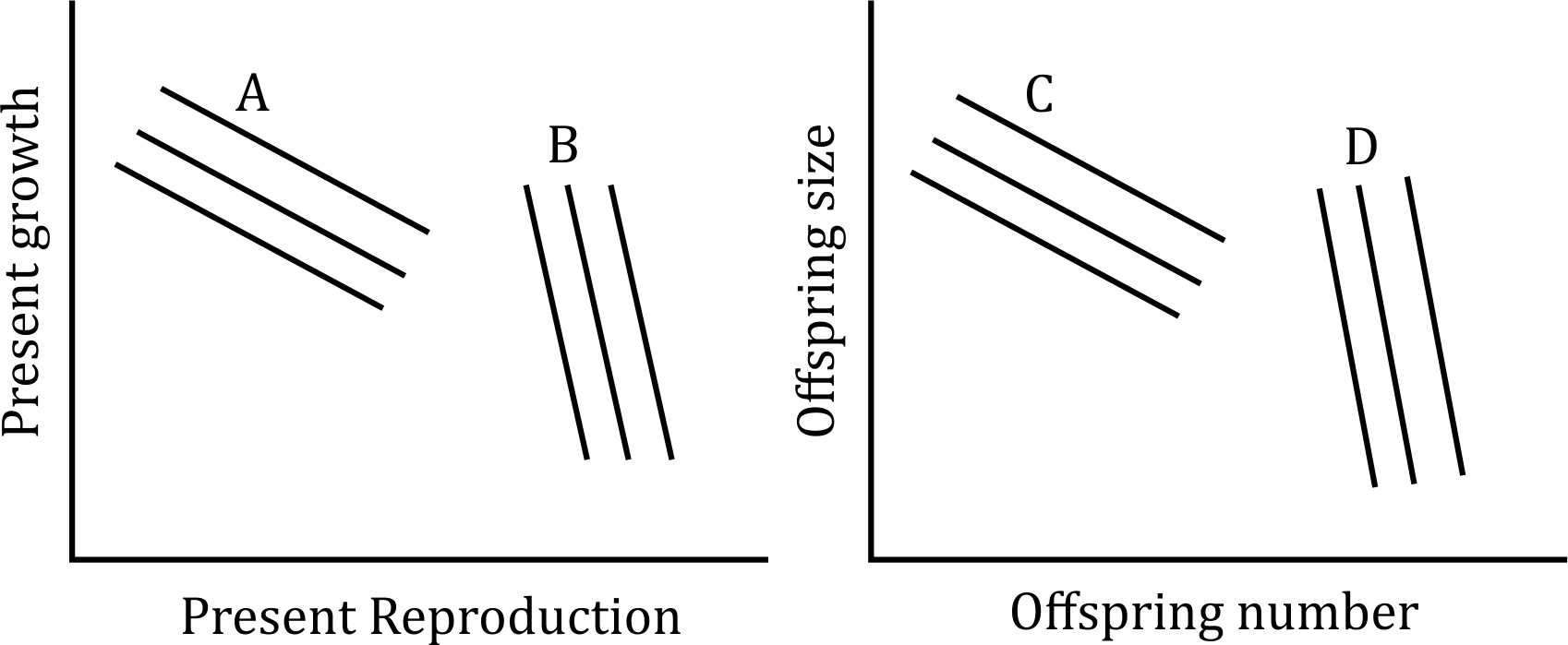
The trade-off between growth and reproduction is a significant concept in ecology. Plants must allocate resources to either grow larger (competing for light and nutrients) or produce more offspring (spreading their genes).
The size of the offspring can influence survival. Larger seeds may have more nutrients and can give seedlings a better start in life, but they are often produced in fewer numbers compared to smaller seeds.
Explanation:
Line A: Species represented here likely invest in both growth and reproduction, which is advantageous in stable environments where competition is moderate.
Line B: Indicates high reproductive output but lower growth. This could be characteristic of "weedy" species that spread quickly and establish themselves in disturbed areas.
Line C: Shows the relationship between offspring size and number, indicating that larger offspring are produced, which can be beneficial in nutrient-rich areas where competition is initially low.
Line D: Similar to Lines B, but emphasizes rapid reproduction, which is crucial in newly disturbed areas.
Therefore, Option 2 i.e. B and D represent species that have a high reproductive rate (B) combined with a strategy for rapid establishment (D). This combination is particularly well-suited for early succession, where rapid colonization is critical.