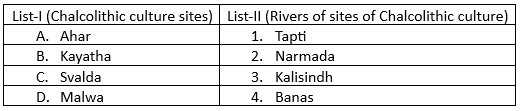
Correct option is A
The correct answer is (a) Both I and II.
The Iron Age in North India is characterized by the presence of both Painted Grey Ware (PGW) and Northern Black Polished Ware (NBPW) cultures.
Painted Grey Ware is associated with the early Iron Age, dating roughly from 1200 BCE to 600 BCE, and is linked to the later Vedic period.
Northern Black Polished Ware follows the PGW culture and dates roughly from 700 BCE to 200 BCE, marking the later Iron Age and early historic period.
Both pottery types are significant archaeological markers used to identify different phases of Iron Age cultural development in North India.
Information Booster:
PGW is characterized by fine grey pottery with painted geometric designs.
NBPW is known for its highly polished, glossy black or dark pottery, often used in important urban settlements.
PGW culture is linked to early Vedic texts and is primarily found in the western Ganges plain.
NBPW marks the rise of urbanization, trade, and early state formations in ancient India.
Both wares provide important chronological frameworks for studying the transition from the late Bronze Age to early historic times.
Archaeological sites like Hastinapur, Ahichhatra, and Taxila have yielded both PGW and NBPW artifacts.
These pottery types reflect evolving technological skills and social changes in Iron Age North India.
 English
 80 Questions
 160 Marks
 60 Mins