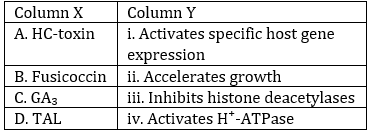
Correct option is B
Key Observations:
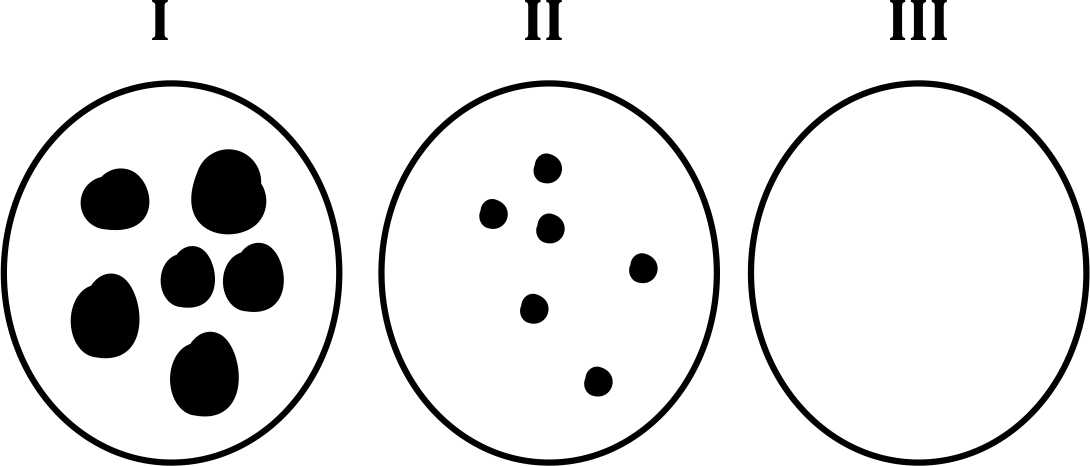
- Plate I: Shows large, dense plaques.
- Plate II: Shows smaller, fewer plaques.
- Plate III: Shows isolated, no plaques.
Bacterial Strain and rII Locus Information:
- Plate I: The bacterial strain is B , and the rII locus is mutant (b).
- Plate II: The bacterial strain can be either B or K-12, and the rII locus is Wild type (a) .
- Plate III: The bacterial strain is K-12, and the rII locus is mutant (b).
Analysis of the Phenotypes:
Plate I: The large, dense plaques suggest that the phage is able to infect the bacterial strain very efficiently. Based on the observed phenotype, the rII locus is likely mutant (b) in this case. Mutant rII phages often lead to less efficient phage infection, resulting in large, dense plaques as a result of limited host range or other mutations.
Plate II: The smaller, fewer plaques observed on this plate suggest that the rII locus is Wild type (a) in either B or K-12 strain. Wild-type phages typically form plaques more efficiently on strain B, but the smaller number of plaques could be a result of the experimental conditions or density of plating.
Plate III: The sparse plaques on this plate indicate that the rII locus is mutant (b) in strain K-12. Mutant rII phages in the K-12 strain do not form many plaques, leading to the sparse appearance observed.
Correct Answer:
I-ii-b, II-i-a, III-iii-b
Information Booster:
- Mutant rII locus: A mutation in the rII locus of the phage can result in large, dense plaques in some conditions (Plate I), or sparse plaques (Plate III) in others.
- Wild-type rII locus: Wild-type rII phages generally form smaller plaques due to more efficient replication, as seen in Plate II.
- E. coli strain B: This strain is typically more susceptible to phage infection, and the wild-type rII phage can form plaques more efficiently in strain B.
- E. coli strain K-12: K-12 strain may produce fewer plaques compared to B, especially if the rII locus of the phage is mutant, as seen in Plate III.
- Plaque formation: The size and density of plaques are important indicators of the efficiency of phage infection and replication in the host strain.