Correct option is D
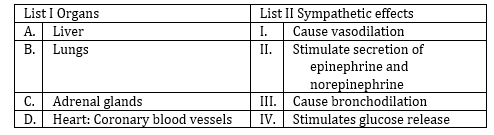
A. Liver: The sympathetic stimulation of the liver results in the
release of glucose, providing a quick energy source during stress. This is due to
stimulating glucose release (IV).
·
B. Lungs: The
sympathetic activation causes
bronchodilation (opening of airways), which helps improve airflow. Hence, the correct match is
III (Cause bronchodilation).
·
C. Adrenal glands: The sympathetic nervous system activates the
adrenal glands to
stimulate the secretion of epinephrine and norepinephrine (II), hormones that prepare the body for the 'fight or flight' response.
·
D. Heart: Coronary blood vessels: The sympathetic system induces
vasodilation of the coronary blood vessels to ensure adequate oxygen and nutrient supply to the heart during increased activity. This is
I. Cause vasodilation.
Information Booster:
1.
Sympathetic nervous system (SNS): The SNS prepares the body for stressful situations, often referred to as the "fight or flight" response. It increases heart rate, expands airways, and releases glucose for quick energy.
2.
Liver (IV): The liver's role during sympathetic activation is to mobilize energy reserves by releasing glucose into the bloodstream.
3.
Lungs (III): Bronchodilation improves air exchange, vital during physical exertion or stress, ensuring sufficient oxygen supply.
4.
Adrenal glands (II): The adrenal glands release epinephrine and norepinephrine, which have widespread effects on the body, such as increasing heart rate and blood flow to muscles.
5.
Heart's Coronary blood vessels (I): Vasodilation in the coronary arteries ensures enhanced blood flow to the heart muscle, crucial during exertion.
Additional Information:
·
Liver (IV): The liver plays a crucial role in the body's metabolic response to stress, releasing glucose for quick energy.
·
Lungs (III): During exercise or stress, bronchodilation allows better airflow to meet the body's increased oxygen demands.
·
Adrenal glands (II): The hormones epinephrine and norepinephrine also increase the efficiency of the heart and muscles during physical stress.
·
Heart's Coronary blood vessels (I): Vasodilation helps maintain optimal blood flow, ensuring that the heart functions effectively under stress.
 English
 150 Questions
 150 Marks
 150 Mins