Correct option is D
·
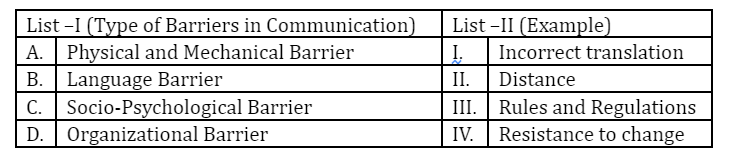
Physical and Mechanical Barrier (A) includes factors like
distance (II), which can make communication difficult due to physical separation or faulty technology.
·
Language Barrier (B) involves
incorrect translation (I), where communication is hampered by differences in language or errors in translating messages.
·
Socio-Psychological Barrier (C) involves
resistance to change (IV), which can prevent effective communication due to personal attitudes, biases, or unwillingness to adapt.
·
Organizational Barrier (D) includes
rules and regulations (III), where rigid policies or hierarchical structures prevent efficient communication within organizations.
Information Booster:
·
Physical and Mechanical Barriers: These can include physical distance, environmental noise, or technological failures that obstruct the flow of communication. Examples include poor phone reception, broken equipment, or long geographical distances between the communicator and the receiver.
·
Language Barriers: Arise when two parties don't share a common language or if there are misunderstandings due to poor translations or jargon that the receiver cannot understand.
·
Socio-Psychological Barriers: Emotional factors such as stress, distrust, stereotypes, or resistance to new ideas can block communication. People may resist new information because they fear change or misunderstand the message due to preconceived notions.
·
Organizational Barriers: These include formal rules, hierarchical structures, and bureaucratic systems that can slow down or distort the communication process within organizations. Rigid chains of command or overly complex procedures can obstruct the flow of information.
 English
 10 Questions
 20 Marks
 12 Mins